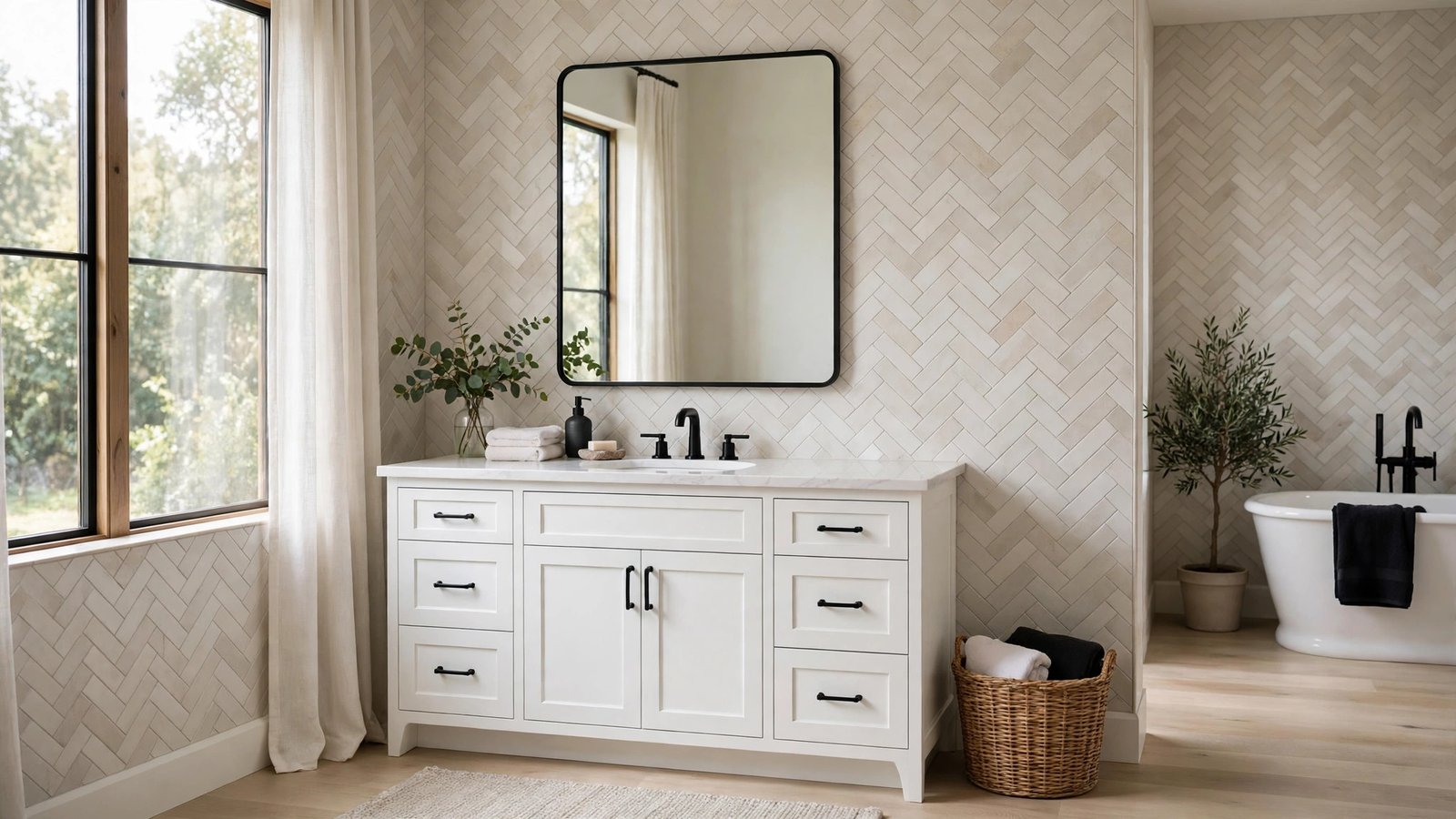
Some bathrooms are perfectly fine — and completely forgettable. The tile is neat, the grout is straight, and nothing makes you look twice. Nine times out of ten, what’s missing is movement.
Herringbone is the easiest way to add it. The zigzag turns ordinary rectangular tiles into a pattern with rhythm and direction, leading the eye across a floor or up a shower wall and making small rooms feel deliberately designed.
Here are 16 herringbone tile bathroom ideas for floors, showers, vanity walls and niches, each with the sizes, materials and layout details to copy, plus a practical tip for getting the pattern right first time.
1. Classic White Ceramic Herringbone Floor
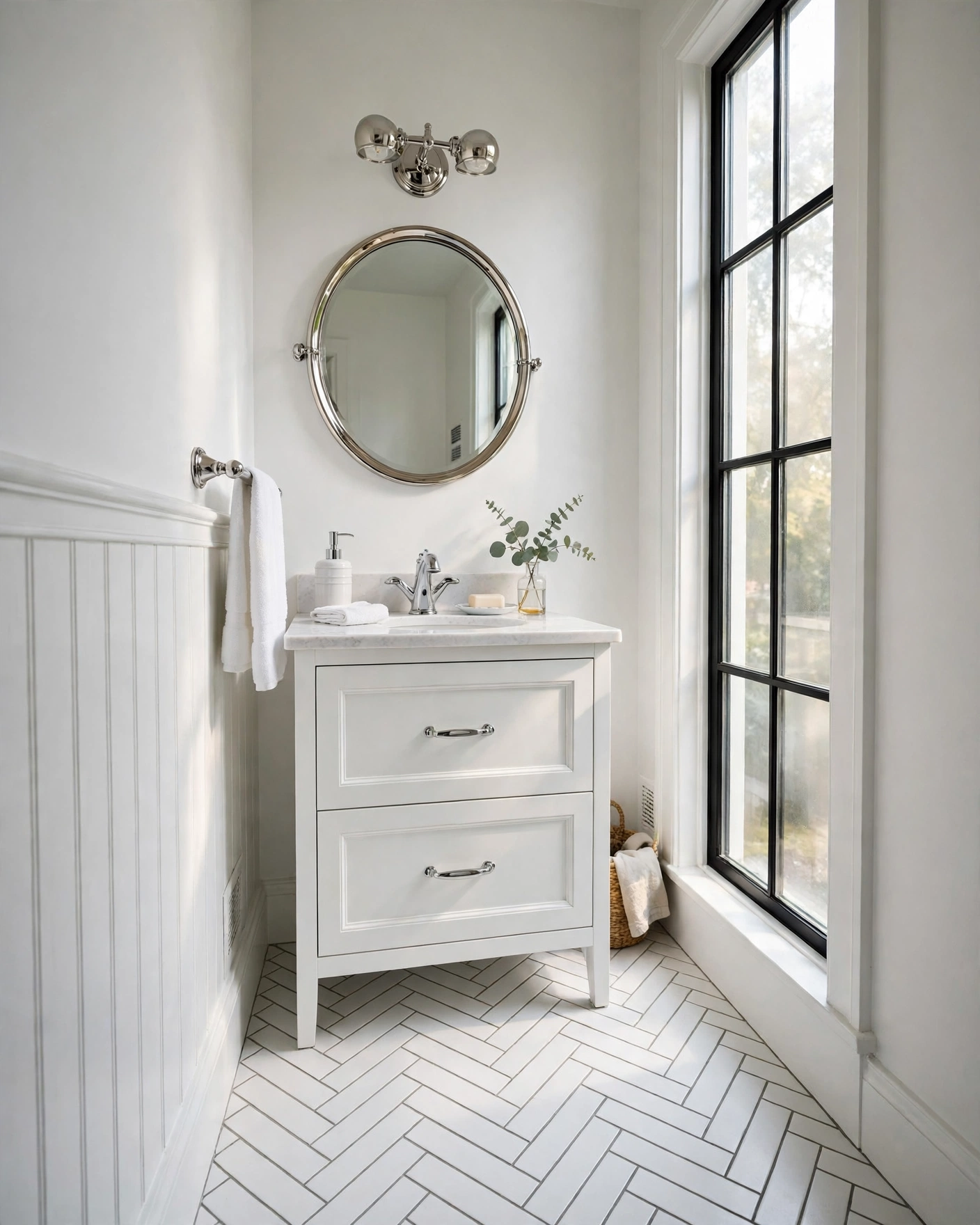
The timeless version: glossy white 3×6 ceramic laid at 45 degrees across the whole floor. It suits nearly every style, brightens dark rooms and pairs with any vanity color. Tip: choose a mid-gray grout — white grout shows every speck of dirt between the many joints this pattern creates.
2. Soft Gray Herringbone Shower Wall
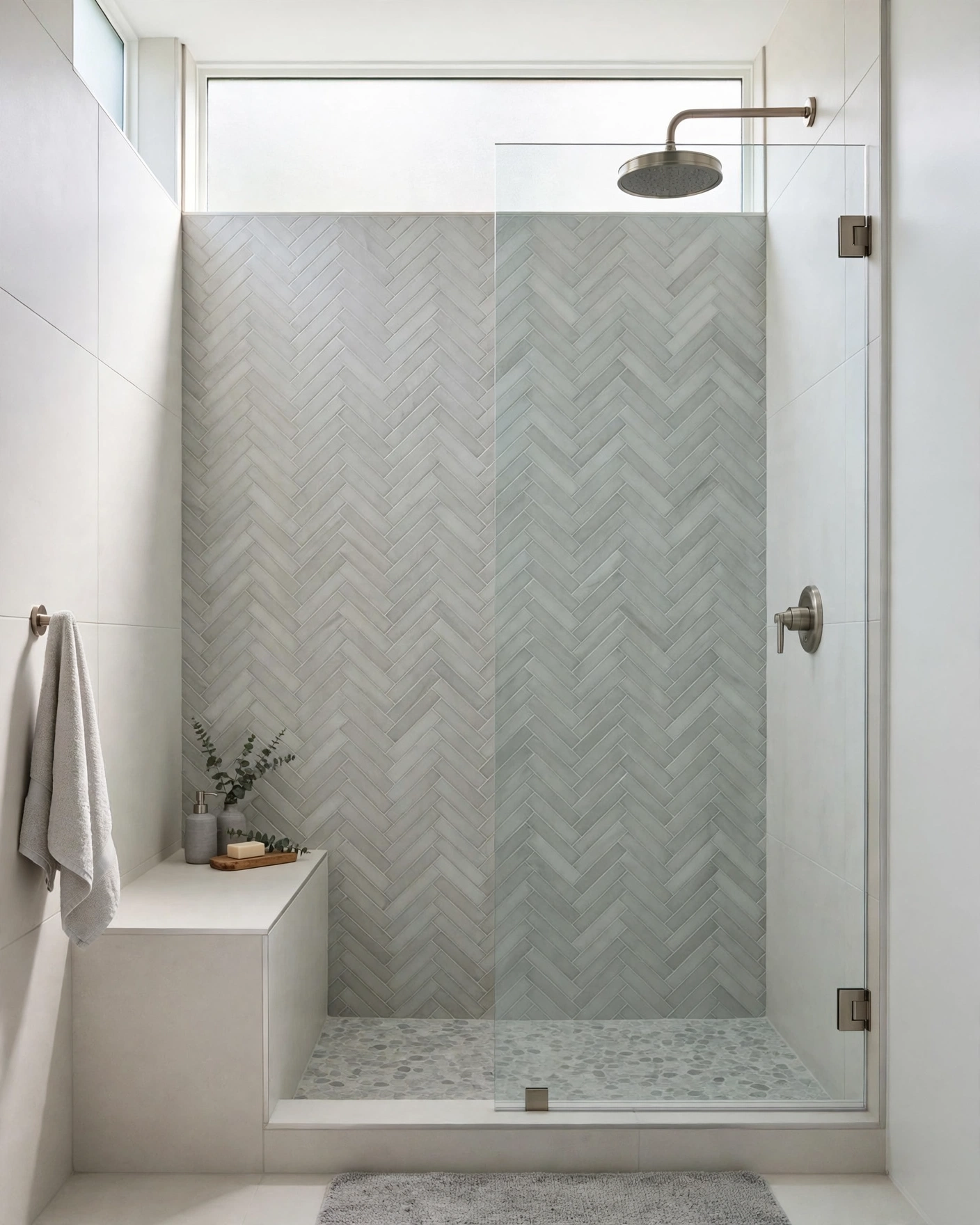
In the shower, herringbone turns a plain enclosure into the focal point. Use matte 2×8 gray porcelain on the back wall, run it to the ceiling, and keep side walls in large plain tiles for contrast. Tip: plan from the center line outward so cuts at both corners come out even.
3. Vertical Herringbone Vanity Wall
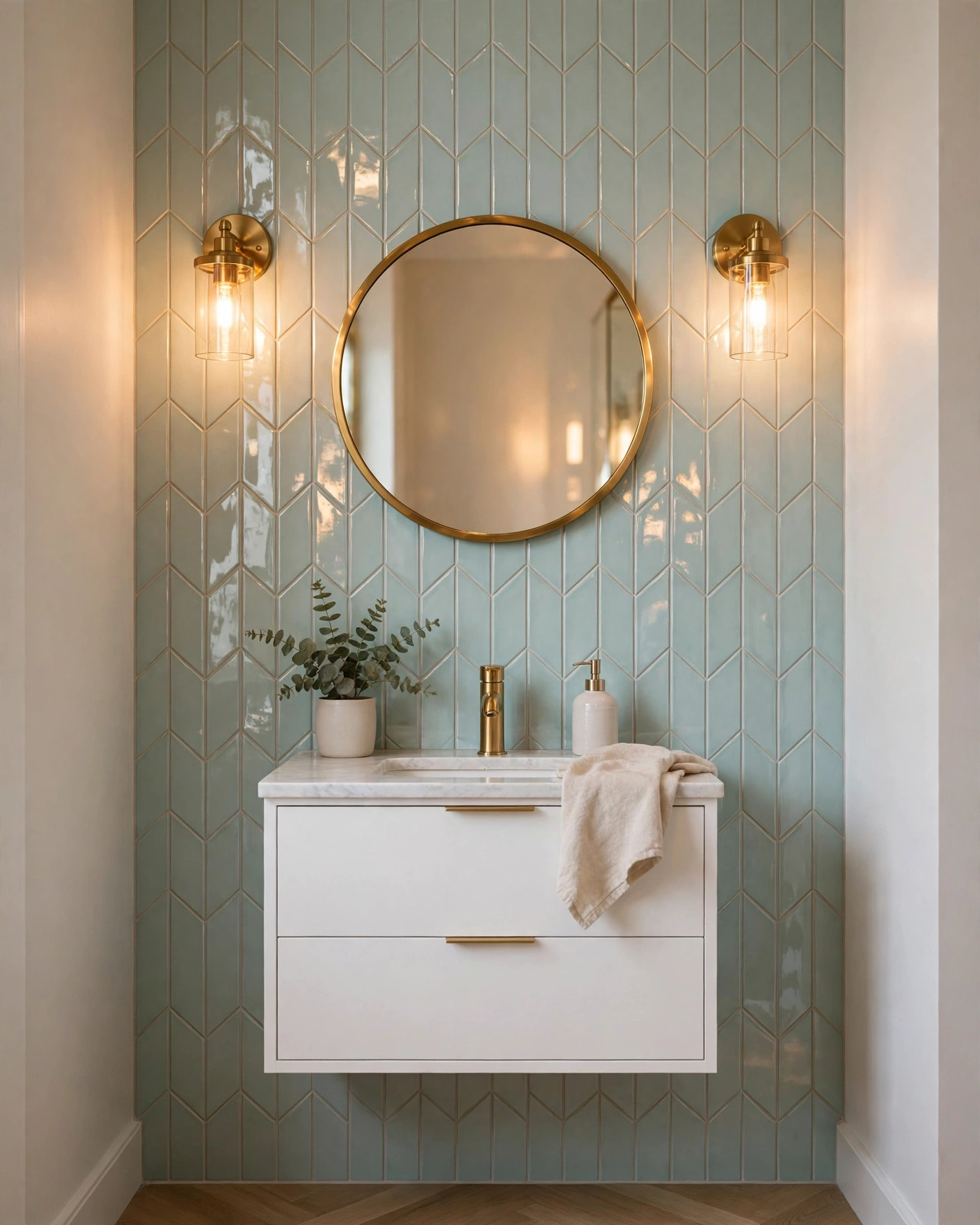
Rotate the pattern so the zigzag climbs instead of spreads, and a low-ceilinged room suddenly feels taller. Glossy 3×12 ceramic in pale aqua or soft white works beautifully behind the mirror. Tip: vertical herringbone is less expected than the classic floor layout, so it reads as a deliberate designer choice.
4. Wood-Look Plank Herringbone Floor
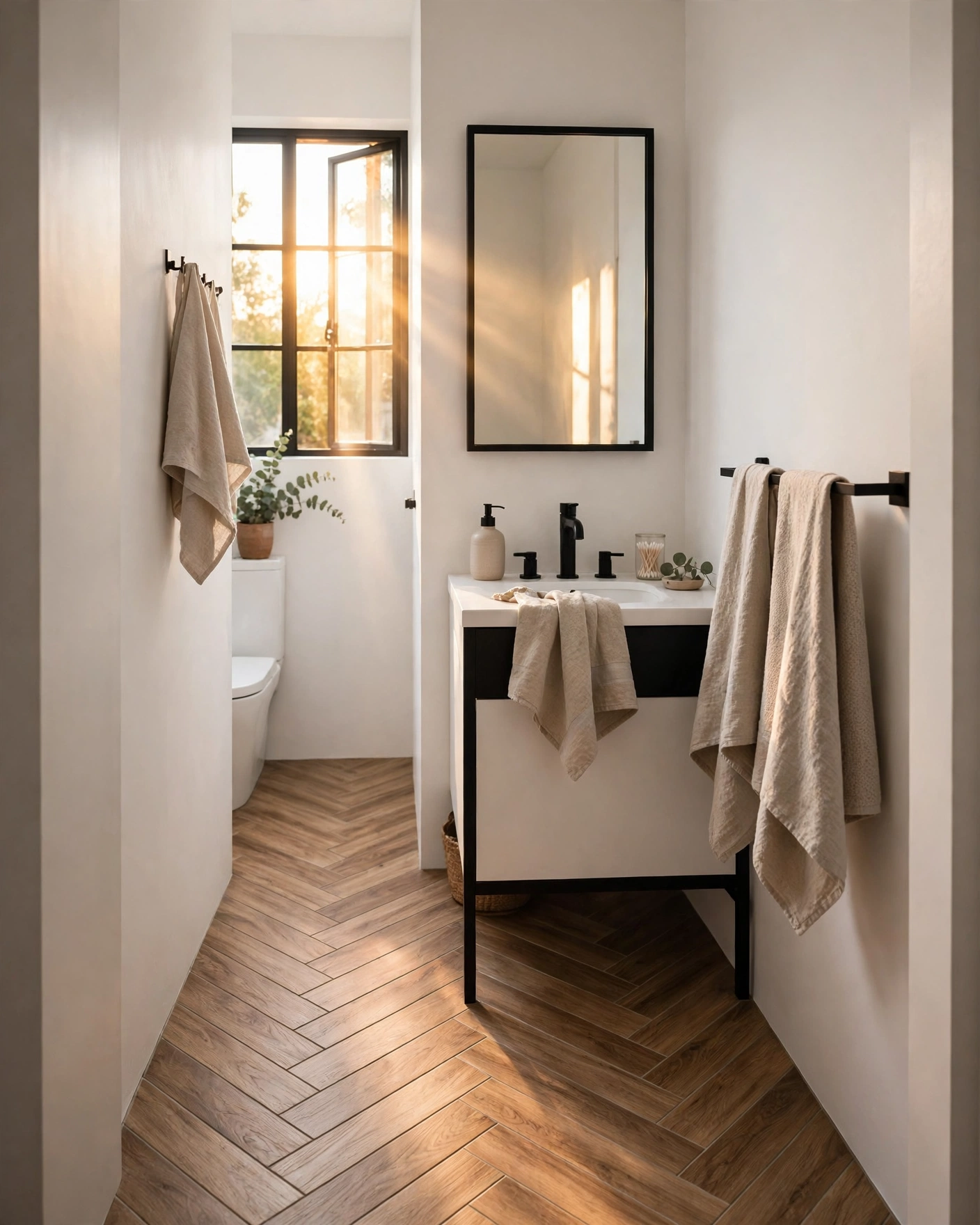
Wood-look porcelain planks in herringbone give you a parquet floor’s elegance with none of wood’s fear of water. Choose mid-oak planks in 4×16 or 6×24, run lengthwise down the room. Tip: keep joints tight and grout close to the plank color, so it reads as real timber.
5. Matte Black Herringbone Feature Wall
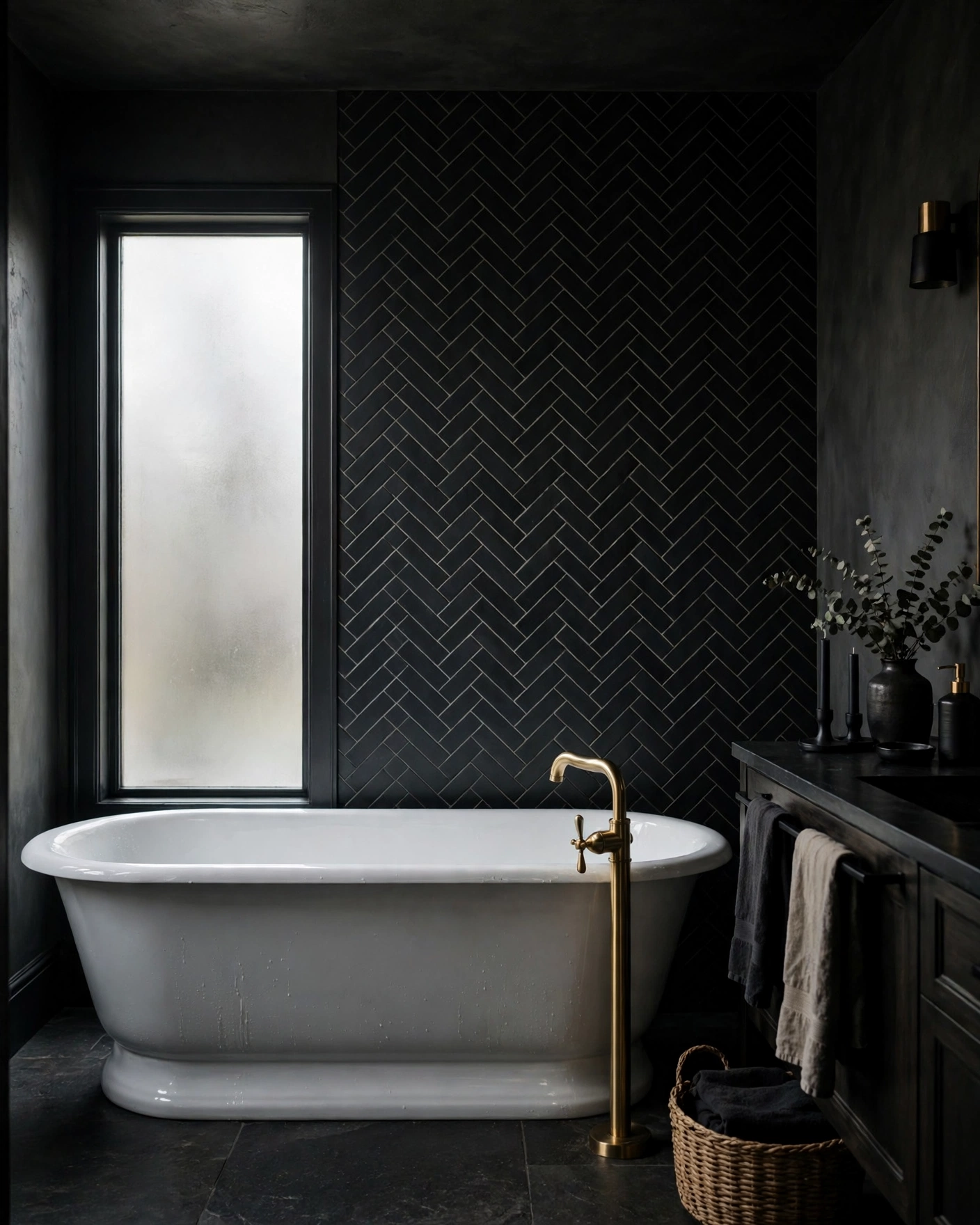
For drama, few things beat matte black herringbone behind a white tub or vanity — the zigzag keeps the dark wall from feeling flat. Use 2×8 or 3×12 matte porcelain and a light gray grout to trace the pattern. Tip: black tile shows soap scum and water spots, so keep it outside the direct spray zone.
6. Double Herringbone for Bold Energy
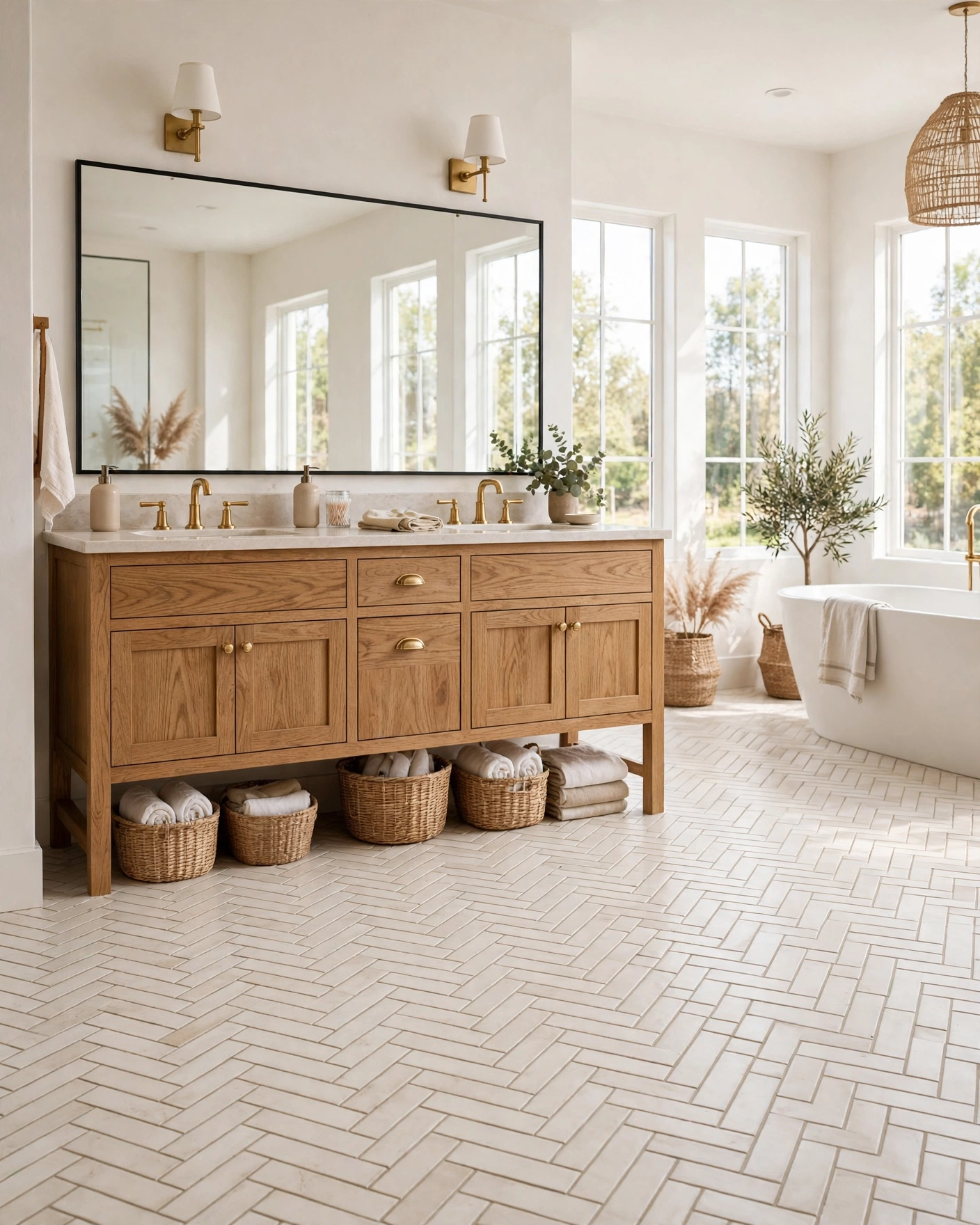
Double herringbone pairs tiles two by two before zigzagging, doubling the pattern’s scale and energy — ideal for larger floors. A warm white 3×12 ceramic keeps it bold but not busy. Tip: this layout involves more cuts and time, so dry-lay a full repeat on the floor before mixing any adhesive.
7. 90-Degree Herringbone with a Modern Edge
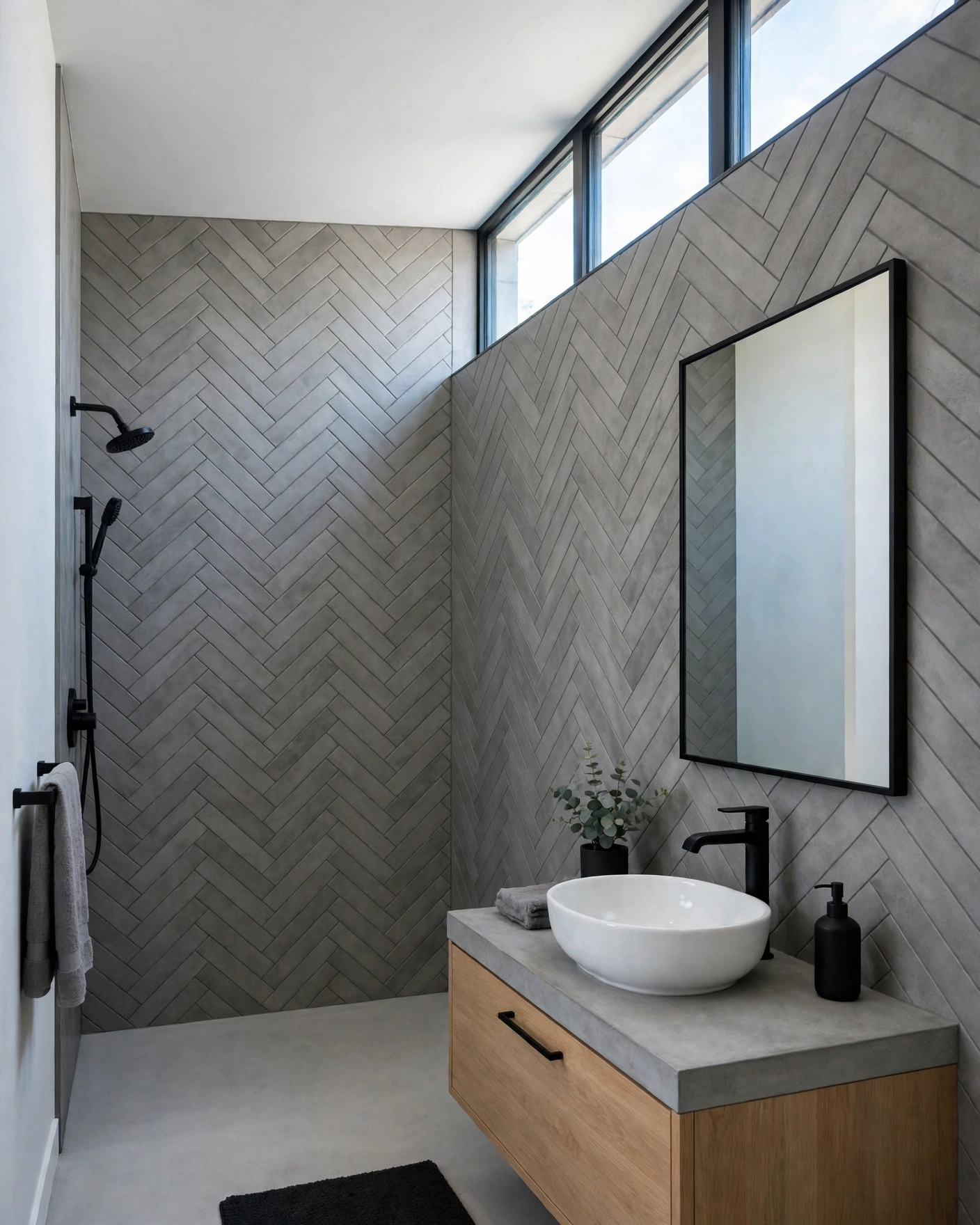
Turning the pattern to a straight 90-degree angle trades vintage charm for crisp, architectural lines. Try it in concrete-look or solid matte tiles on a shower or vanity wall. Tip: the straighter geometry is more forgiving for first-time tilers than the classic 45-degree layout, with simpler cuts at the edges.
8. Marble-Look Herringbone Floor
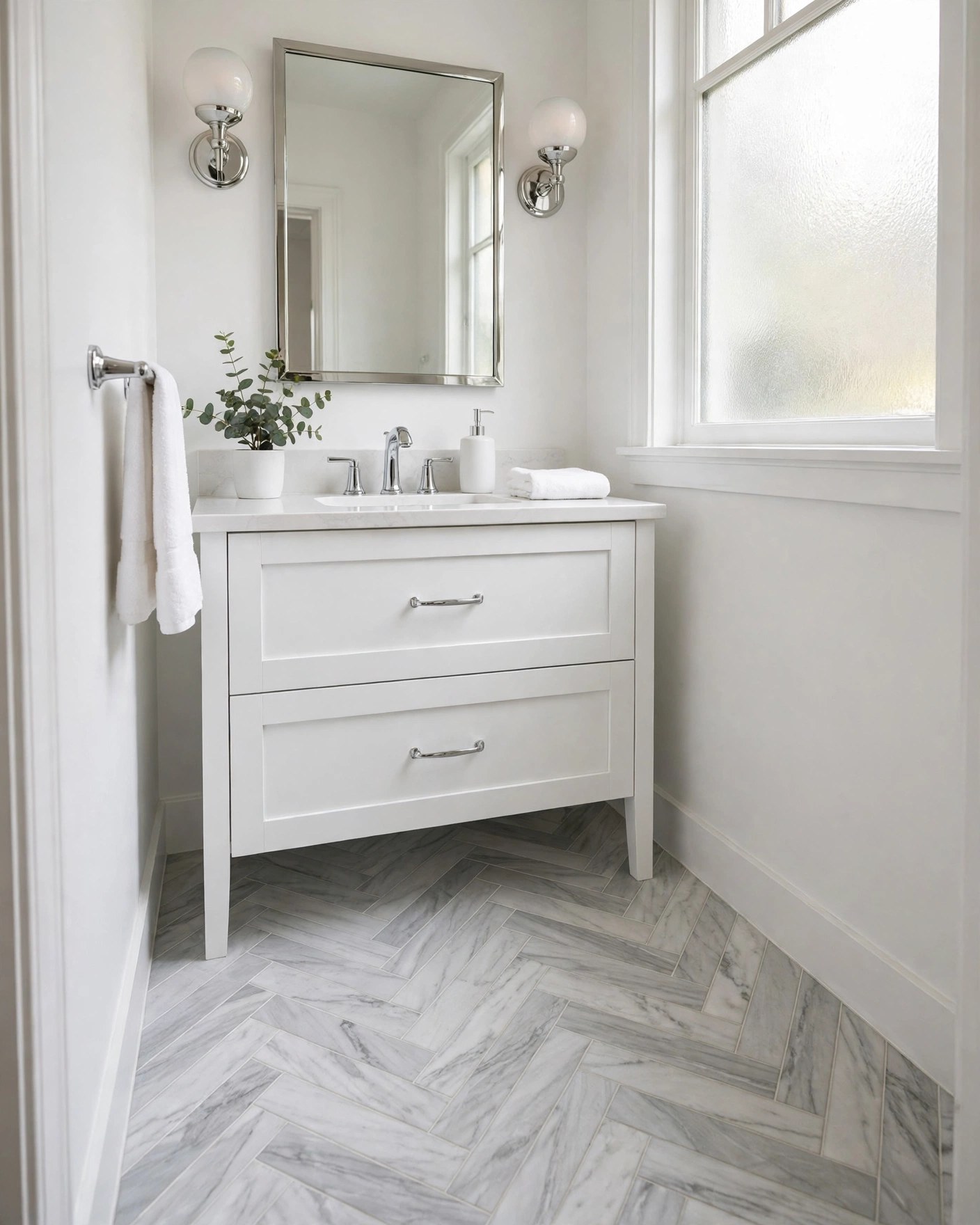
Marble-look porcelain in herringbone layers two luxuries at once: flowing veining and lively movement. Keep the format small — 3×12 planks — so the vein dances across the zigzag; let walls stay plain. Tip: because so many tiles meet at angles, order at least 15 percent extra to cover cuts and waste.
9. Sage Green Herringbone Wall Tile
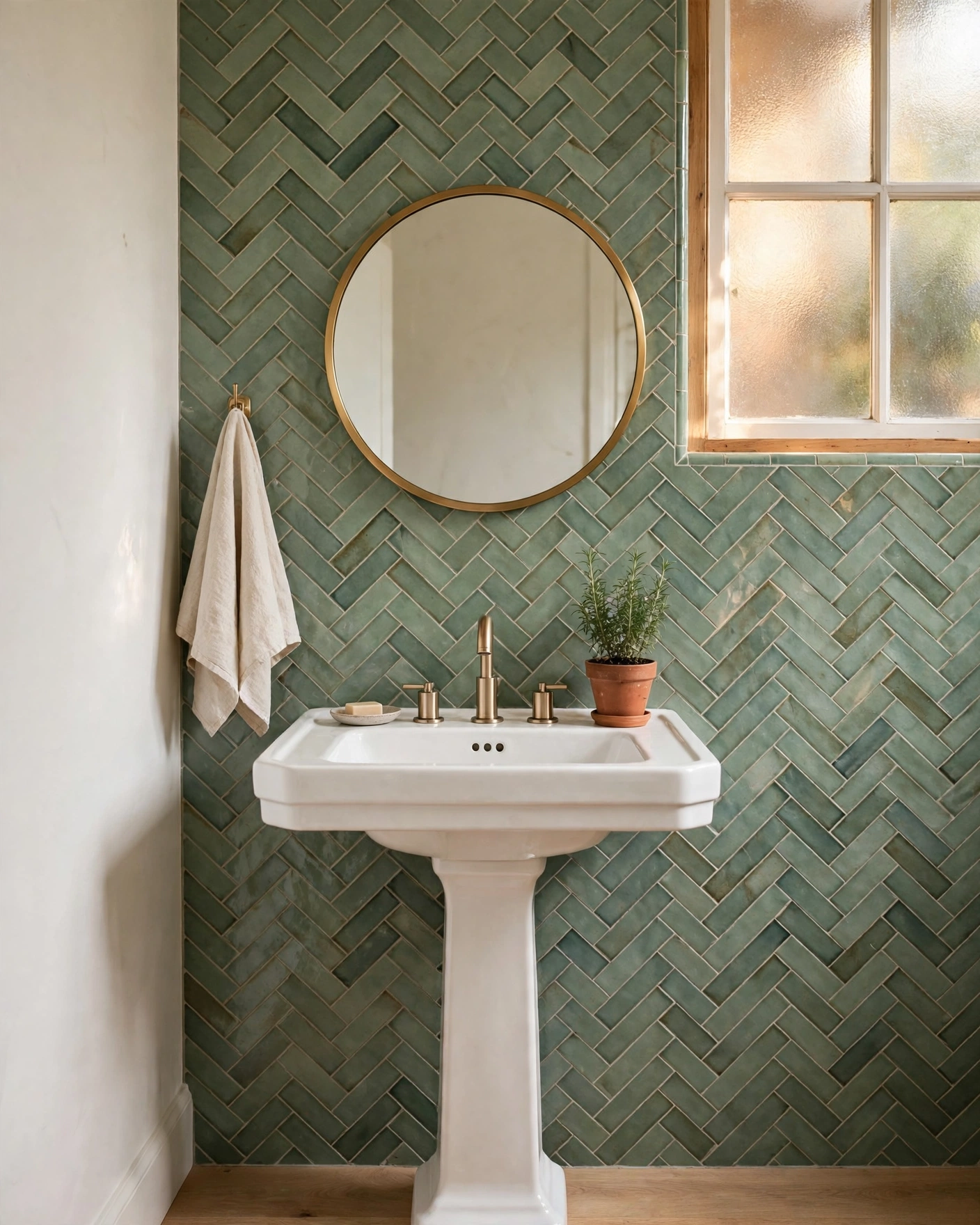
Sage green herringbone brings color and pattern in one move, and the zigzag makes the soft green feel alive. A glossy zellige-look 2×8 tile behind the vanity or in the shower is the sweet spot. Tip: green tiles vary by batch, so buy all your boxes at once and blend tiles from several boxes as you lay.
10. Large-Format Herringbone with Fewer Grout Lines
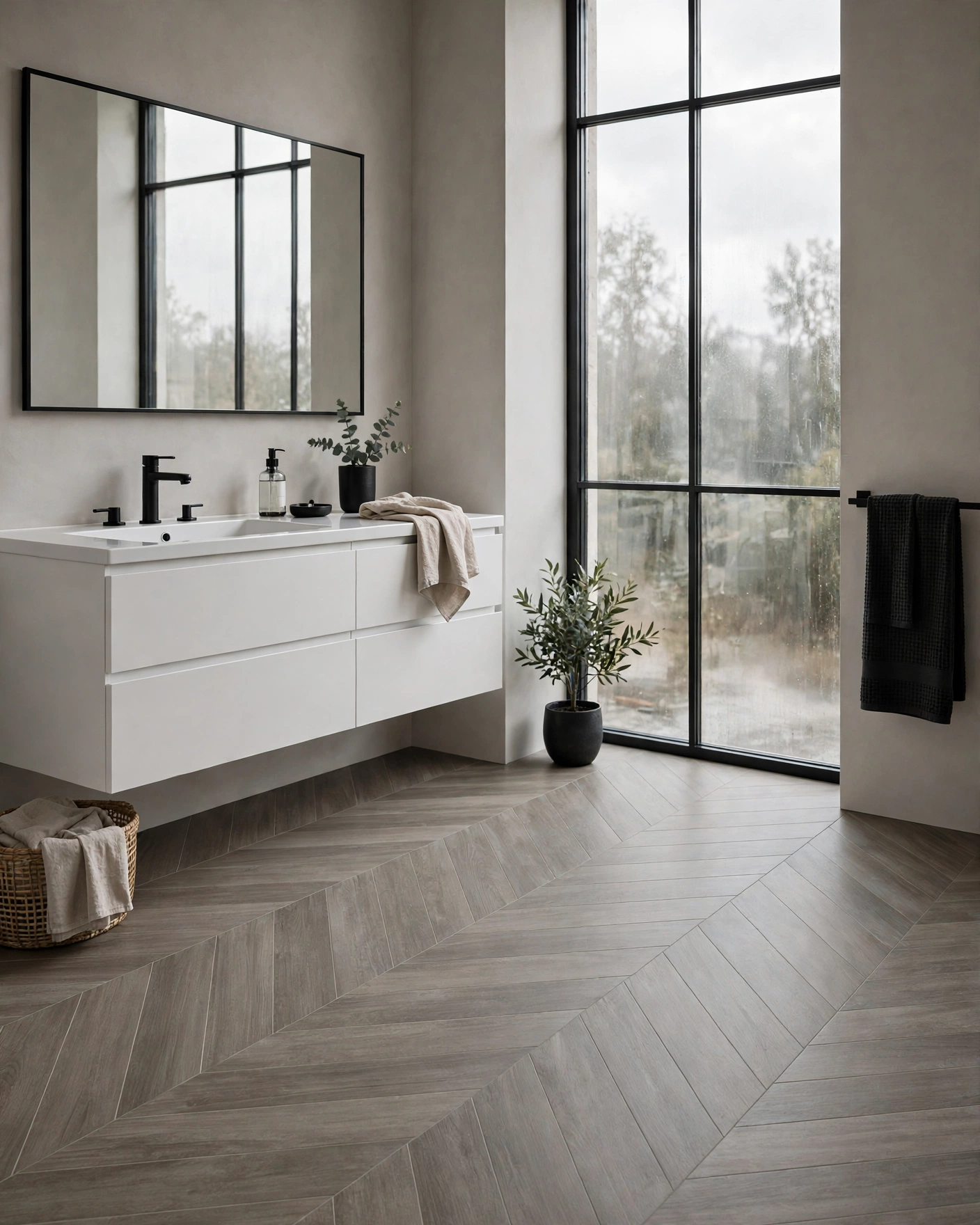
Herringbone doesn’t have to mean hundreds of tiny pieces — 6×24 or 8×32 planks create the same zigzag with a fraction of the grout joints, for a calmer, quicker lay. Tip: large tiles demand a flat base, so budget time to level the floor or every bump will telegraph through the corners.
11. Herringbone Wainscot Half-Wall
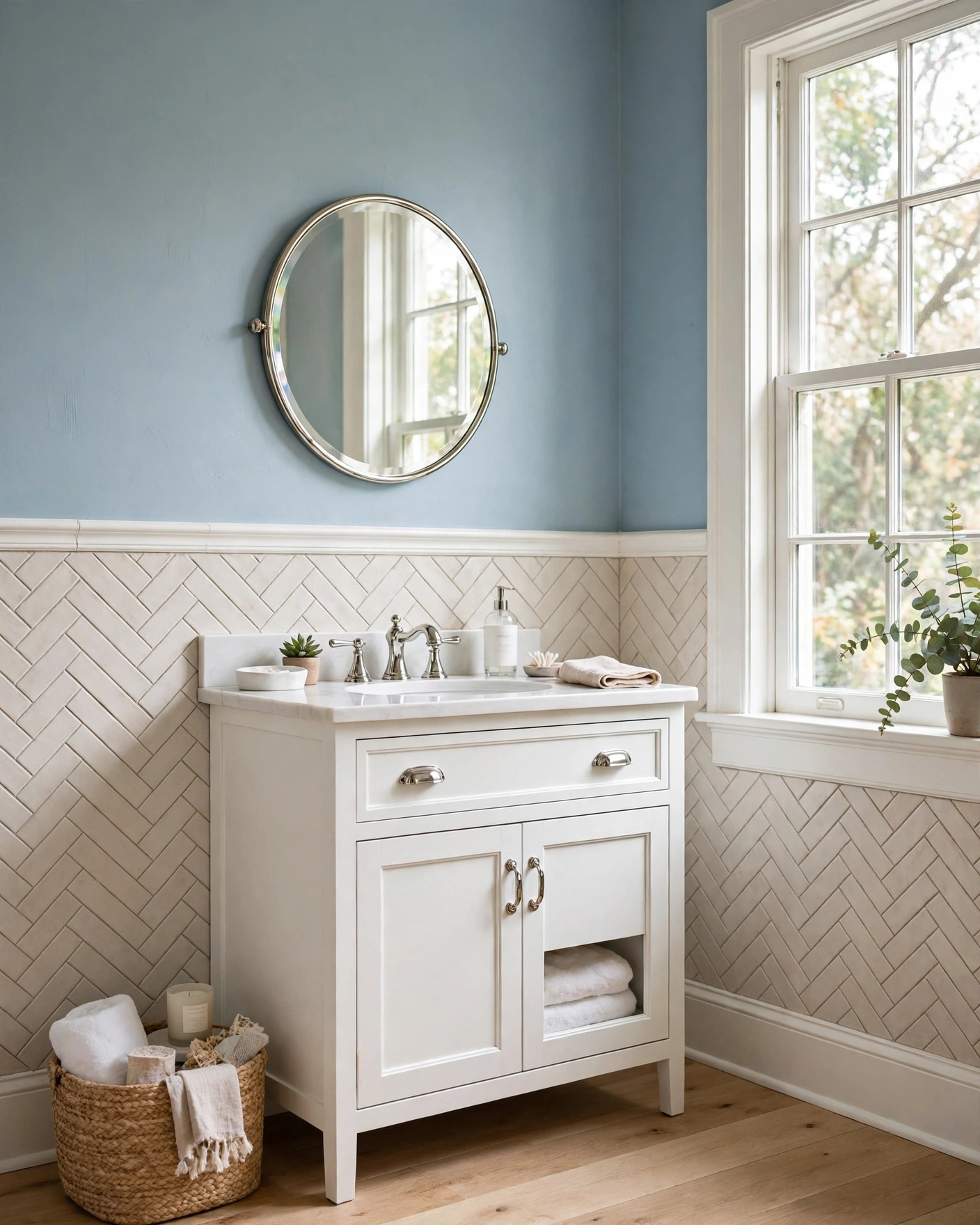
A herringbone wainscot — pattern to chair-rail height, capped with a trim tile — adds craftsmanship at splash height only. Painted walls above keep the budget and visual weight down. Tip: end the pattern at a natural break like a door frame or corner, so the cut edge all but disappears.
12. Terracotta Herringbone Floor
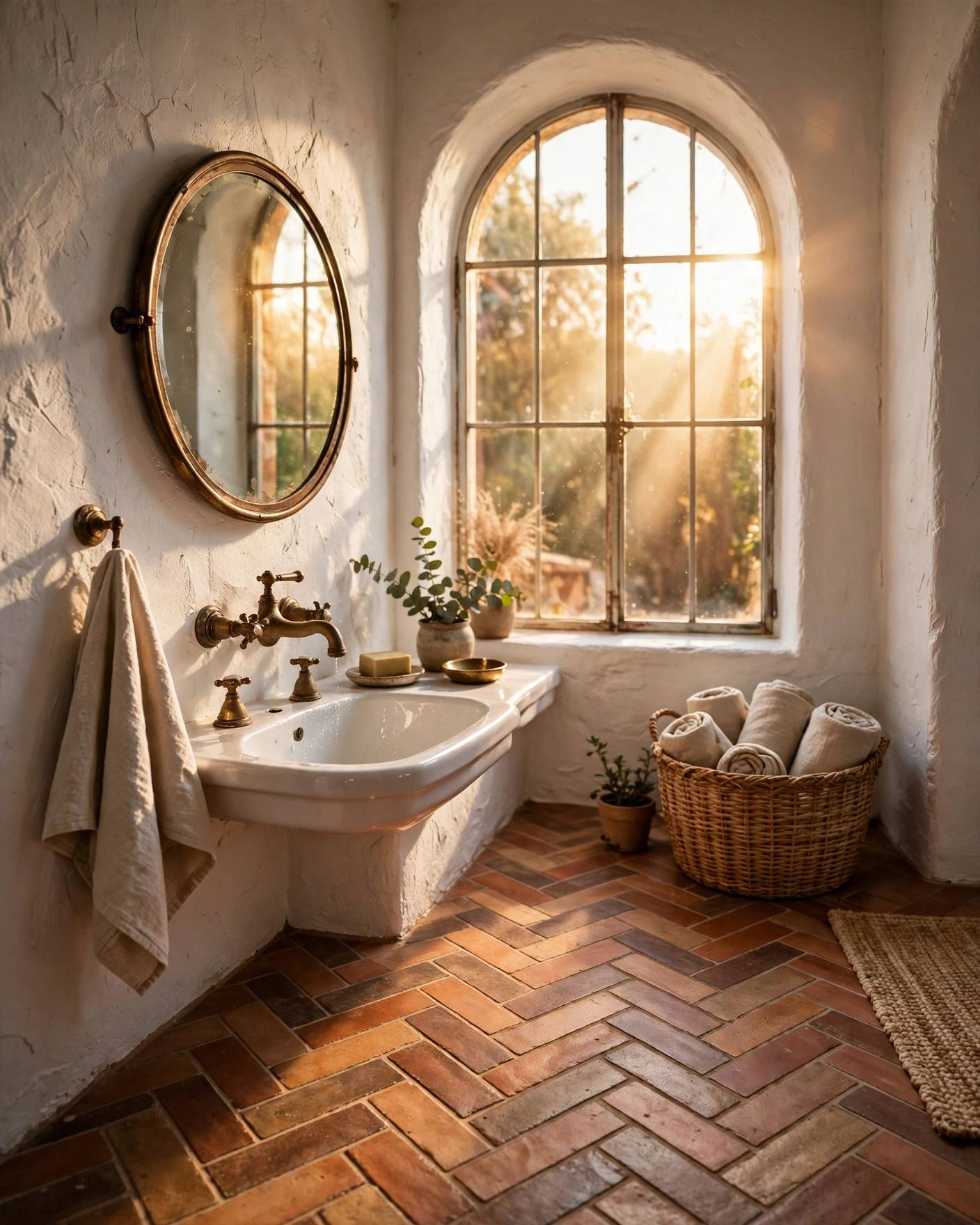
Terracotta-look herringbone brings Mediterranean warmth and hides everyday dust between cleans. Matte porcelain in mixed clay tones pairs beautifully with white walls and aged brass. Tip: porcelain needs no sealer, so just choose a warm tan grout to keep the earthen, sun-baked feel.
13. Herringbone Shower Niche Accent
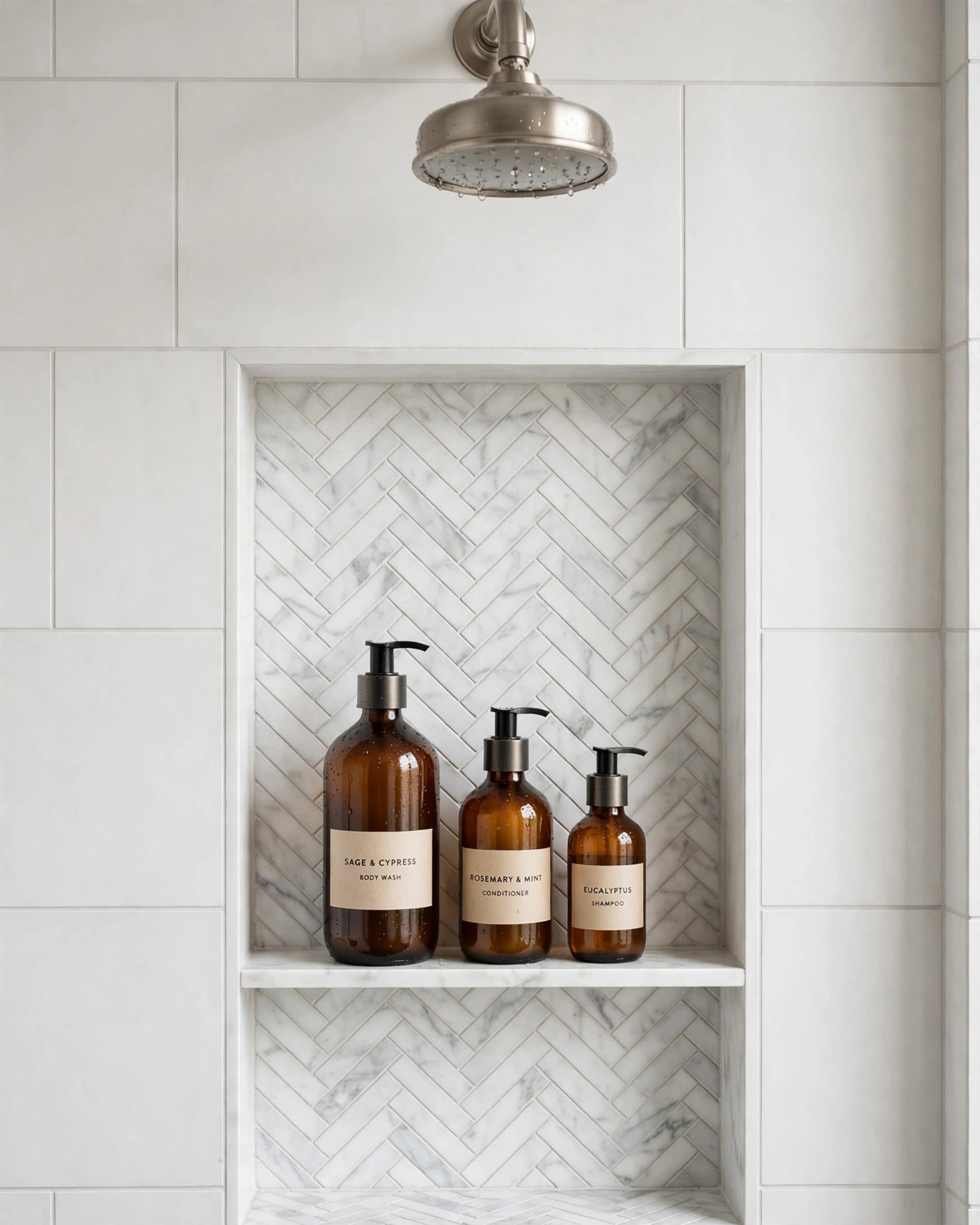
If a whole herringbone wall feels like too much commitment, tile just the shower niche in a contrasting herringbone. It’s a small canvas, so bold colors and marble-look mosaics become affordable. Tip: use mesh-backed mosaic herringbone sheets for the niche — the backing makes that fiddly little cavity far easier to tile neatly.
14. Two-Tone Herringbone in White and Gray
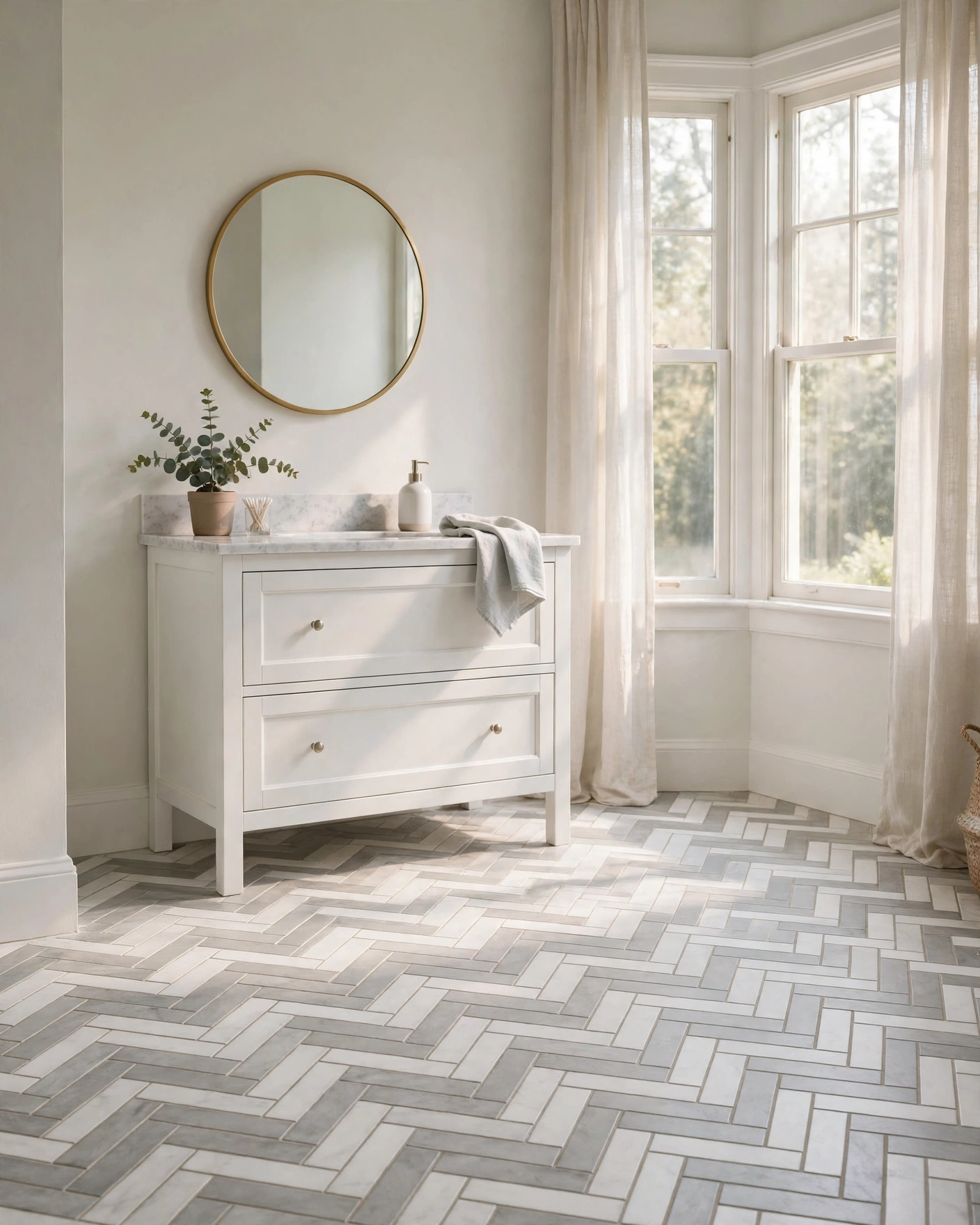
Alternating white and soft gray tiles in one herringbone field creates a gentle rhythm inside the zigzag — pattern on pattern, still calm. Use one grout shade for both colors so transitions stay seamless. Tip: sort tiles by tone first and keep the alternation strict; random mixing reads as a mistake, not a design.
15. Herringbone Border Strip
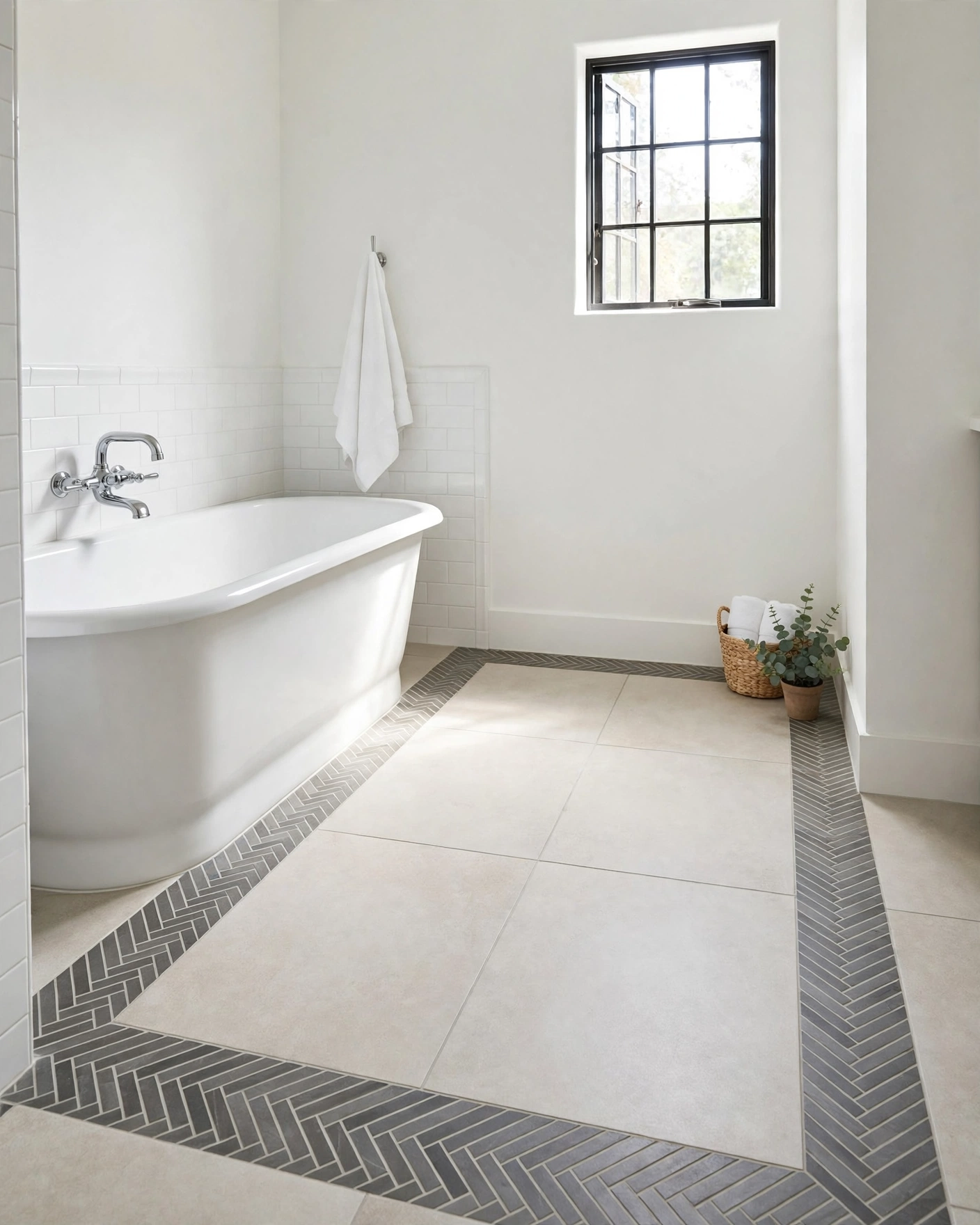
A band of herringbone around the edge of a plain floor delivers the pattern where it frames the room best. It’s also a clever way to use leftover tiles. Tip: borders forgive imperfect walls, because the plain field tile — not the patterned strip — meets the edges.
16. Tiny Herringbone Mosaic in a Powder Room
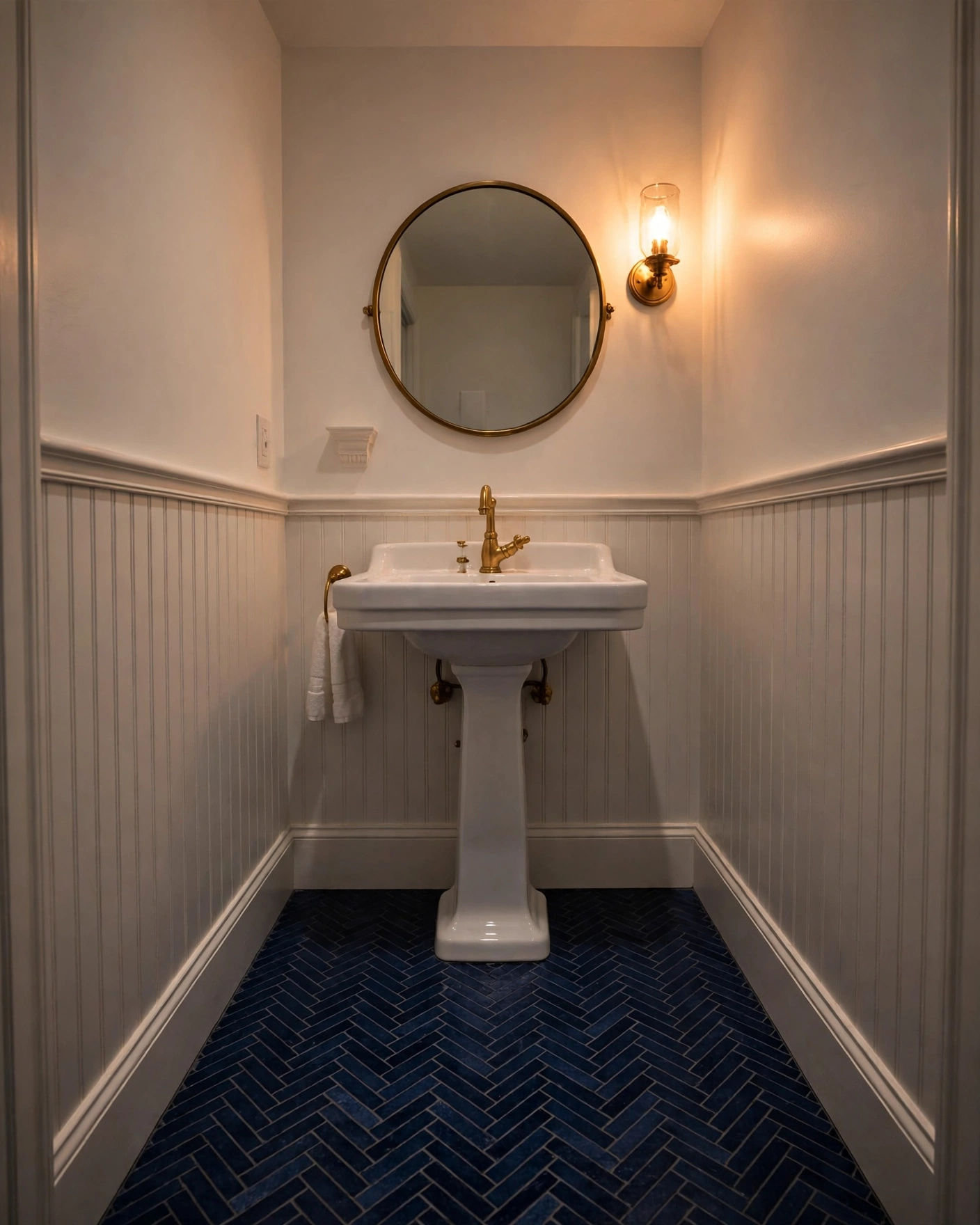
Powder rooms are where small-scale herringbone shines — a 1×3 mosaic covers the floor in intricate zigzag for little material cost. Deep navy or forest green turns it into a jewel box. Tip: in a room this small, splurge freely — even premium mosaic rarely covers more than a few square feet.
In Summary
Herringbone proves layout is a design material all by itself. The same rectangle of tile can feel classic, modern, rustic or glamorous depending on its size, finish and angle — and it adds movement plain stacked tile can’t match.
Pick the surface your eye lands on first — the floor, the shower’s back wall, the niche you reach into every morning — and let the zigzag work there. Dry-lay the pattern, mind your center line, and order a little extra: you’ll get a bathroom considered down to the last tile.
Leave a Reply