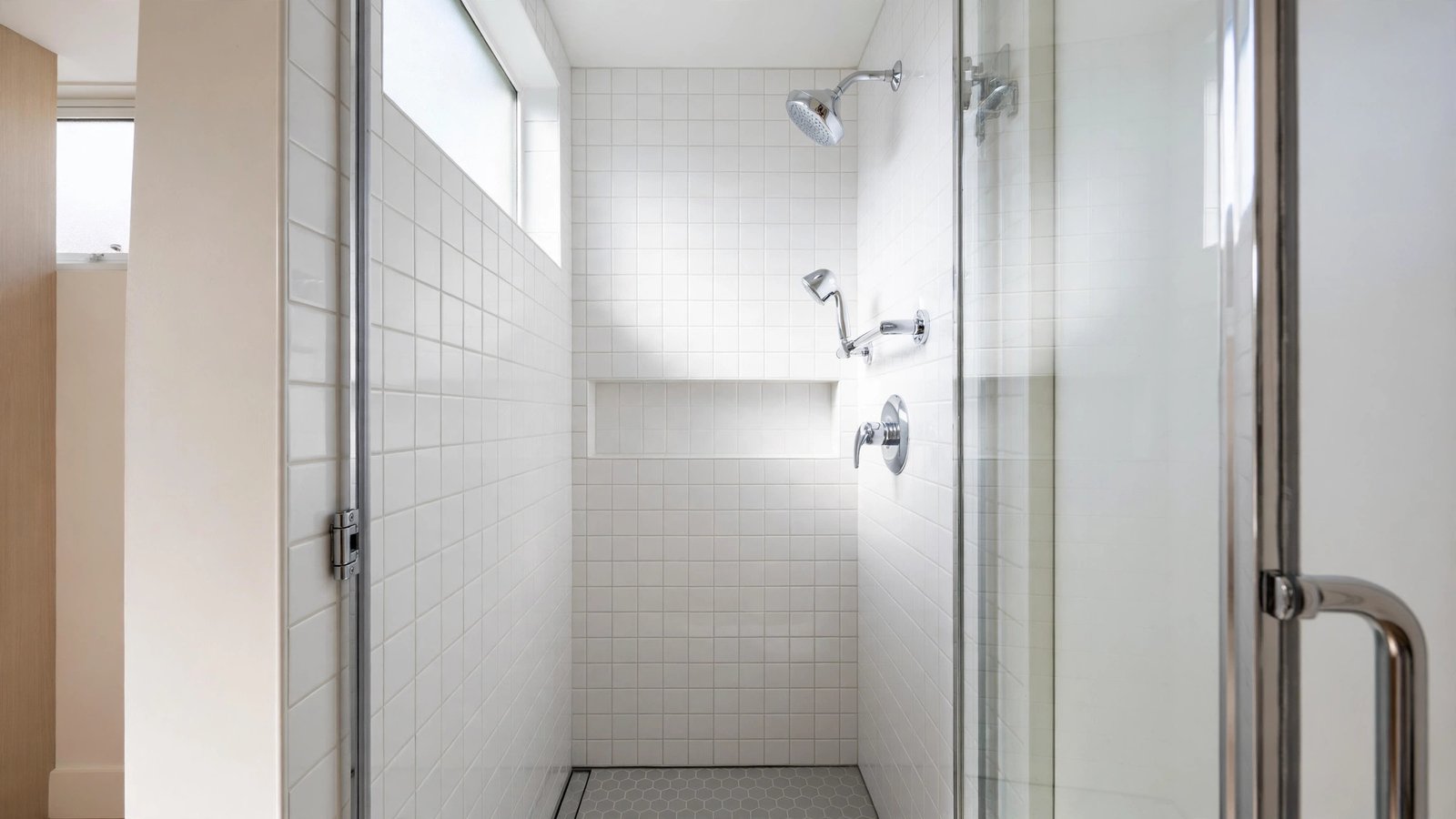
A tiny shower can feel like a squeeze, even when it does the job perfectly well. The walls close in, the light disappears, and every grout line seems to shout about how small the space is. But the tile you choose changes all of that — it is the one surface that covers almost everything you see when you step inside.
The right tile can stretch the walls upward, bounce light around the room, and blur the edges so the shower feels like part of the bathroom instead of a box inside it. Large tiles with fewer grout lines, glossy finishes, and one continuous surface from floor to wall all work quietly in your favour.
Below are 15 tiny shower tile ideas that make a small shower feel open, calm, and far more generous than its measurements suggest. Each one comes with the materials to use, how to recreate the look, and one practical tip to get it right.
1. Large-Format Tile With Fewer Grout Lines
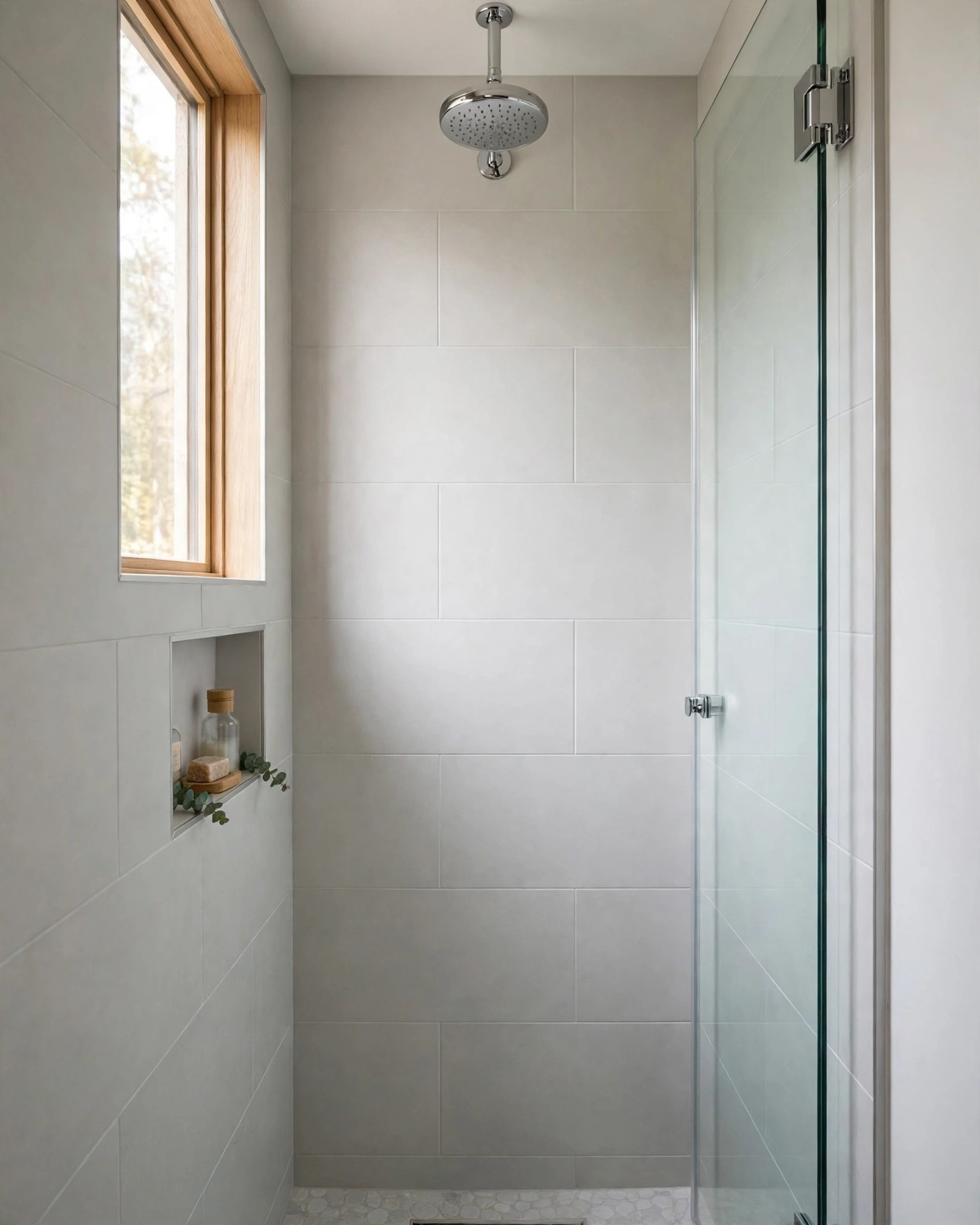
Large 12×24 inch porcelain tiles mean far fewer grout lines breaking up the walls, so the eye reads one calm surface instead of a grid. Choose a pale gray or warm white matte finish and run the tiles in a stacked layout for the cleanest effect. Tip: ask your tiler for a 1/16 inch grout joint in a colour matched to the tile, so the lines nearly disappear.
2. Vertical Subway Tile to Stretch the Height
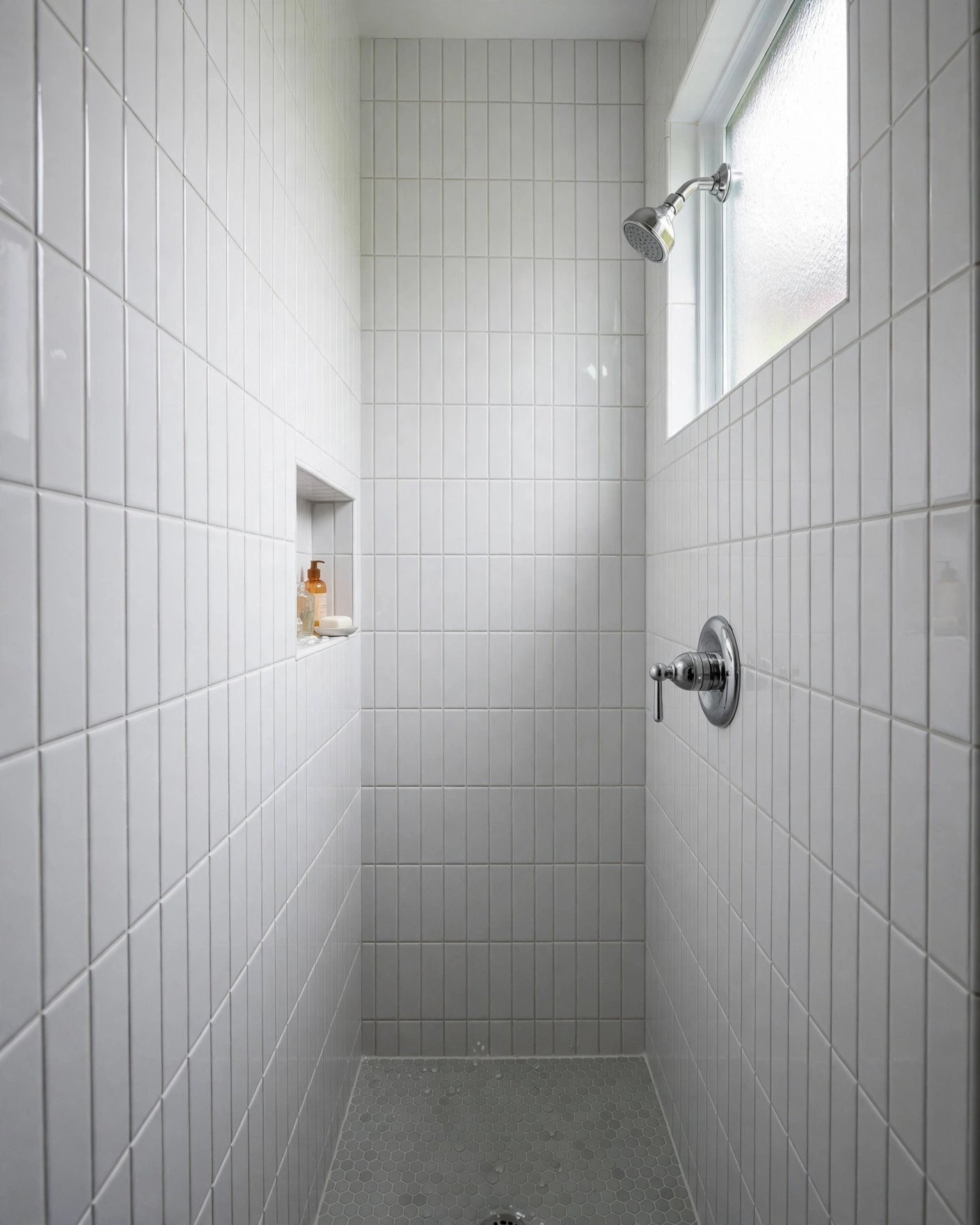
Turning classic subway tile on its end pulls the eye upward and makes a low ceiling feel taller. Use glossy white 3×12 inch tiles with white grout, stacked vertically from floor to ceiling with no border tile to stop the line. Tip: carry the same vertical stack onto the shower’s back wall only, and keep the side walls plain, so the height effect stays focused.
3. Glossy White Tile That Reflects Light
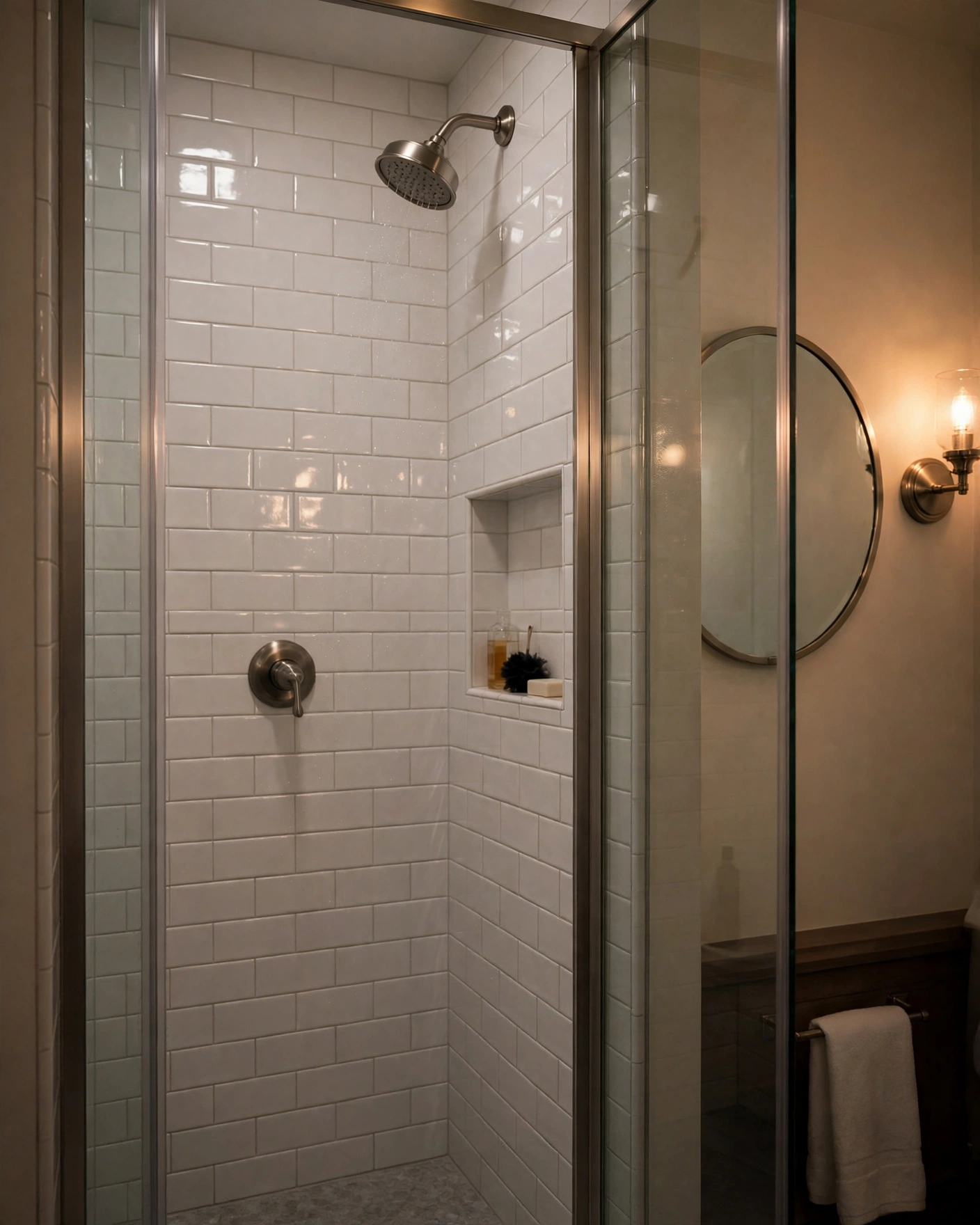
Glossy white tile acts like a mirror for whatever light the room has, doubling brightness in a shower with no window. Pick a 4×12 inch glazed ceramic tile in pure white and pair it with warm lighting so the shine feels soft, not stark. Tip: keep the grout white and sealed, because any discolouration shows up fast on a glossy white surface.
4. Same Tile on Floor and Walls
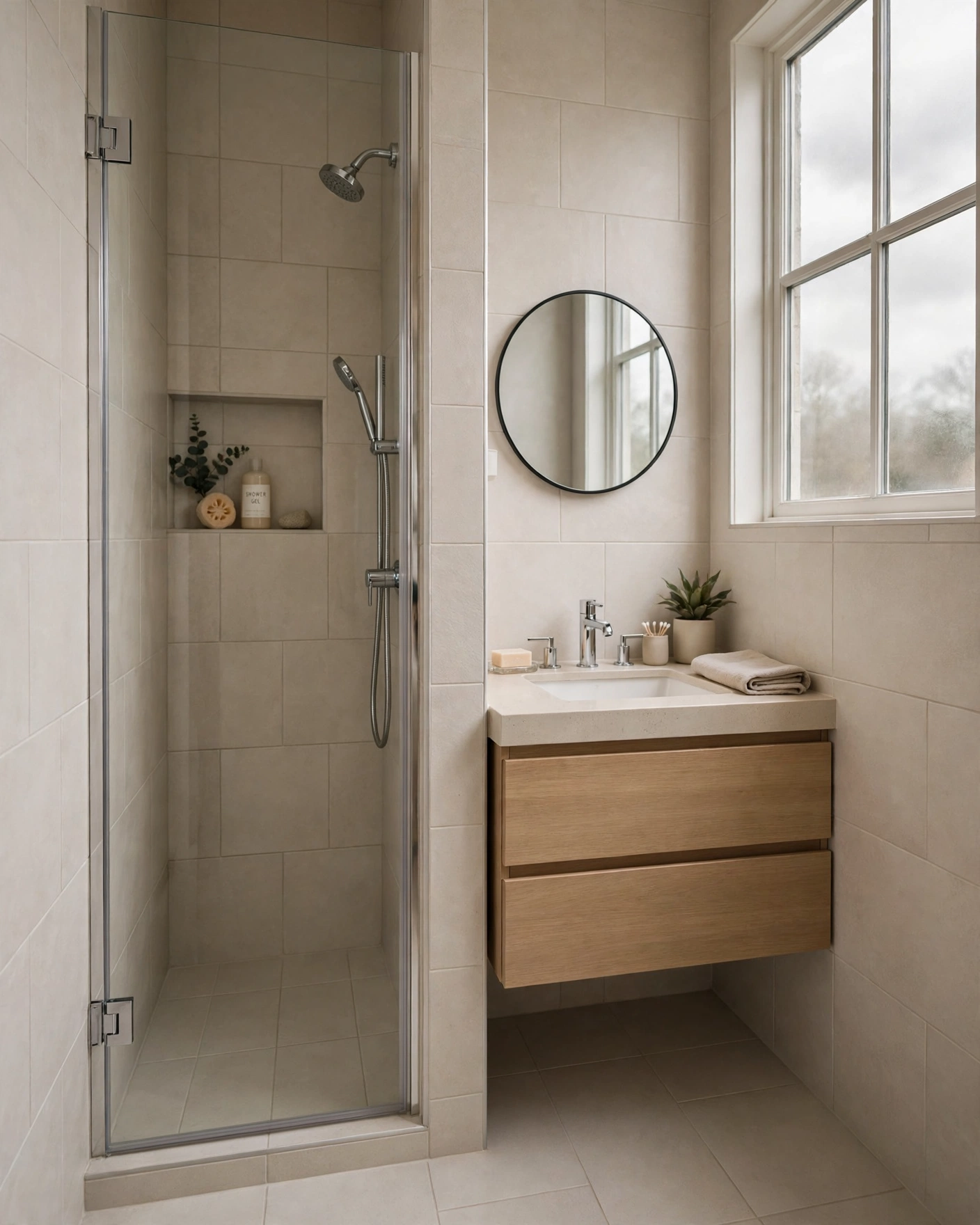
Using one tile on the floor and the walls erases the line where the shower ends and the room begins, which makes the whole space read bigger. Choose a light beige or warm gray matte porcelain in 12×24 inch size, with a matching mosaic version of the same tile for the shower floor so it grips underfoot. Tip: slope the shower floor gently toward the drain and test the mosaic’s grip with wet feet before the grout goes in.
5. Herringbone Accent on the Back Wall
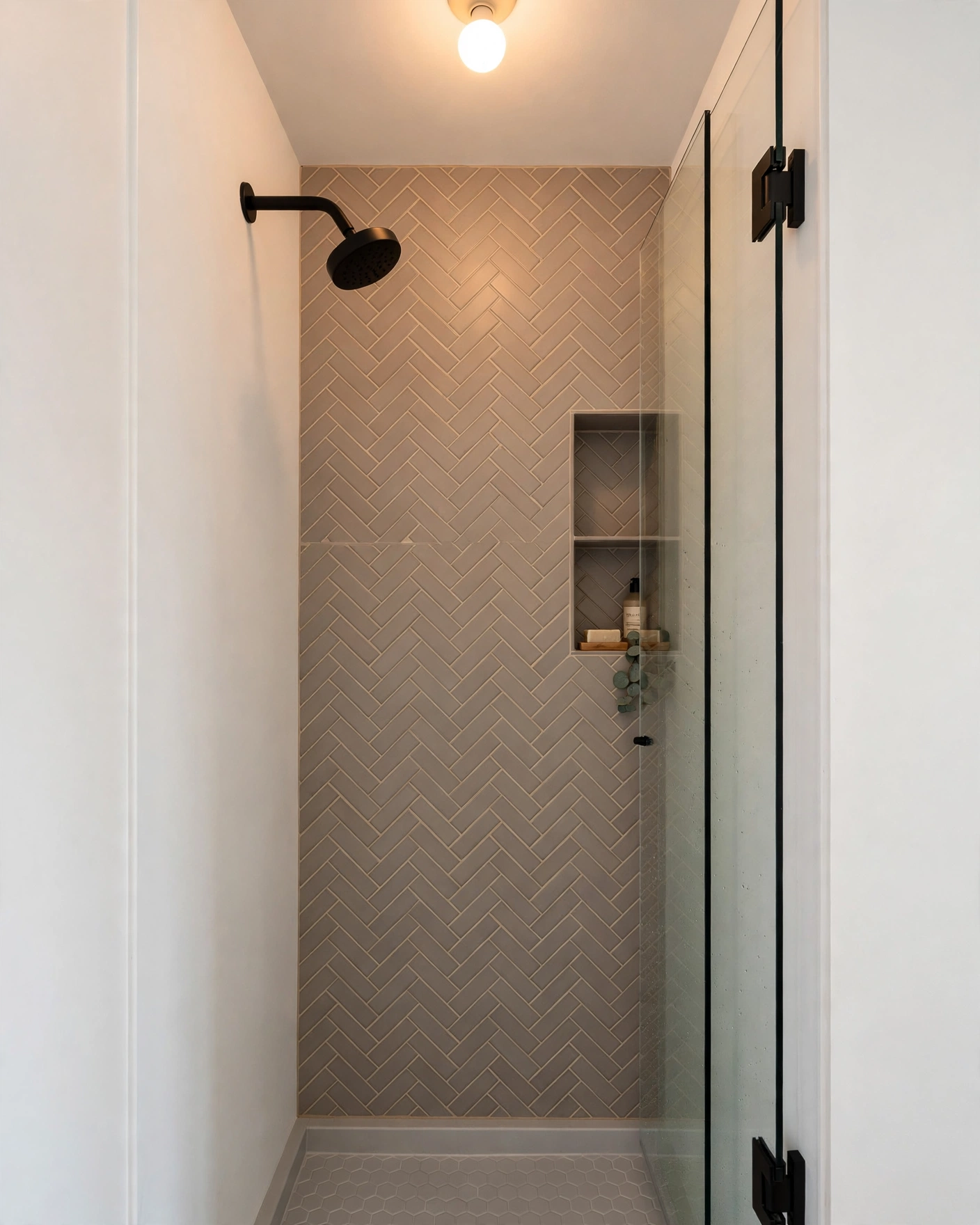
A herringbone pattern on just the back wall adds movement and depth without overwhelming a tiny shower. Use 2×8 inch tiles in a light taupe or soft gray, and keep the side walls in a plain matching tile so the pattern has room to breathe. Tip: have the tiler centre the herringbone on the showerhead wall, so the pattern looks deliberate from the moment you step in.
6. Light Marble-Look Tile With Soft Veining
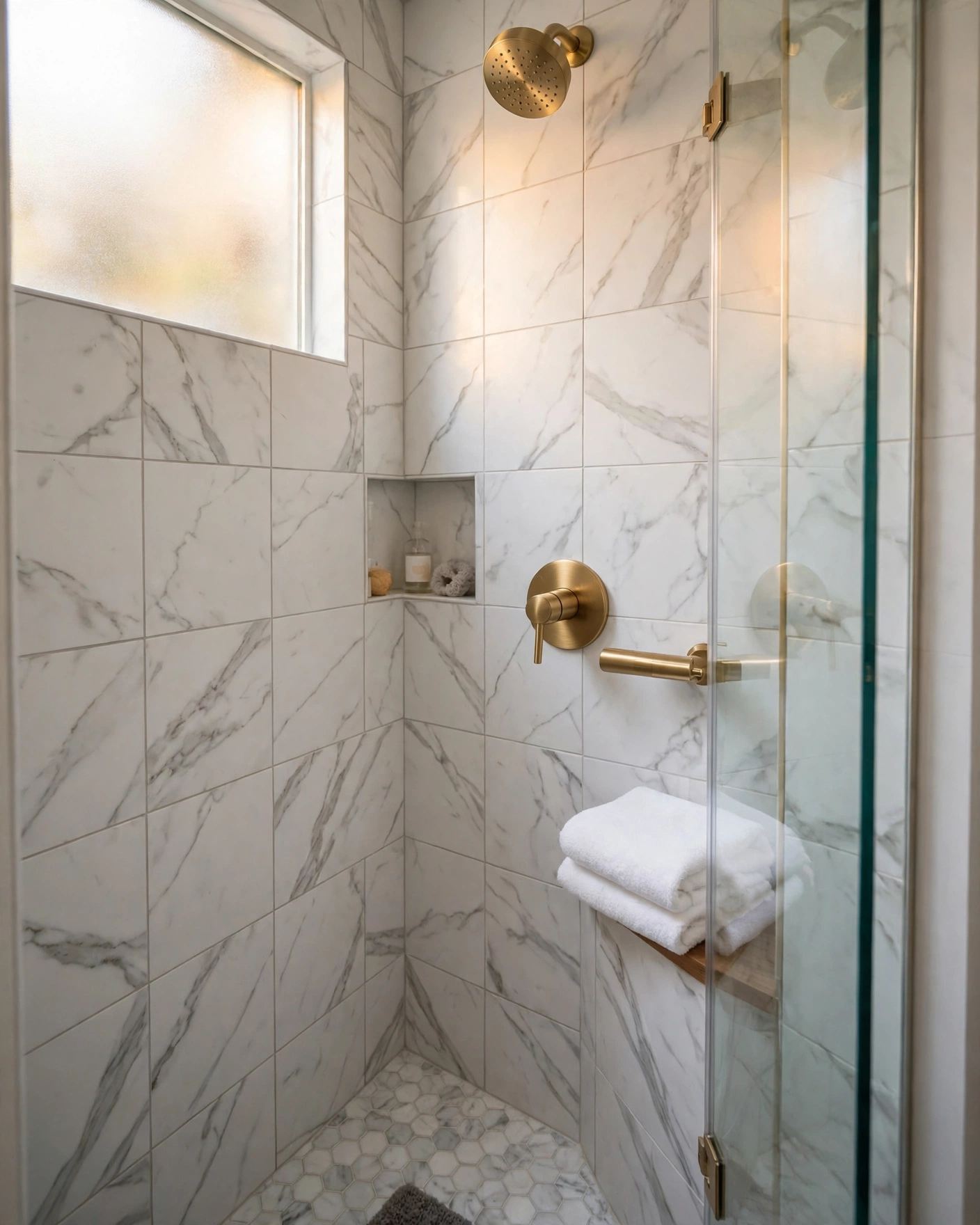
Marble-look porcelain gives a tiny shower a calm, expensive feel for far less than real stone, and the soft veining adds interest without visual clutter. Choose large-format tiles with faint gray veins on a white base, and pair them with brushed gold or chrome fixtures. Tip: book-match the veining on the back wall if you can, so the pattern flows across the grout lines like one slab.
7. Floor-to-Ceiling Tile With No Break
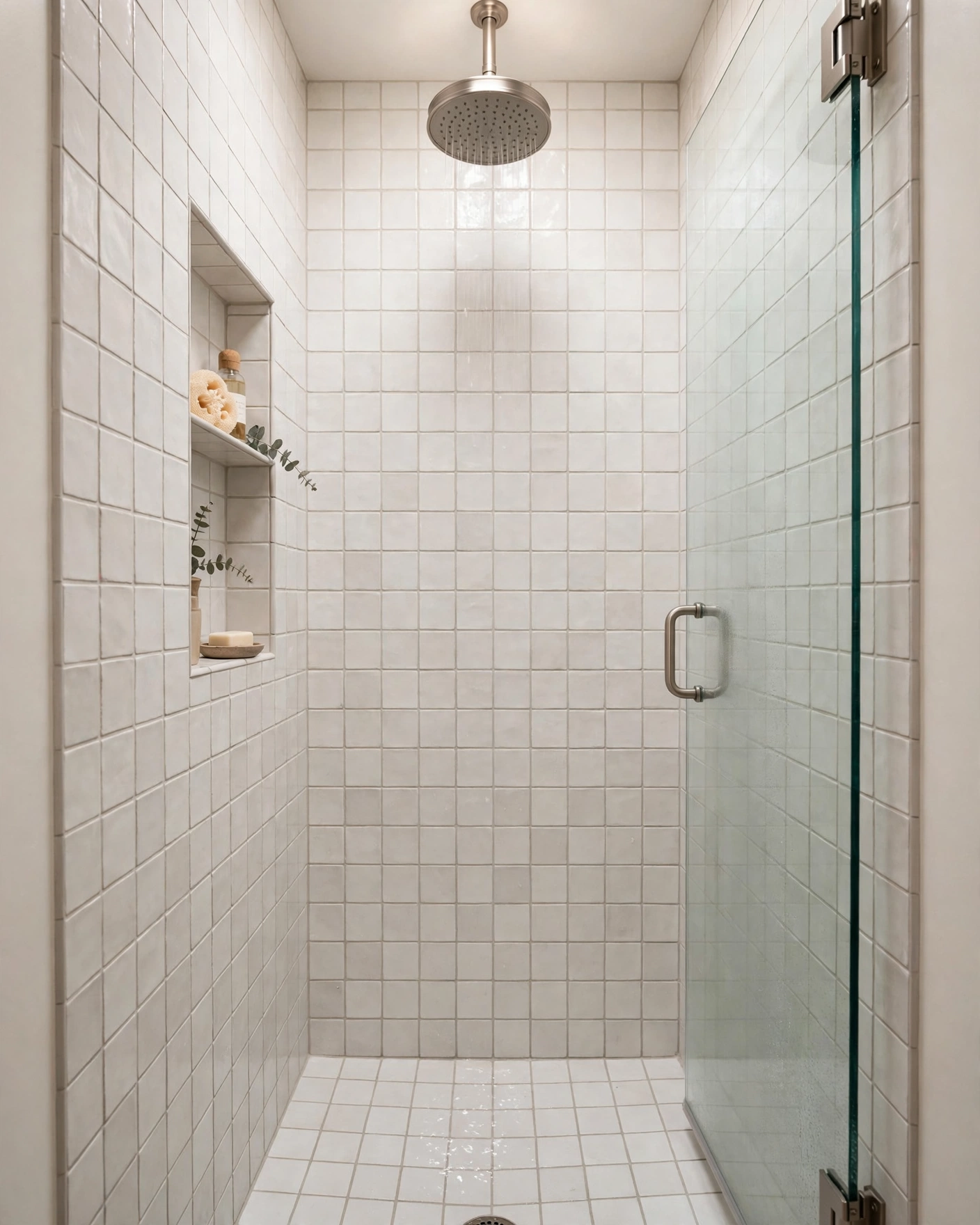
Running tile all the way to the ceiling removes the painted strip that usually caps a shower and visually cuts the height in half. Use a soft white handmade-look 4×4 inch tile with a matching grout, and take it over the ceiling edge only if the ceiling is low enough to reach comfortably. Tip: seal the grout well at the top edge, where steam collects, and choose a grout colour you will not mind seeing every day.
8. Pale Hexagon Floor Tile
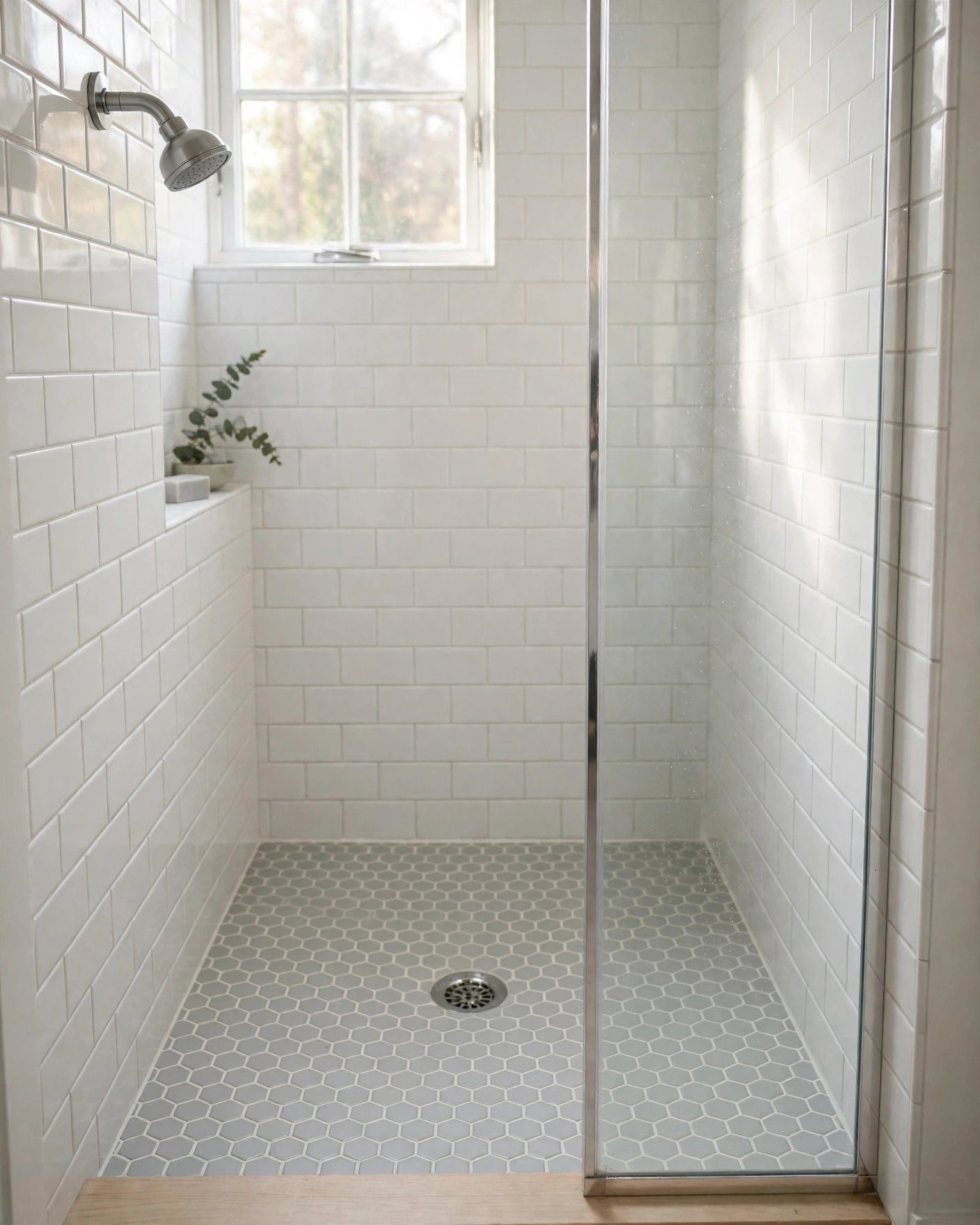
A pale hexagon mosaic on the shower floor adds texture and grip while its small scale makes the floor feel detailed rather than cramped. Use 2 inch hexagon tiles in pale gray with white grout, and keep the walls in a plain white subway tile so the floor becomes the feature. Tip: the many grout lines on a mosaic floor give excellent slip resistance, but seal them twice, since shower floors see the most water.
9. Frameless Glass and Continuous Tile
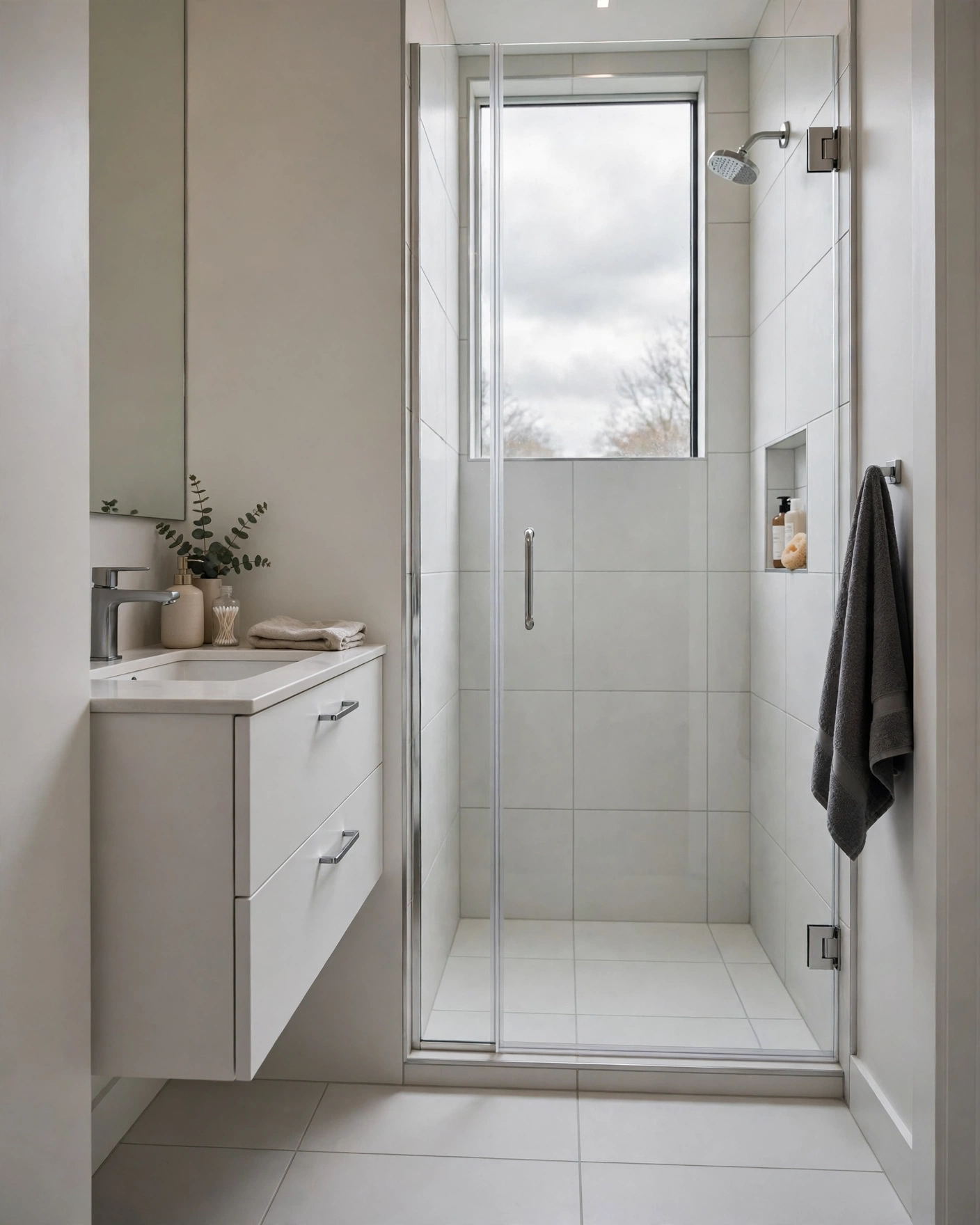
A frameless glass panel lets the eye travel straight through the shower, and running the same tile from the bathroom floor into the shower erases the threshold entirely. Use matte white 12×24 inch tiles throughout, with a linear drain so the floor can stay level. Tip: keep the glass spotless with a daily squeegee, because water marks are the one thing that will make the panel visible again.
10. Soft Sage Green Tile for Calm
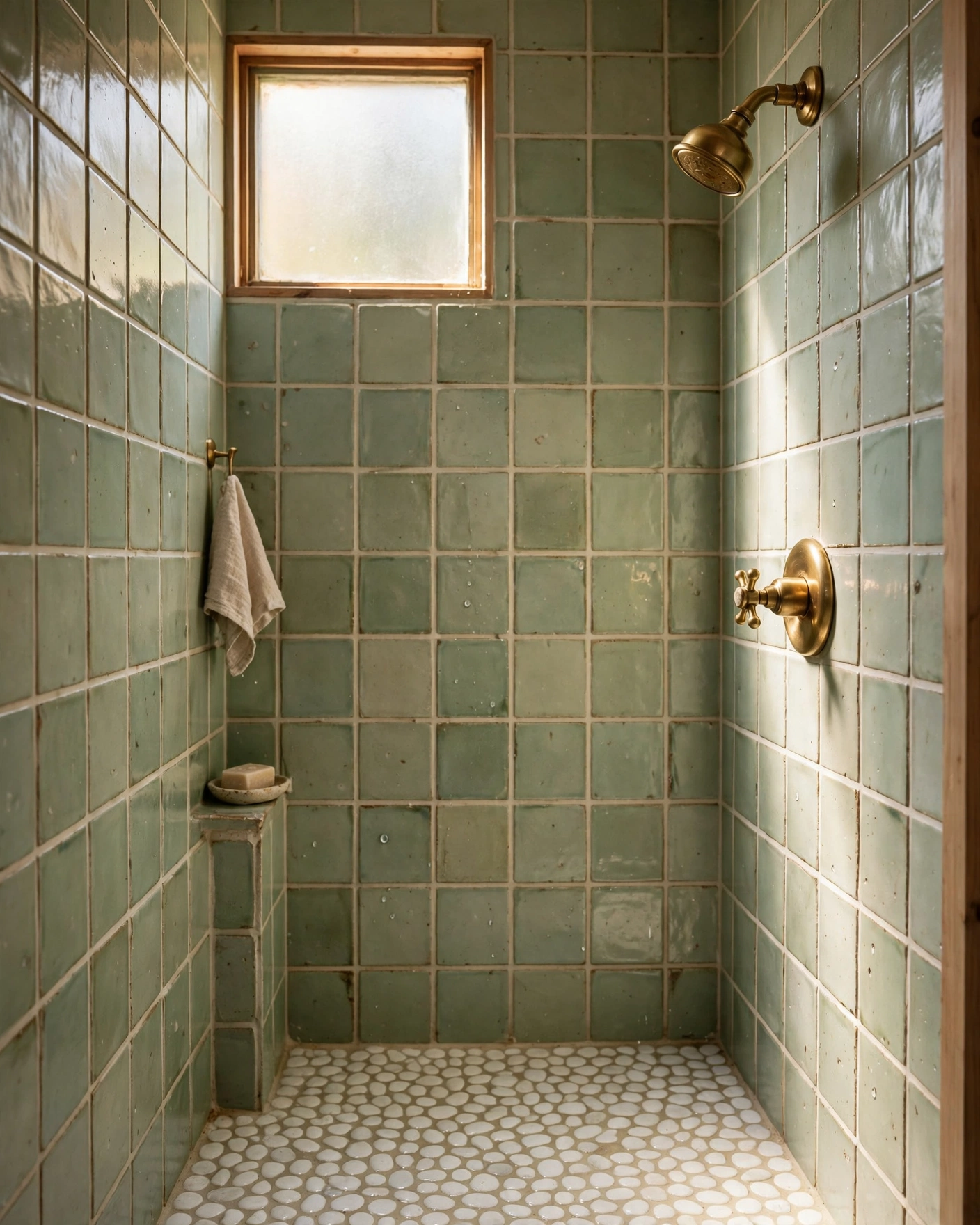
Soft sage green brings a quiet, spa-like calm to a tiny shower without darkening it the way a deep colour would. Use 4×4 inch handmade-look tiles in a muted sage, and warm the space with brass fixtures and a white pebble or plain shower floor. Tip: test a sample tile in your own shower light first, because sage can read gray or mint depending on the bulbs you use.
11. Diagonal Floor Tile to Widen the Space
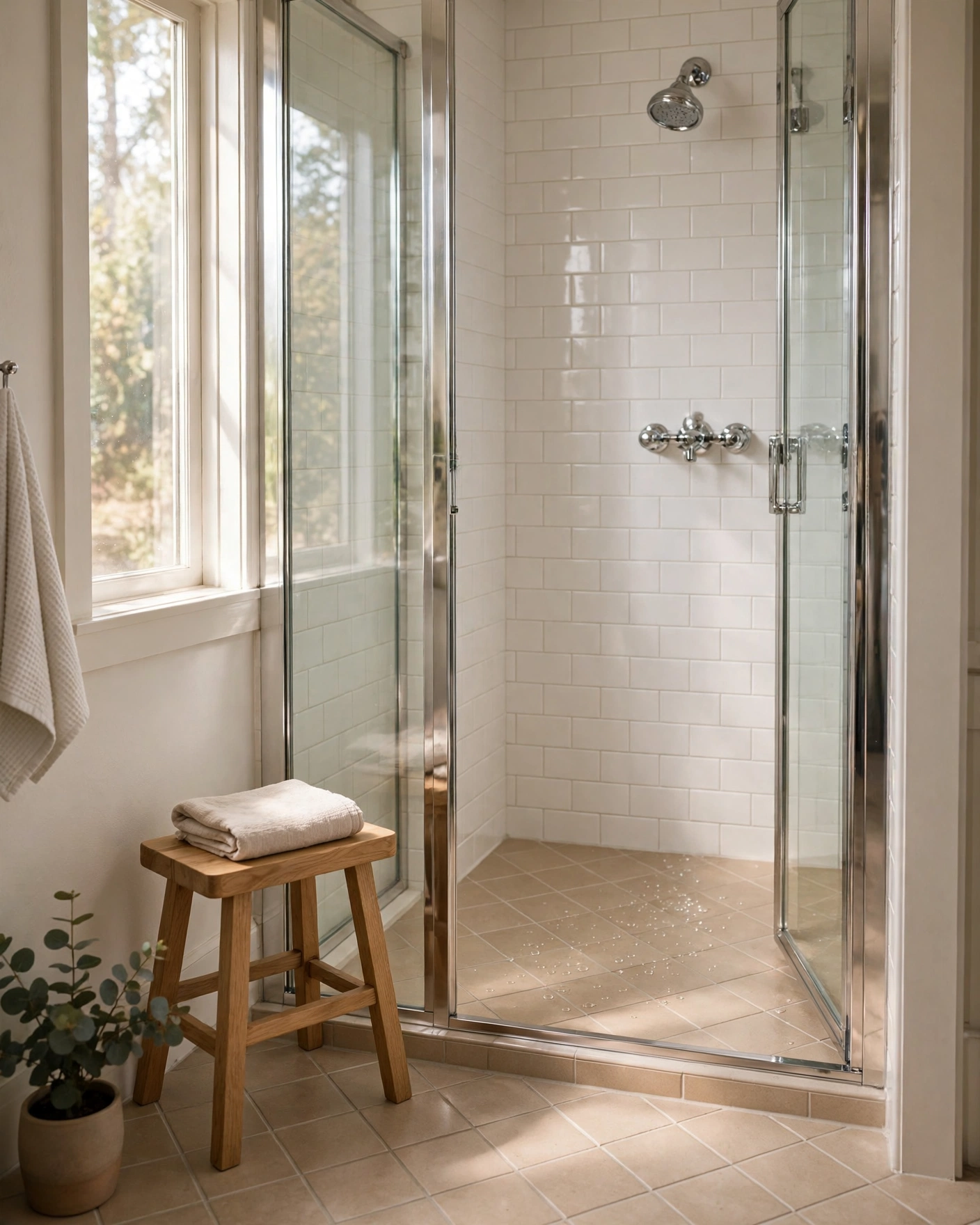
Laying floor tiles on the diagonal tricks the eye into seeing a wider floor, because the longest lines run corner to corner instead of wall to wall. Use 12×24 inch beige porcelain tiles on the diagonal, and keep the wall tiles straight so the floor pattern stands out. Tip: buy about 10 percent extra tile, since diagonal cuts waste more than a straight layout.
12. Niche Tiled in a Contrasting Mosaic
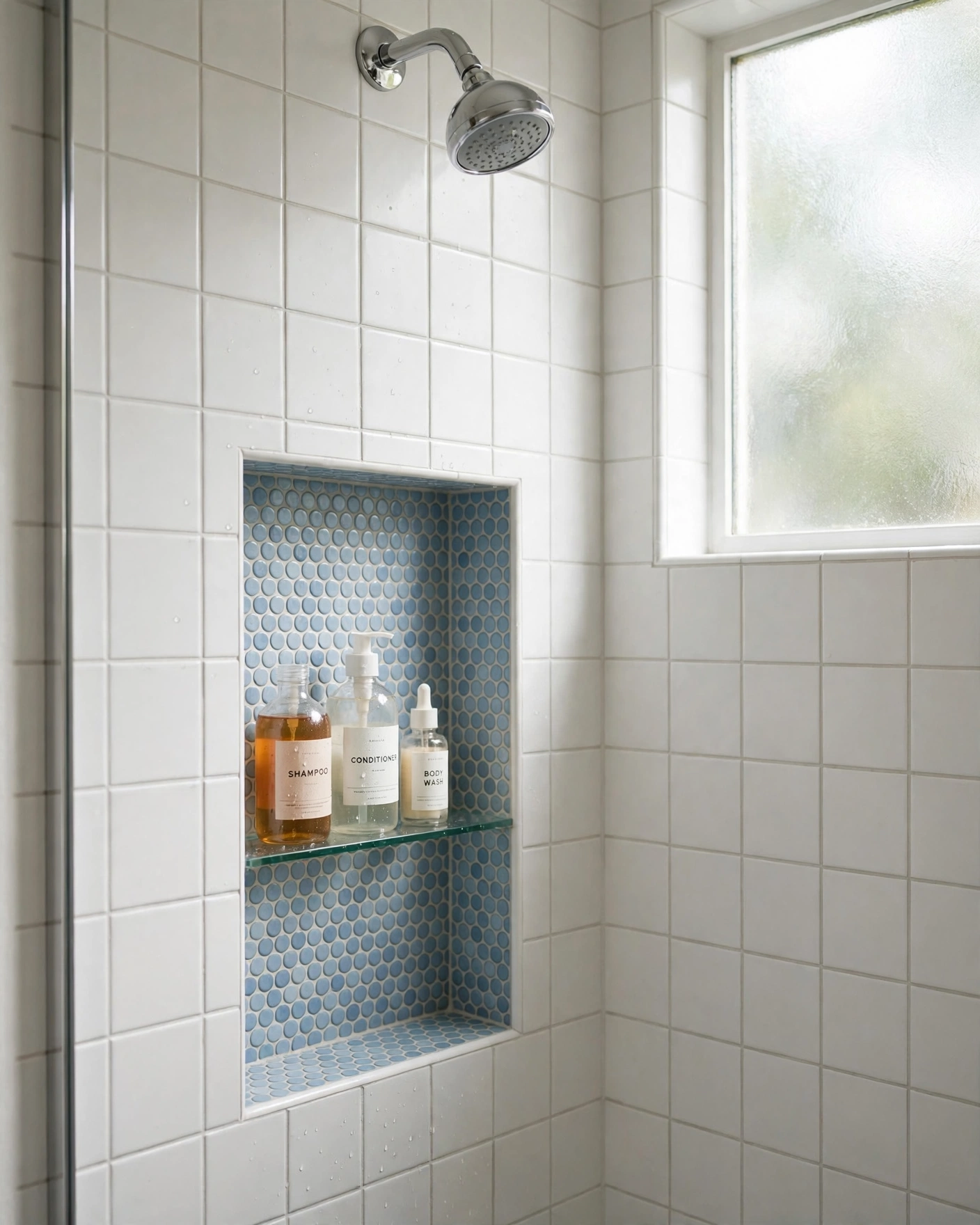
A small recessed niche tiled in a contrasting mosaic gives a tiny shower a focal point and a practical shelf in one move. Use a soft blue or pale green penny round mosaic inside the niche, and keep the surrounding walls plain white so the colour pops. Tip: slope the niche shelf very slightly forward so water drains out instead of pooling behind your bottles.
13. Wood-Look Plank Tile on the Shower Floor
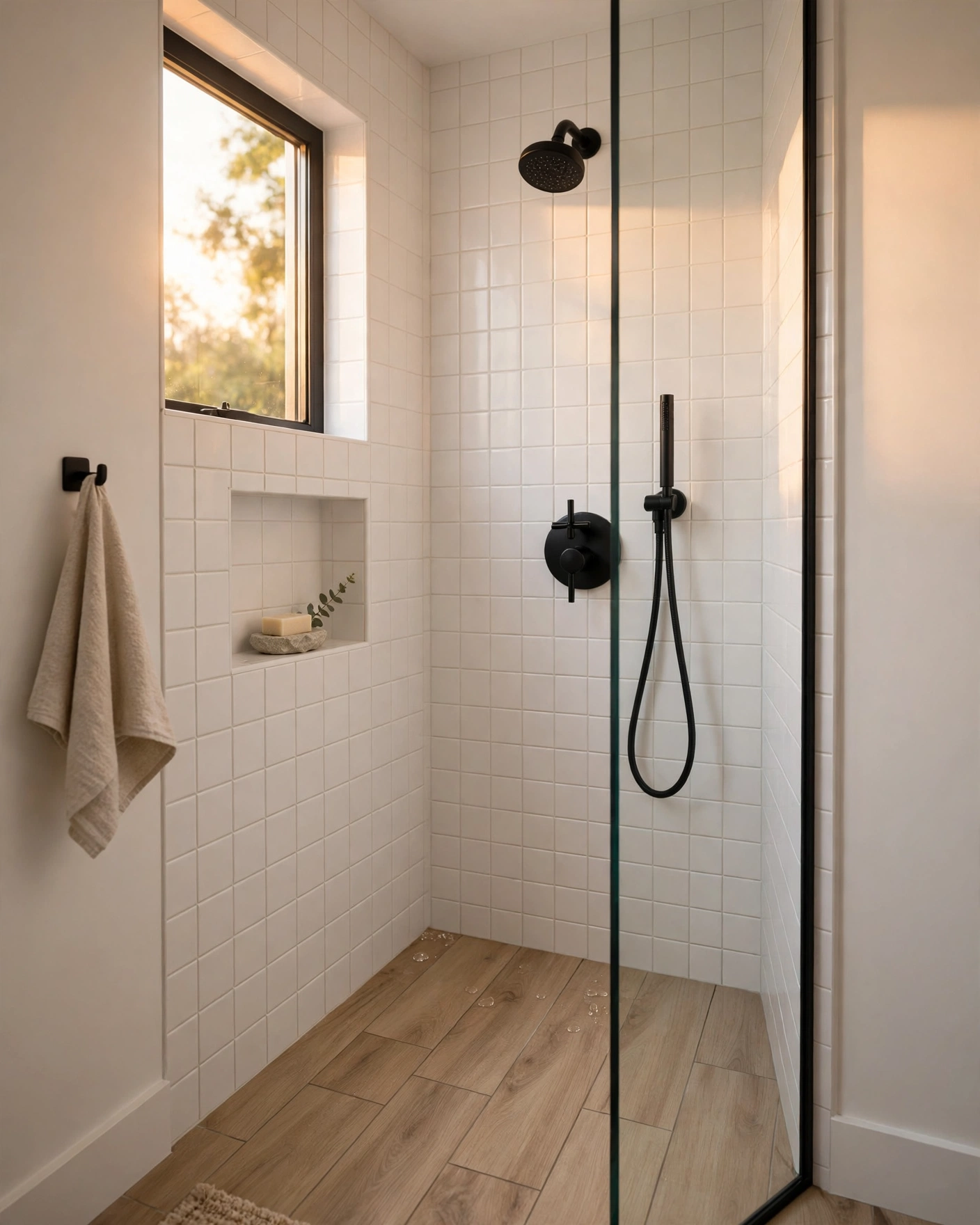
Wood-look porcelain planks warm up a tiny shower without any of real wood’s water worries, and running them lengthwise draws the eye deeper into the space. Use light oak 6×36 inch planks on the shower floor with a matching mosaic cut for grip, and pair them with plain white wall tiles. Tip: choose planks with a textured, slip-rated finish, since smooth wood-look tile gets slick when wet.
14. Tone-on-Tone Grout That Disappears
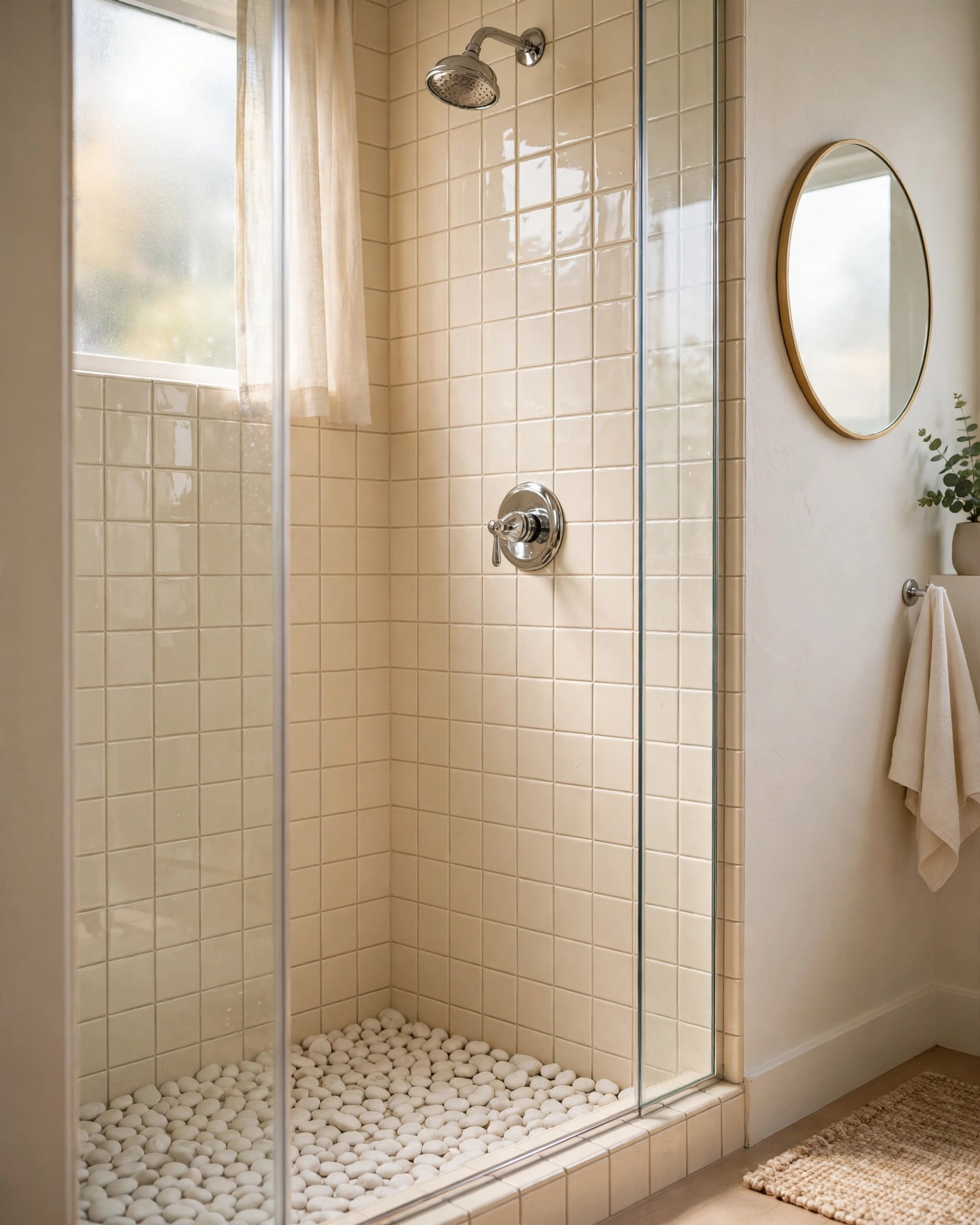
Matching the grout to the tile colour dissolves the grid that usually chops a small shower into squares. Use cream or pale gray 4×4 inch glossy tiles with grout mixed to the same tone, and let the tile’s sheen do the talking instead of the lines. Tip: take a grout sample card home and compare it against the tile in daylight, because grout dries a shade lighter than it looks wet.
15. One Patterned Feature Wall
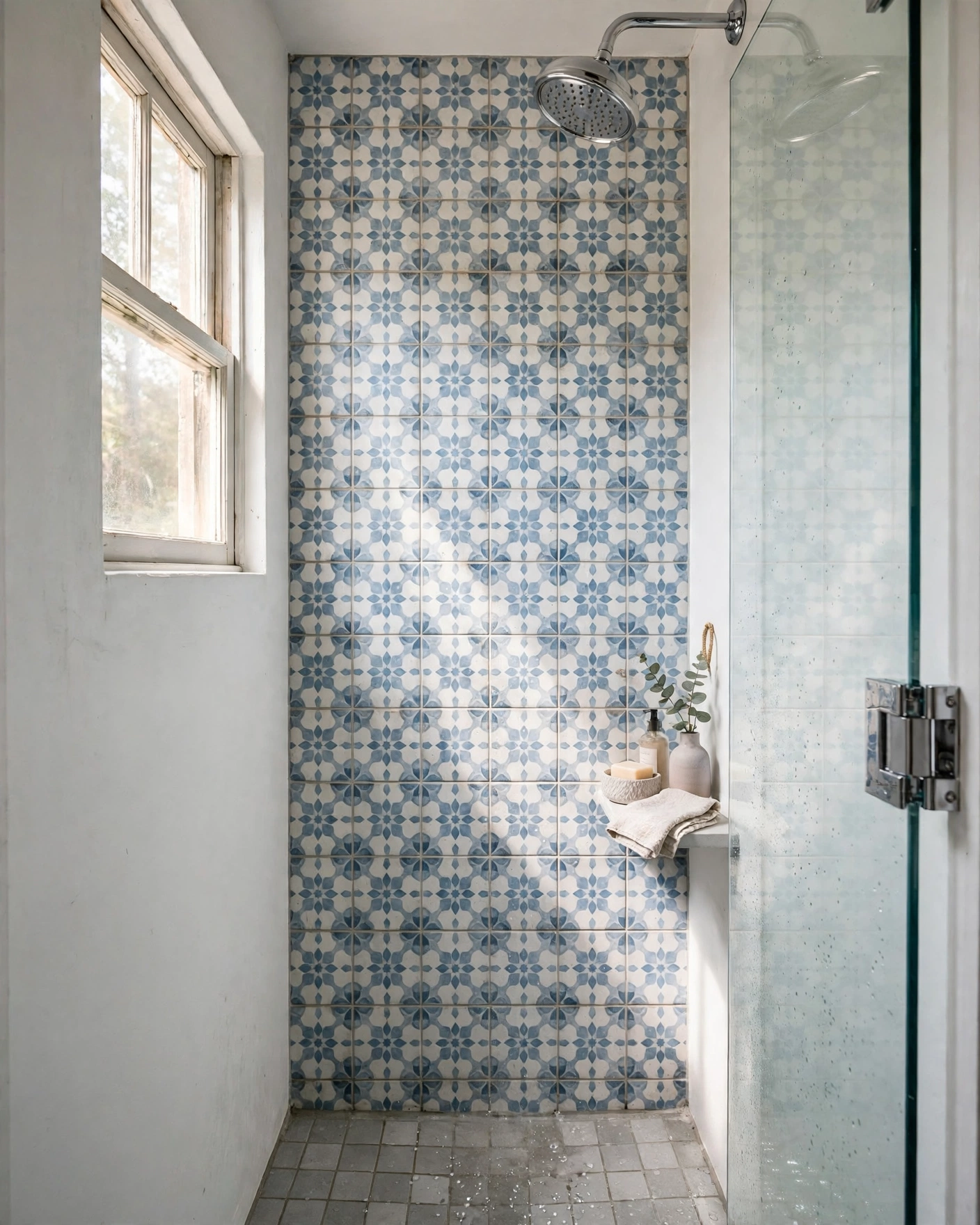
One patterned wall gives a tiny shower personality and depth, while the plain walls around it keep the space feeling open. Use 8×8 inch cement-look tiles in a soft blue and white pattern on the back wall only, with plain white tiles everywhere else. Tip: order one extra box of the patterned tile, because a single chipped piece in the middle of the feature wall is far harder to replace later.
In Summary
A tiny shower does not need to feel cramped — it needs tile that works with the space instead of against it. Large formats and matching grout quiet the visual noise, glossy finishes and light colours borrow every bit of available light, and one continuous surface from floor to wall makes the room read as a whole.
Start with the idea that fixes your shower’s biggest problem, whether that is height, light, or a floor that feels too small. Get the materials right, follow the tip for that idea, and the smallest shower in the house can end up feeling like the calmest room in it.
Leave a Reply