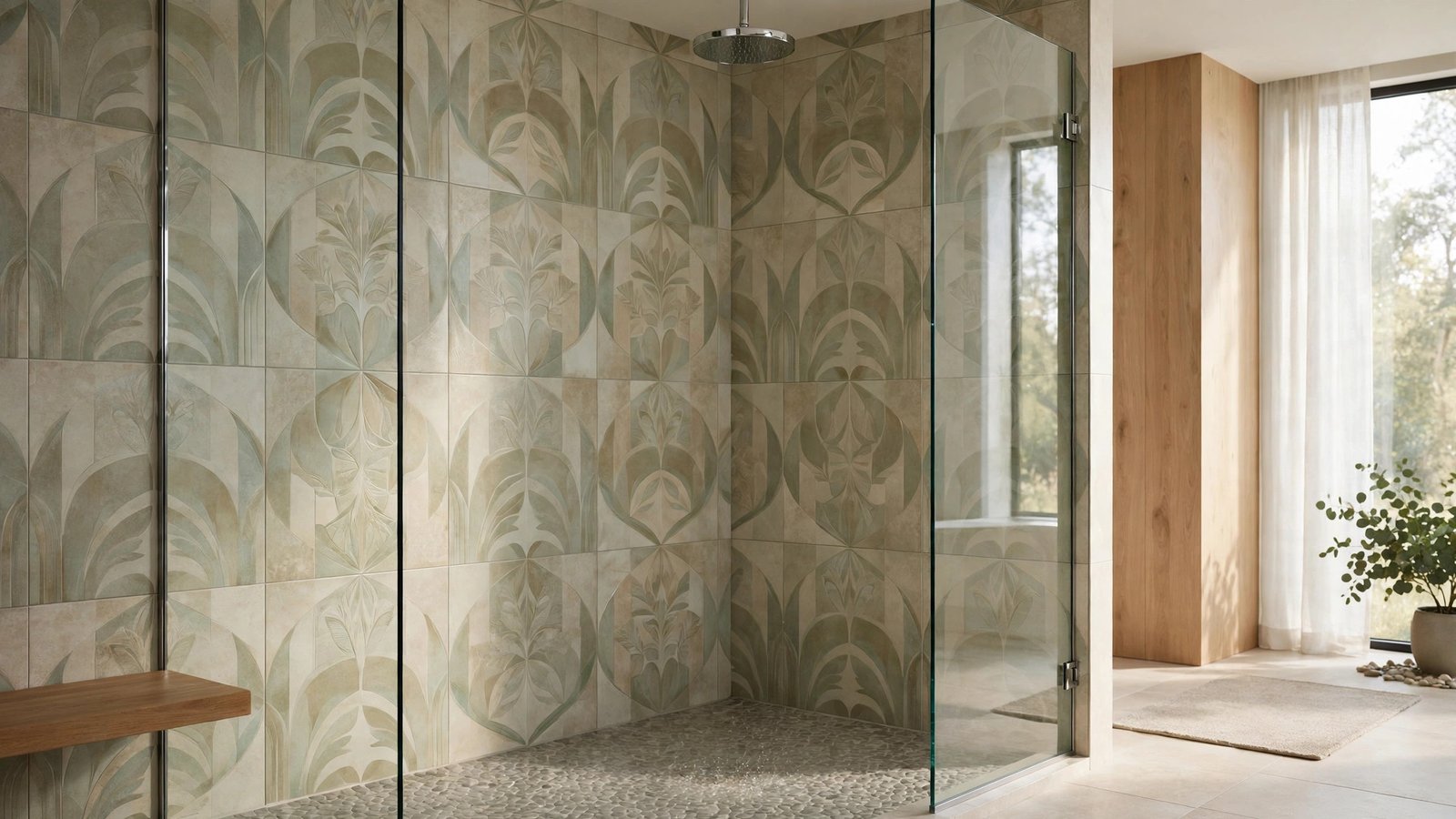
Open the shower door in most bathrooms and you meet the same tired builder-grade tile, chosen to offend nobody and excite nobody. Yet the shower walls are the largest tiled surface in the room, and you look at them up close every single day. Changing them changes everything.
The good news is that shower wall tile is a style decision and a practical one at the same time. Glossy surfaces bounce light into a dark stall, large formats mean fewer grout lines to scrub, and one well-chosen accent wall can make a standard tub-shower feel like a boutique hotel.
Here are 21 shower wall tile ideas worth copying, each with the materials to look for, how to recreate the look in a real bathroom, and a practical tip on budget, cleaning or layout.
1. Classic White Subway in a Brick Pattern
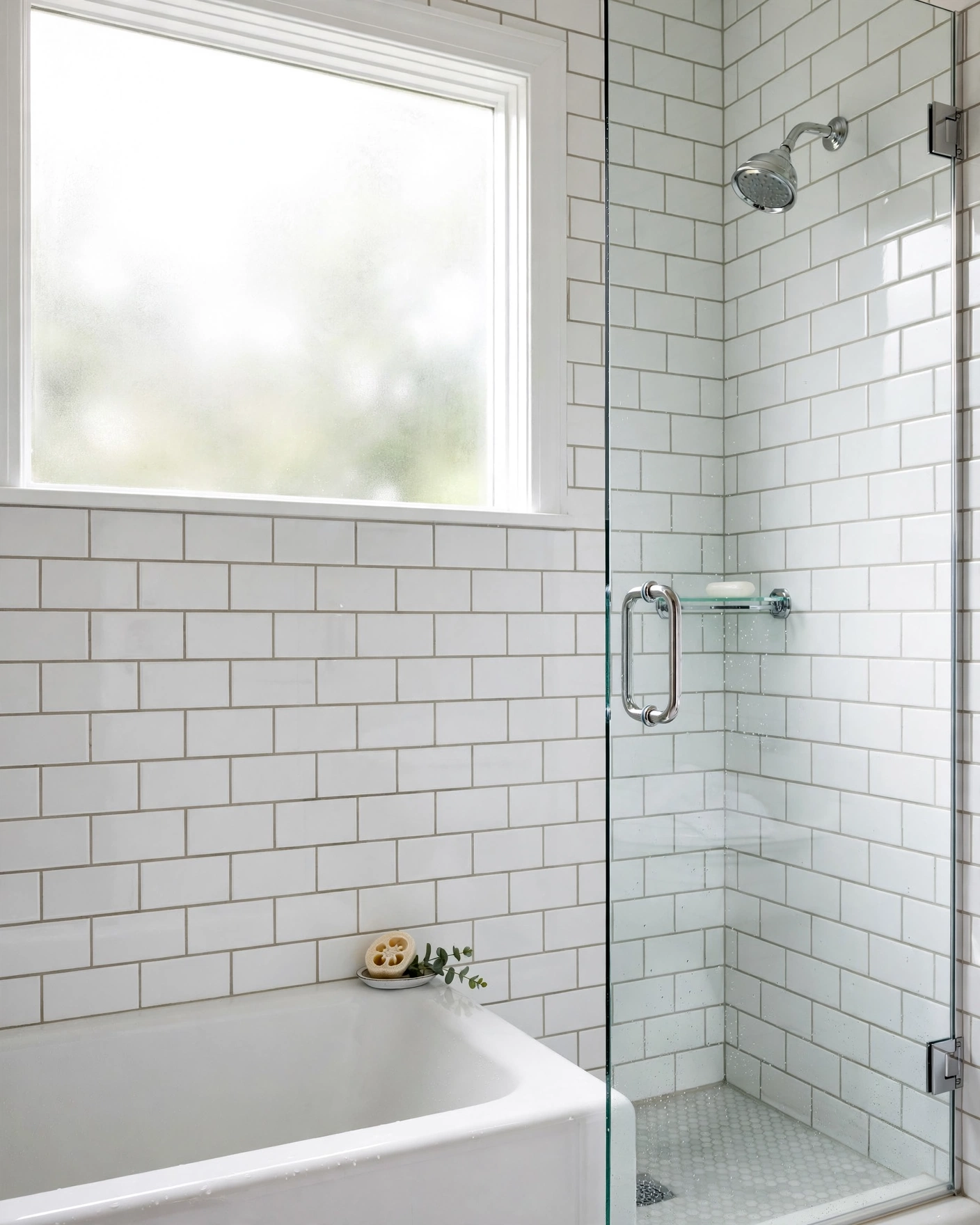
You cannot go wrong with 3×6 inch glossy white subway tile in a running bond brick pattern and light gray grout. It suits every home style, reflects light into the stall, and costs less per square foot than almost anything else on this list. Recreate it by tiling all three shower walls to the ceiling and finishing the edges with white pencil trim. Practical tip: spend the small upgrade on epoxy or high-performance grout in the shower; it resists mildew far better than standard grout.
2. Vertical Stacked Subway for Height
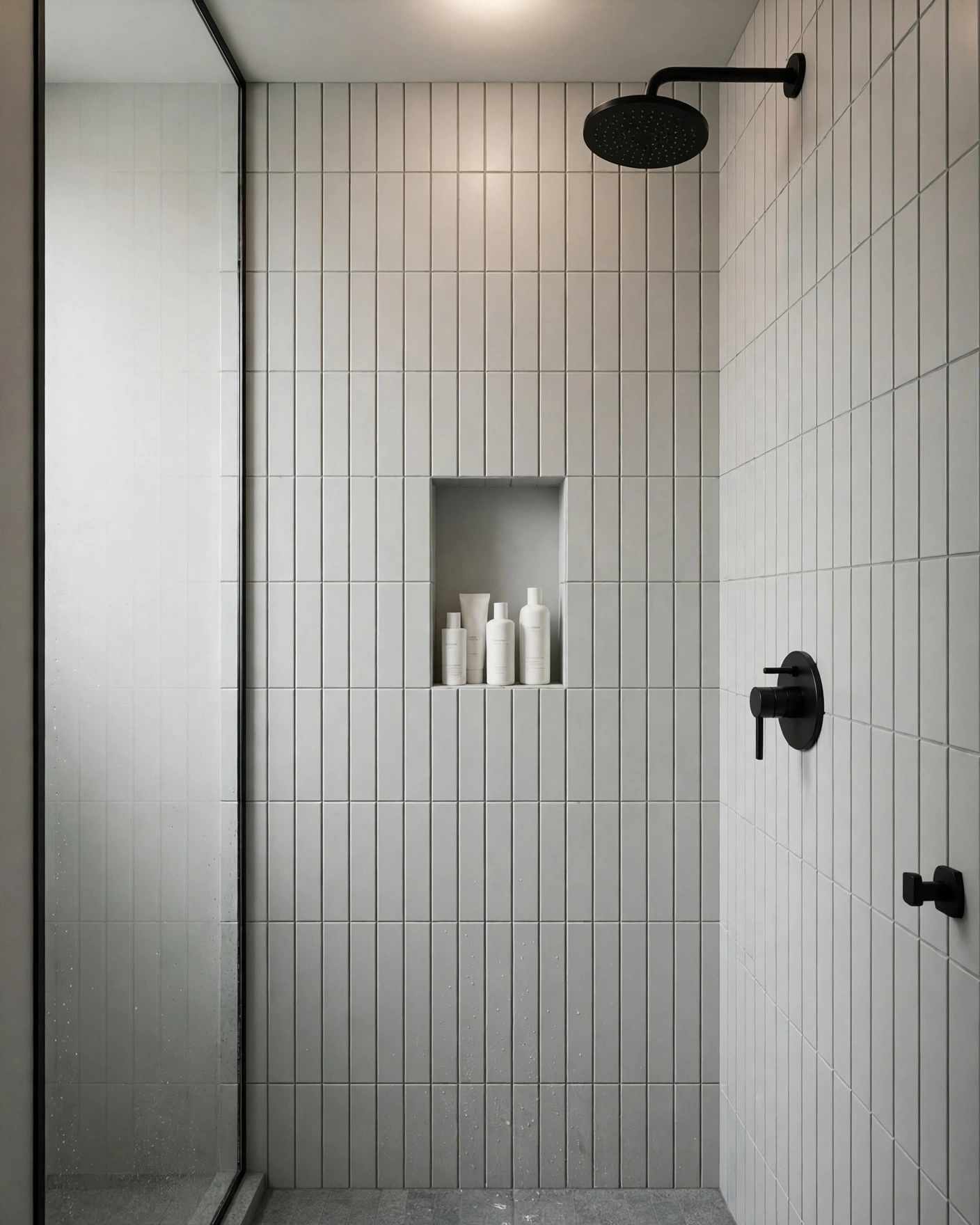
Take the same affordable subway tile and stack it vertically in straight columns, and a low-ceilinged shower immediately feels taller and more contemporary. Use a 3×12 inch format in pale gray or warm white to stretch the effect, and align the grout lines perfectly for that crisp architectural look. Matte black fixtures add just enough contrast. Practical tip: vertical stacks forgive nothing, so have your installer use leveling clips and check the first row with a laser level.
3. Large-Format Marble-Look Porcelain
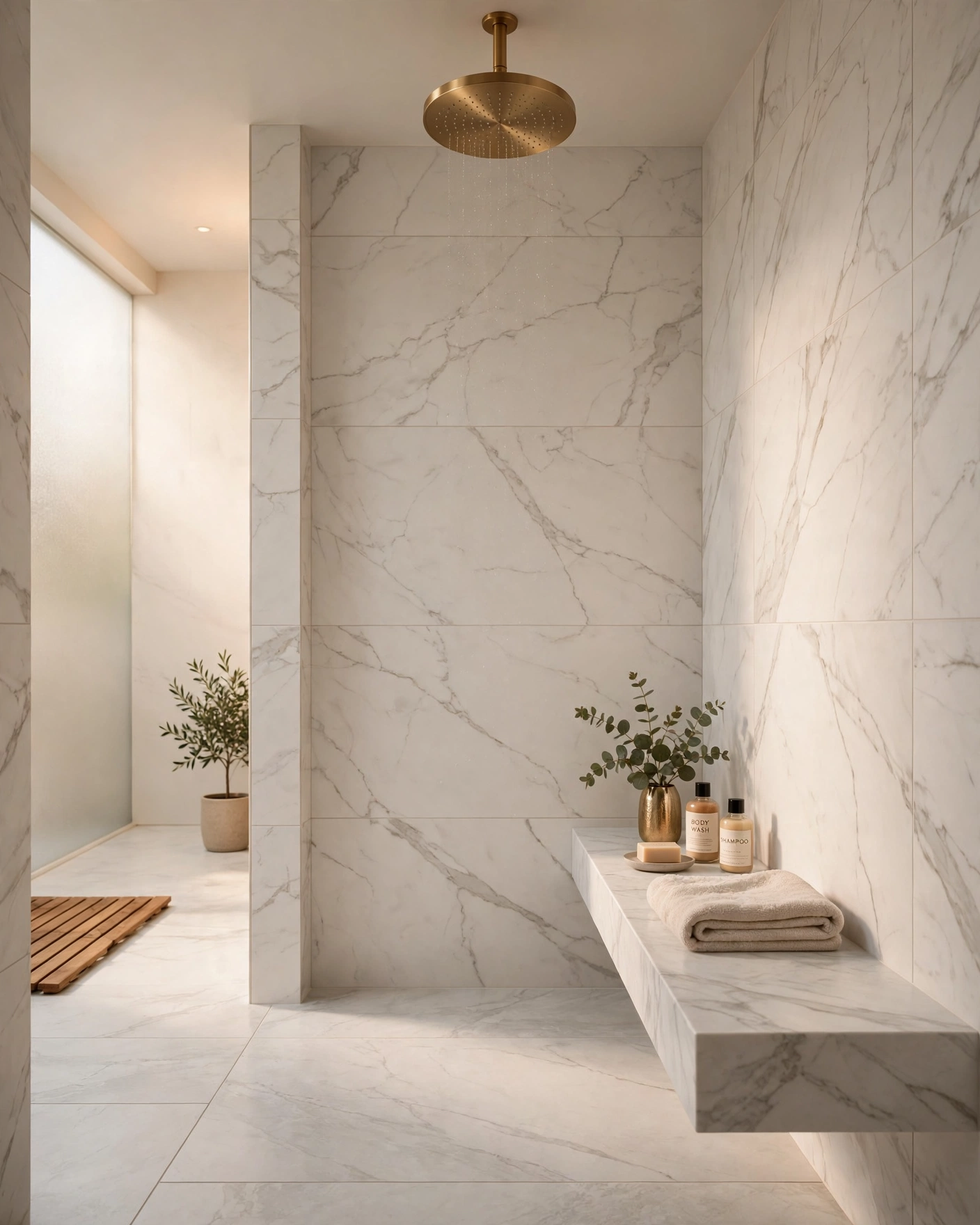
Cover the shower walls in 24×48 inch marble-look porcelain with soft gray and gold veining, and you get the calm of a stone spa with almost no grout to maintain. Book-match or simply align the veining across the back wall for the biggest impact, and carry the same tile onto a built-in bench. Porcelain never needs sealing, unlike real marble, and it shrugs off shampoo dyes and hard water. Practical tip: large tiles need flat walls and a skilled setter, so this is the one idea worth hiring out rather than DIY-ing.
4. Sage Green Zellige Handmade-Look Tile
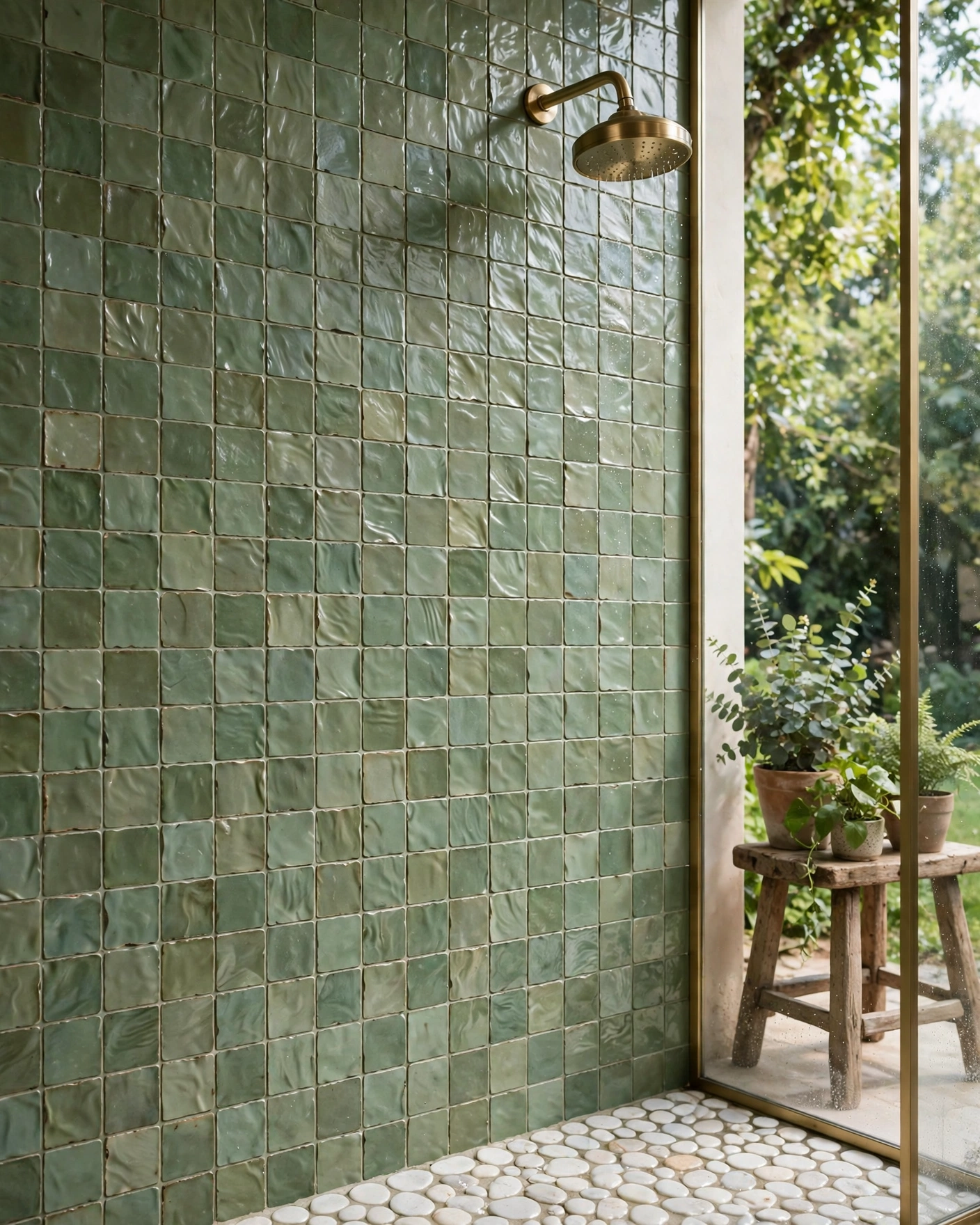
Sage green zellige or zellige-look tiles turn a plain shower into the calmest corner of the house, because every tile catches light a little differently and the wall seems to ripple like water. Lay 4×4 inch squares with tight joints and let the color variation do the decorating; brass or brushed nickel fixtures both work beautifully. Keep the shower floor pale and simple so the green stays the focus. Practical tip: zellige-look porcelain gives the same handmade surface for less money and arrives in consistent thickness, which speeds up installation.
5. Herringbone Accent Wall
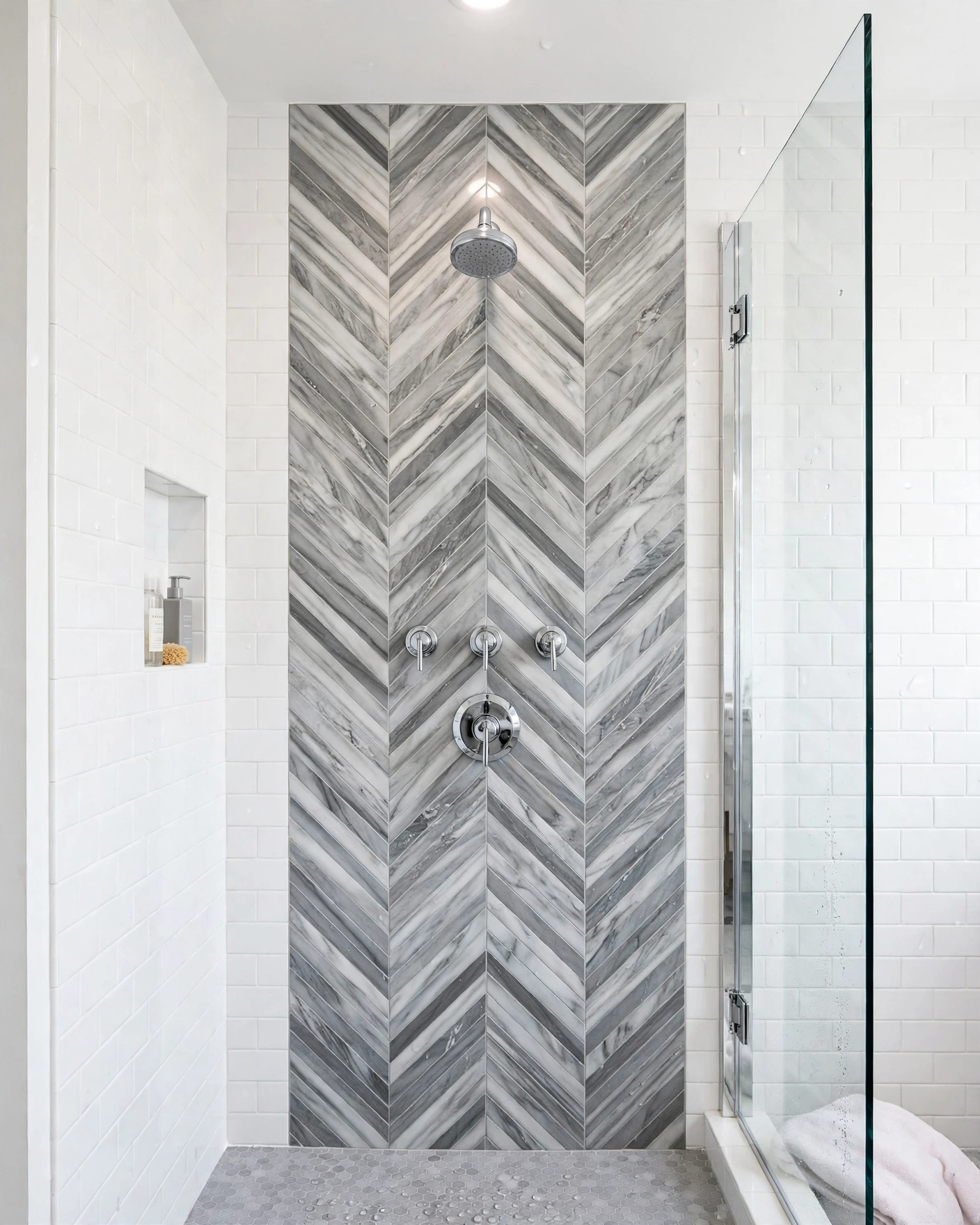
Keep the side walls in a simple large white tile and give the back wall a herringbone layout in gray marble or marble-look 2×6 inch pieces. The zigzag becomes a piece of art behind the showerhead and makes a standard alcove shower look custom designed. Border the herringbone field with a slim metal or pencil trim so the pattern edges look finished. Practical tip: herringbone uses about 10 to 15 percent more tile and labor; confining it to one wall keeps both numbers friendly.
6. Matte Black Hexagon Mosaic
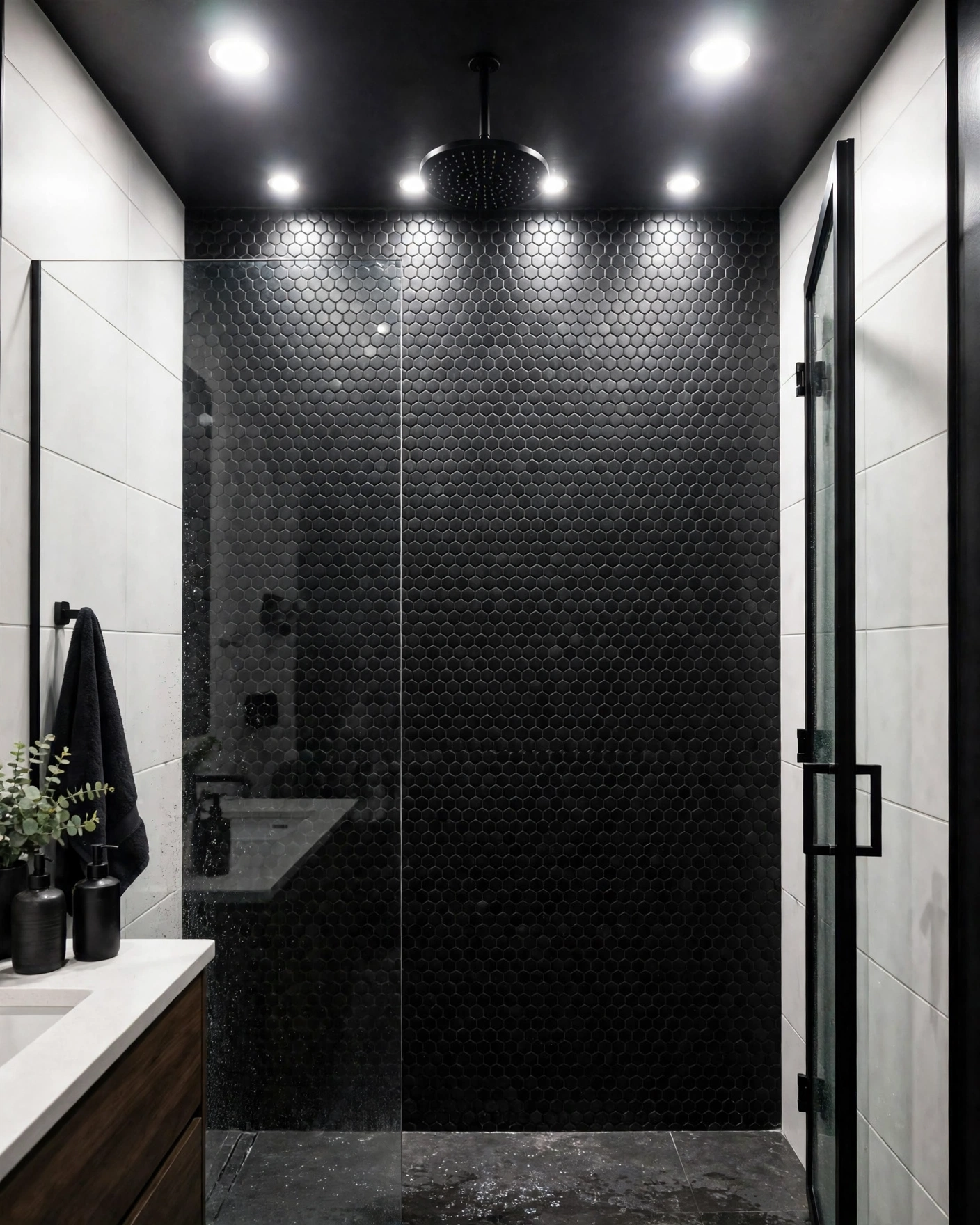
For a shower with real drama, mosaic the back wall in matte black 2 inch hexagons and grout them in dark gray so the pattern reads as texture rather than noise. Pair the dark wall with white large-format side walls and black fixtures for a sharp, tailored contrast that suits modern and industrial homes. The small hexes also handle curved or uneven walls better than big tiles. Practical tip: black tile reveals soap and limescale quickly, so plan on a quick squeegee habit and choose a matte glaze rated for wet walls.
7. Floor-to-Ceiling Glossy Ceramic
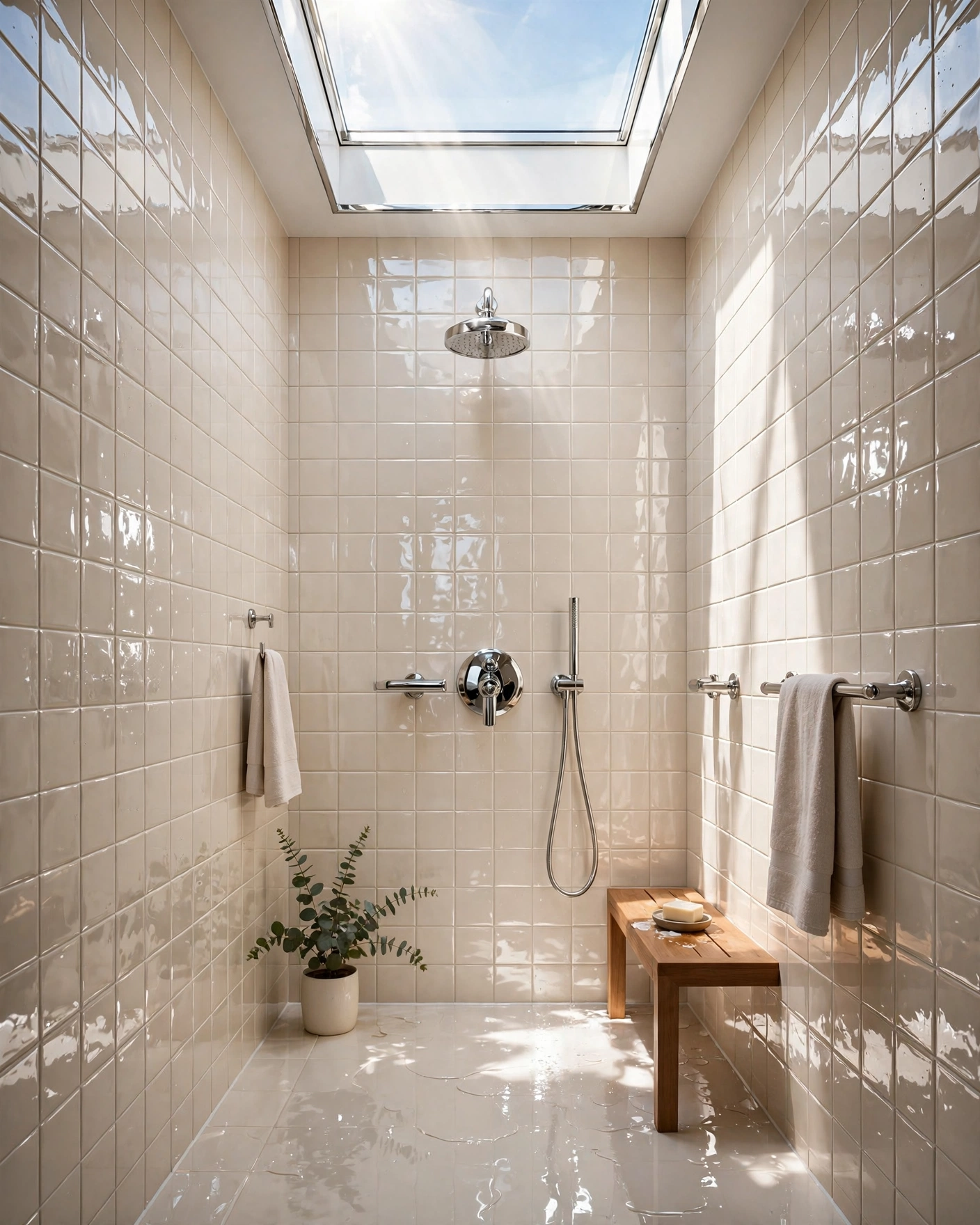
The simplest luxury move is taking one glossy ceramic tile, in warm white or the palest gray, from the shower floor line all the way to the ceiling on every wall. Stopping tile at a random height makes ceilings feel lower; running it full height makes the whole stall feel taller, brighter and more finished. Gloss reflects both natural and artificial light, which is gold in a windowless bath. Practical tip: if you are retiling anyway, full height usually adds only a few extra boxes of tile to the order.
8. Natural Pebble Tile Walls
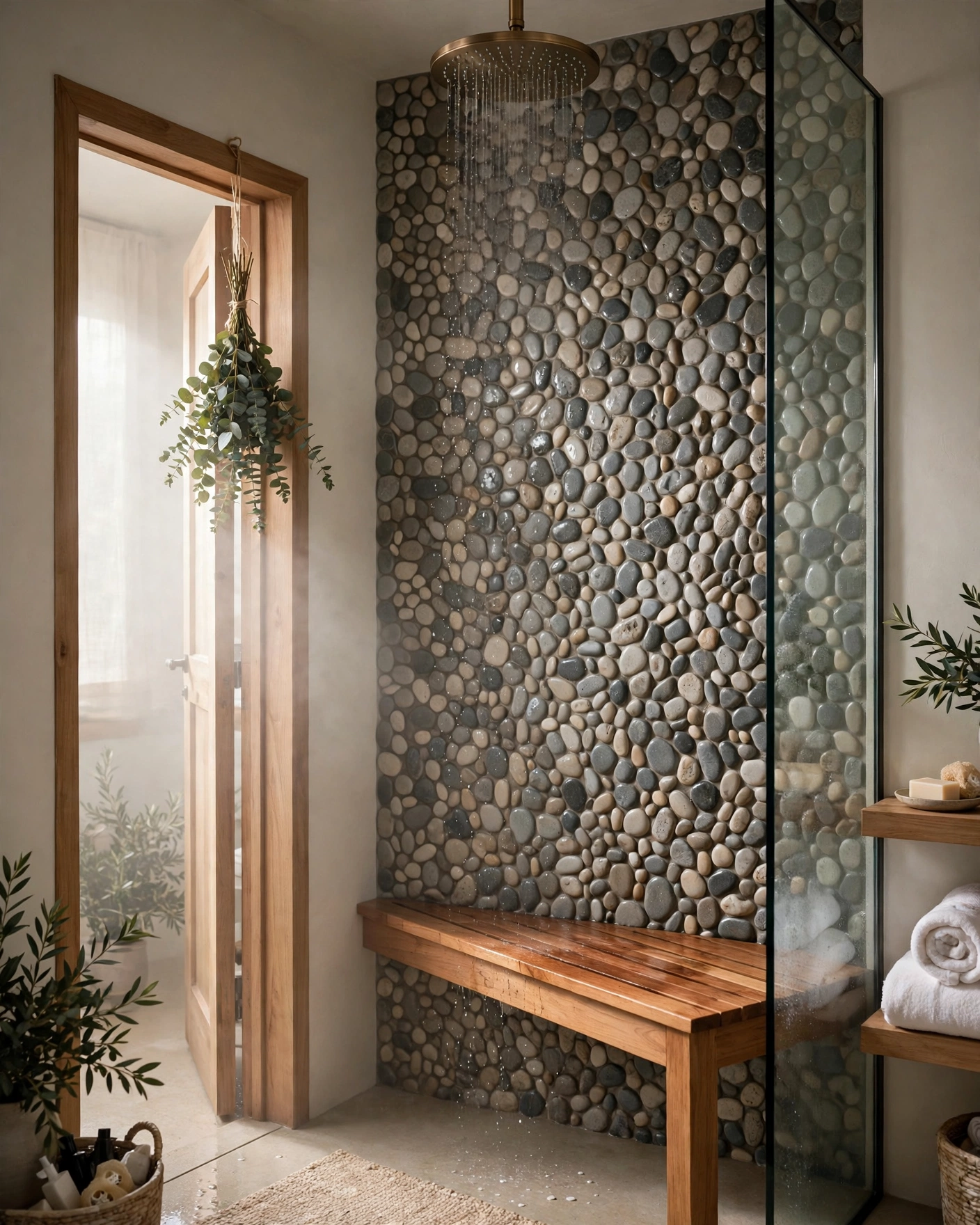
Bring the spa home by covering the back shower wall in sliced pebble tile in mixed gray, beige and taupe stones. The organic texture feels wonderful in a steamy room and pairs naturally with a rain showerhead, teak bench and plain large tiles on the other walls. Sliced pebbles sit flat, so they are comfortable and easy to grout compared with rounded stones. Practical tip: pebble walls need generous grout and a good sealer; plan to reseal once a year to keep the stones rich and dark.
9. Deep Blue Glossy Tile with Brass
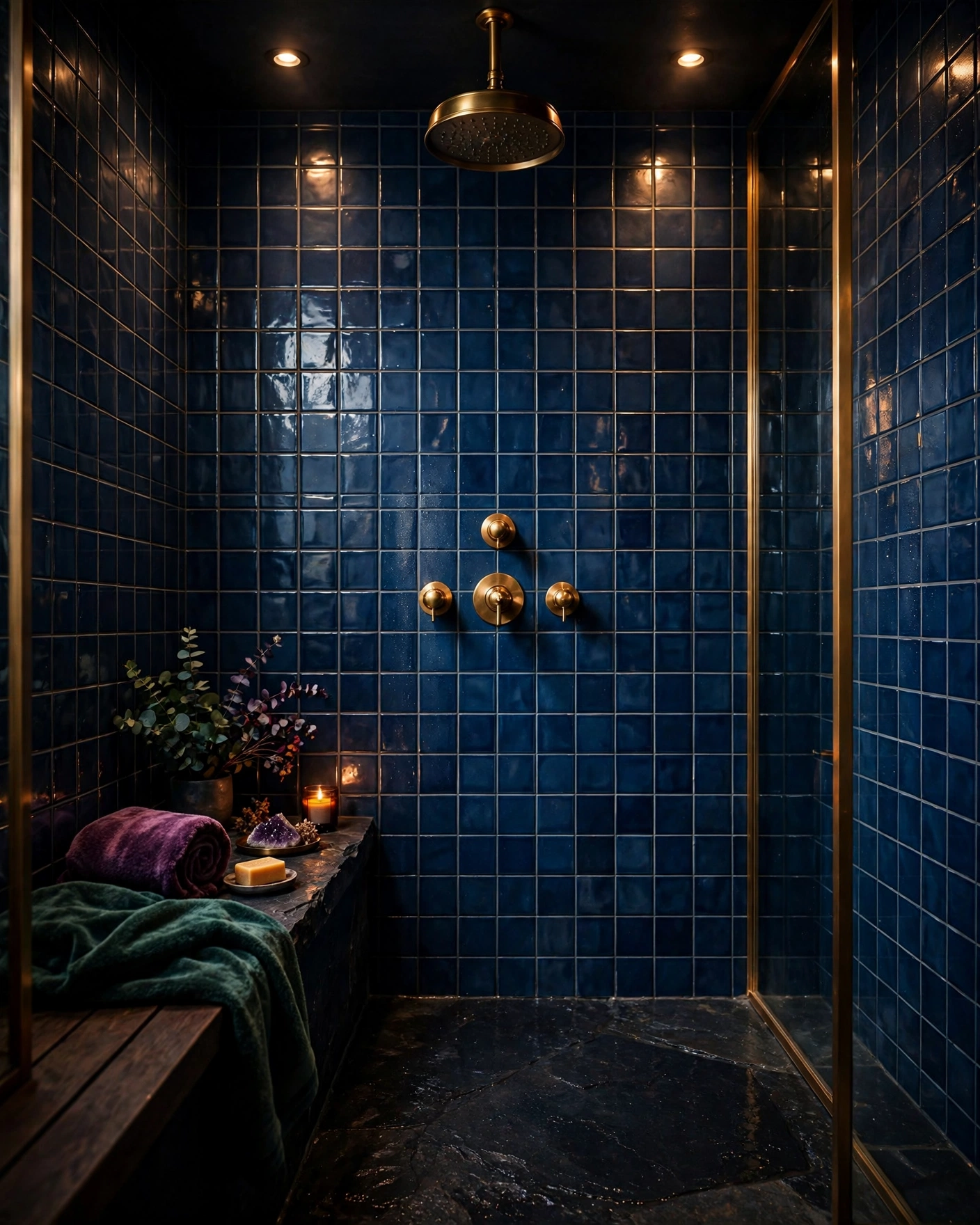
Deep blue glossy tile, in a 4×4 or 5×5 inch square, turns an ordinary shower into a jewel box, especially when you warm it with brushed brass fixtures and a dark stone floor. The saturated color hides water marks well and feels different every time the light changes. Keep the ceiling and the wall outside the shower pale so the blue reads as a deliberate moment. Practical tip: order all the blue tile from one dye lot and mix boxes while tiling, because saturated glazes can shift shade between batches.
10. Soft Gray Chevron Pattern
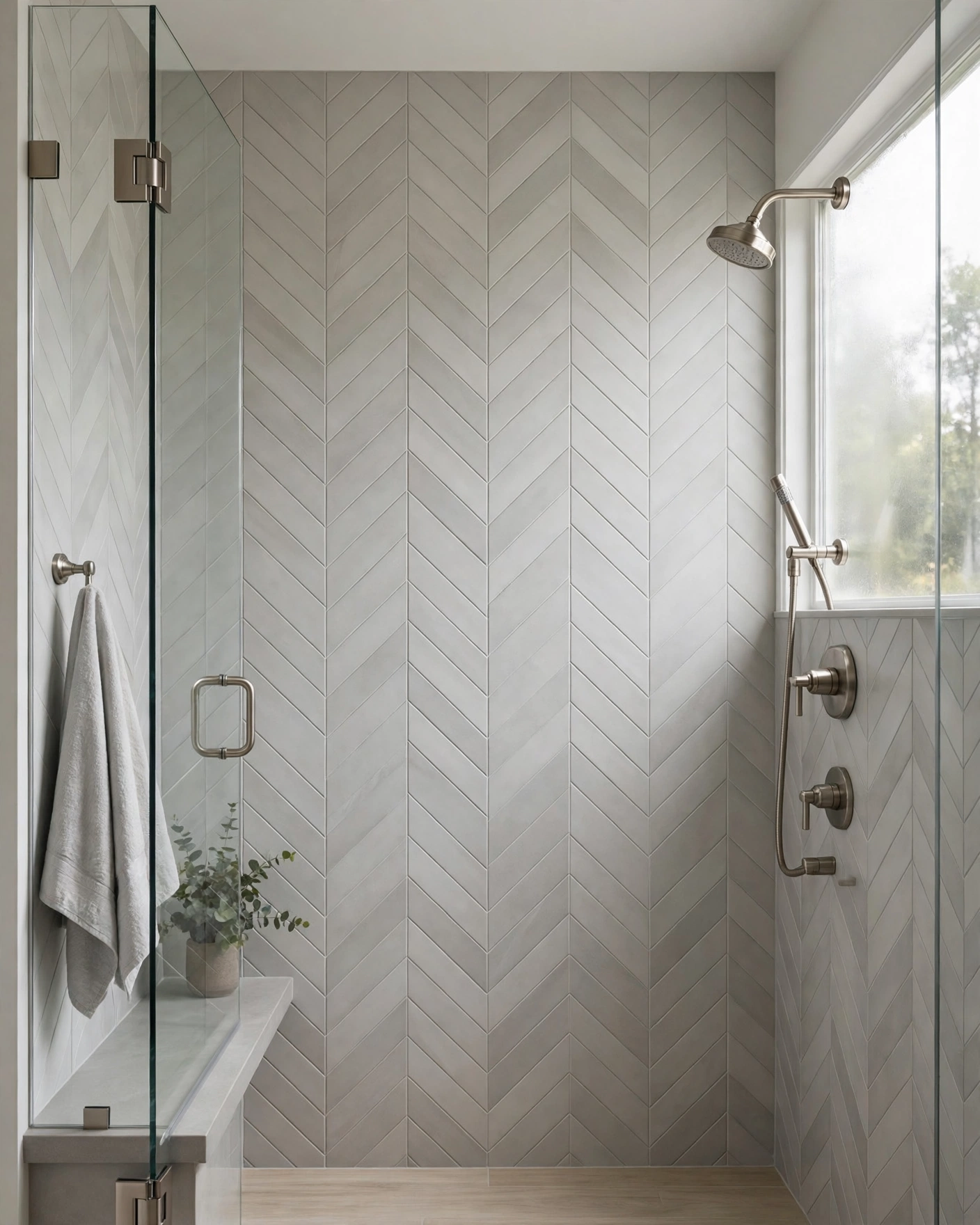
Chevron tiles arrive pre-cut into parallelograms that form a continuous V pattern, giving you rhythm and movement without the busyness of a print. In soft gray with matching grout, the effect is tailored and calm, somewhere between a classic herringbone and a modern geometric. Run it on all walls of a small shower to blur the corners, or on the back wall only for focus. Practical tip: chevron points must meet perfectly at the corners, so start the layout from the most visible wall and work outward.
11. Terrazzo-Look Porcelain Panels
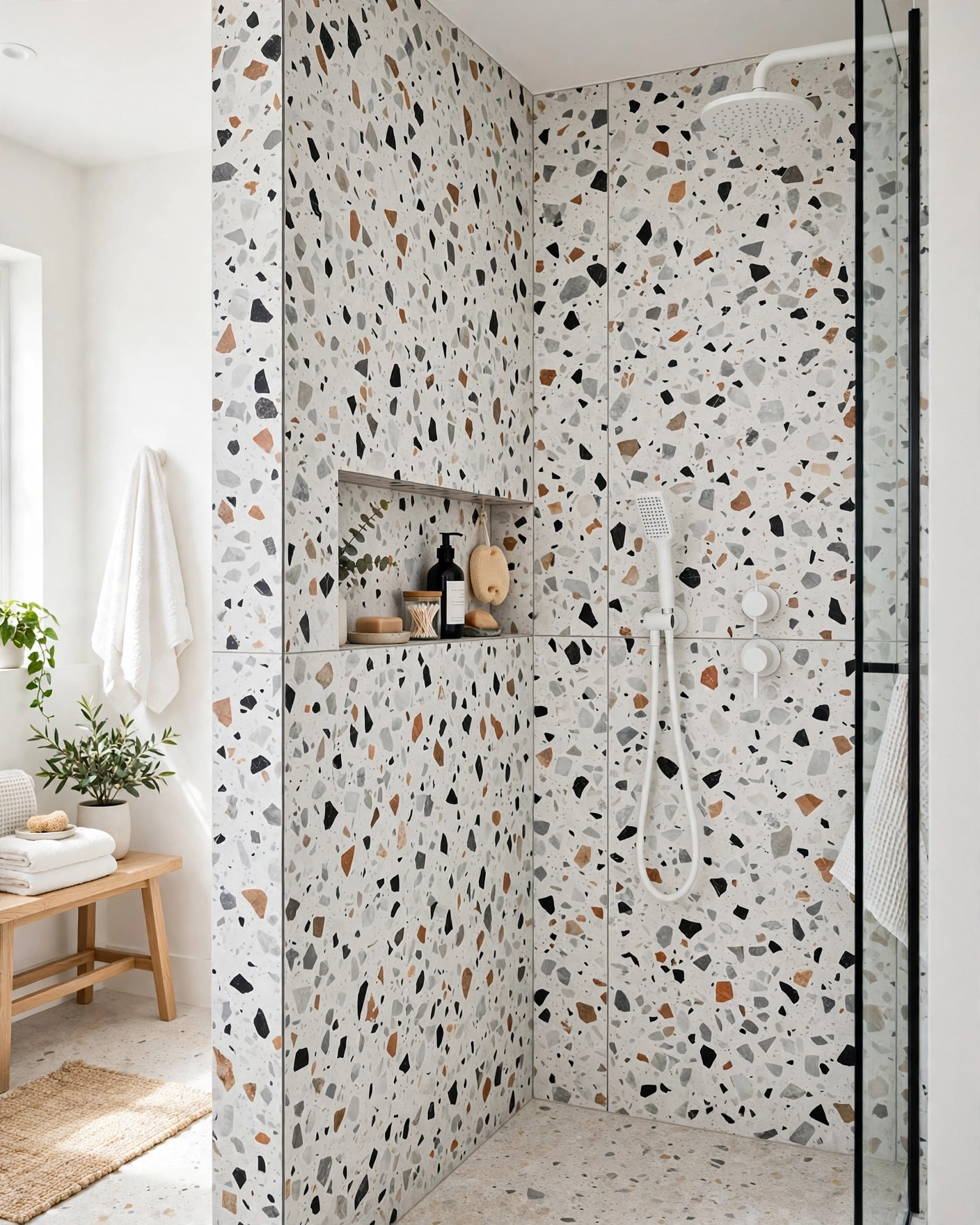
Large terrazzo-look porcelain panels give a shower the playful, speckled charm of Italian terrazzo with the easiest upkeep on this list: a handful of panels, minimal grout, and a surface that hides splashes and stray hairs between cleans. Choose a white base with gray and clay chips to warm up an all-white bathroom, and echo one chip color in towels or a stool. Practical tip: panels are heavy, so confirm your wall backing is cement board and plan for two people to set each piece.
12. Rustic Wood-Look Tile Planks
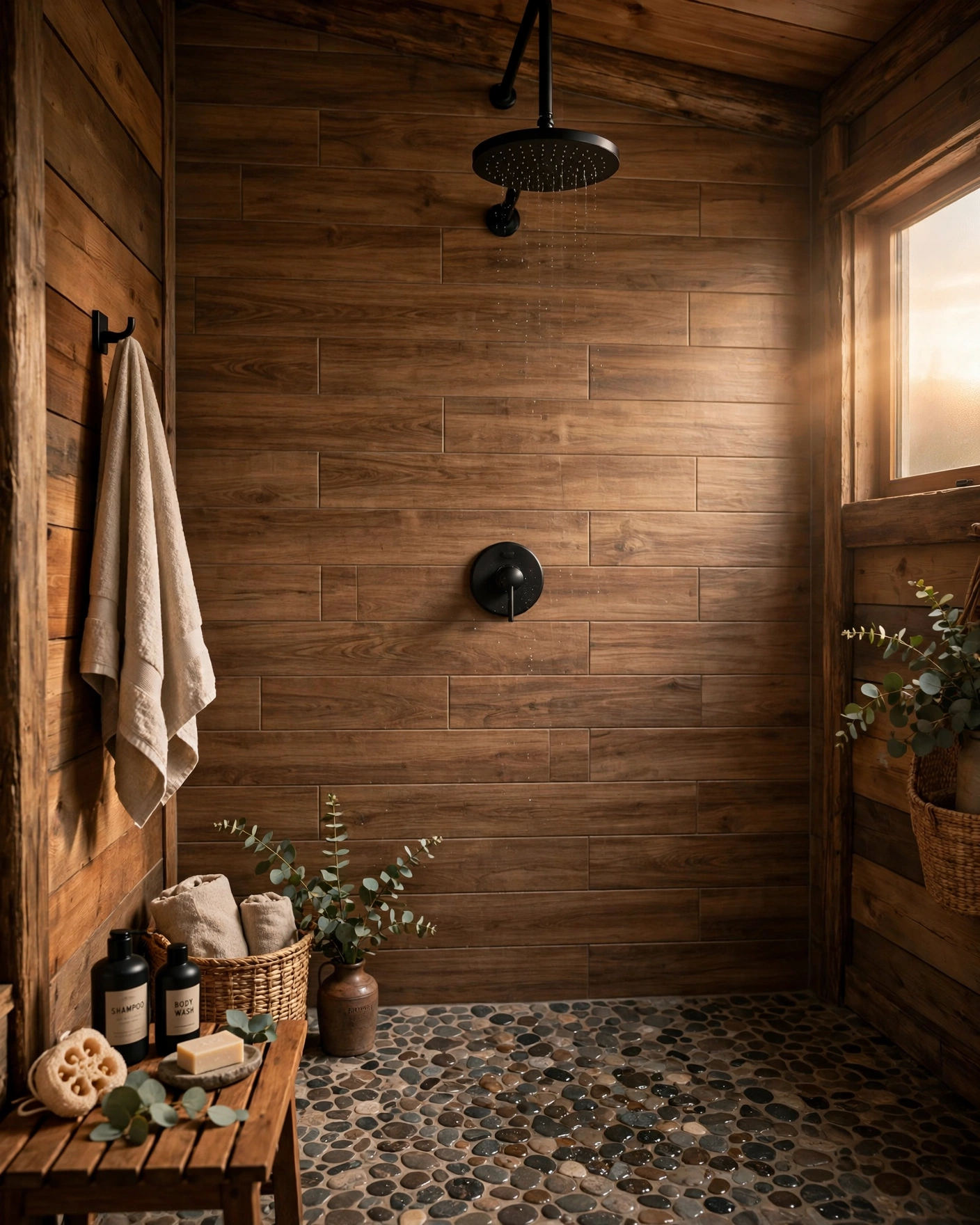
Wood-look porcelain planks let a shower borrow the warmth of a cabin or barn without risking a single splinter, since porcelain is completely waterproof. Run 6×36 inch planks horizontally on the back wall with tight, color-matched grout joints so the grain reads as continuous timber. Matte black fixtures and a stone mosaic floor complete the rustic spa mood. Practical tip: choose planks with at least ten different grain faces and shuffle them, or the repeating pattern will quickly give the trick away.
13. Two-Tone Tile with a Border Line
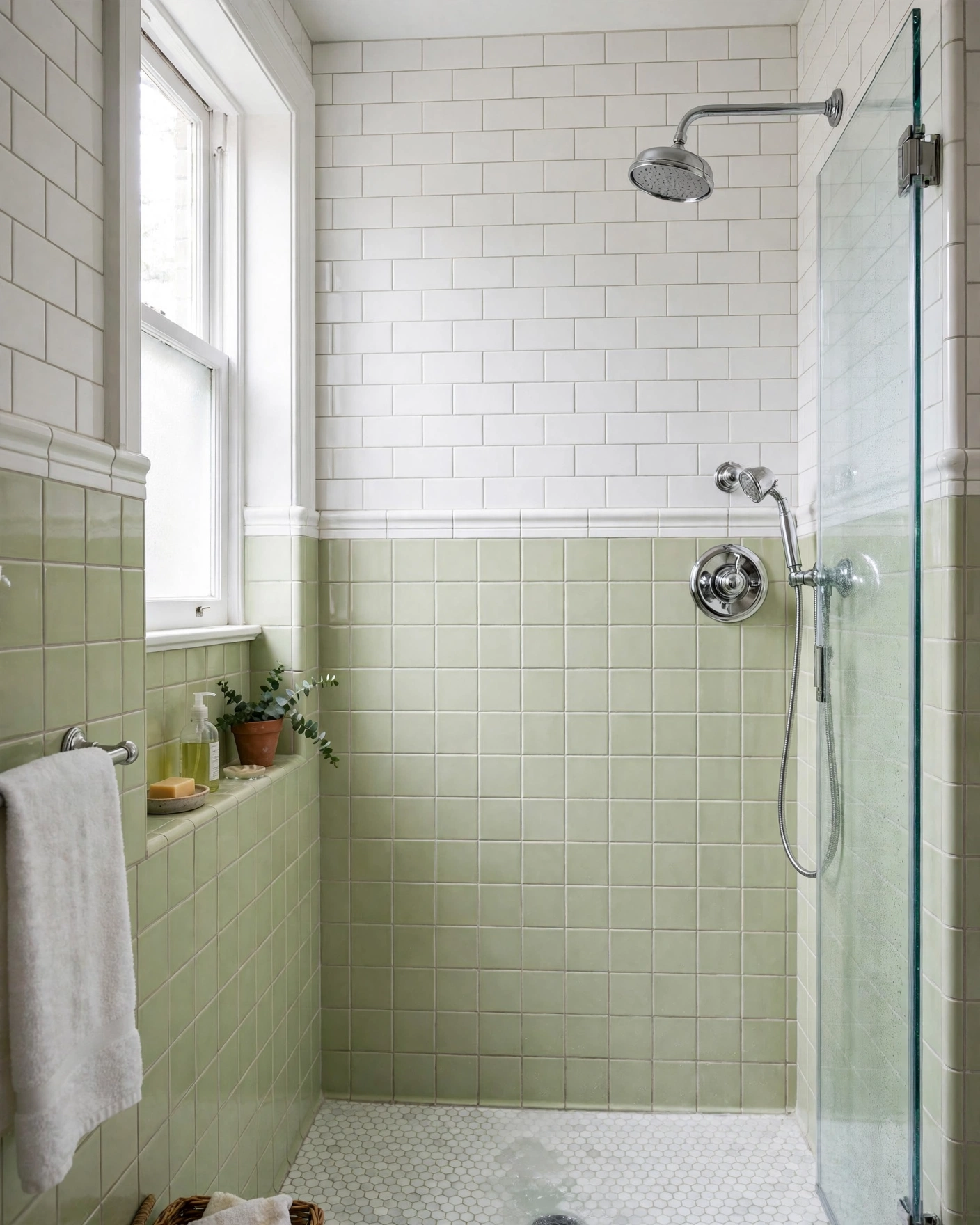
Split the shower walls at shoulder height: a colored tile below, in sage, dusty blue or warm gray, and clean white above, divided by a slim border or pencil tile. The two-tone scheme adds design interest for the price of one accent box of tile, and the pale upper half keeps the stall bright where it matters. It also suits traditional homes where full-height color might feel like too much. Practical tip: set the border at about 48 to 54 inches so it clears most shower niches and window sills cleanly.
14. Kit Kat Finger Mosaic in White
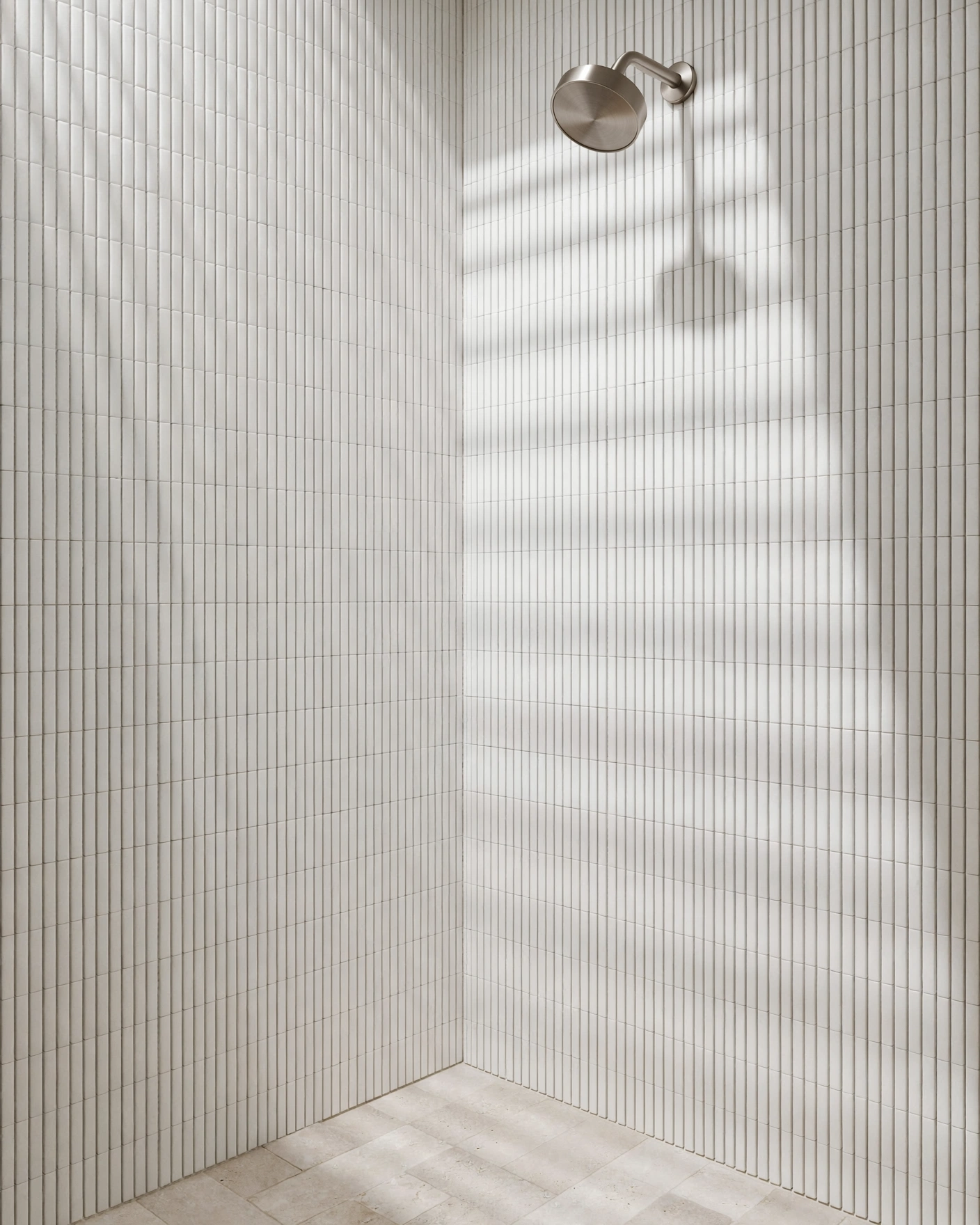
Kit kat mosaics are slim finger-shaped tiles, usually about 1×6 inches, mounted on sheets that stack into fine vertical ribbing. In glossy or matte white they turn a plain shower wall into a study of light and shadow, modern but quietly luxurious, and they pair with almost any fixture finish. The heavy grout coverage also makes them forgiving on slightly wavy walls. Practical tip: because mosaics have so much grout, use a stain-resistant grout and fan the shower after use to keep the white lines bright.
15. Travertine Stone-Look Tile
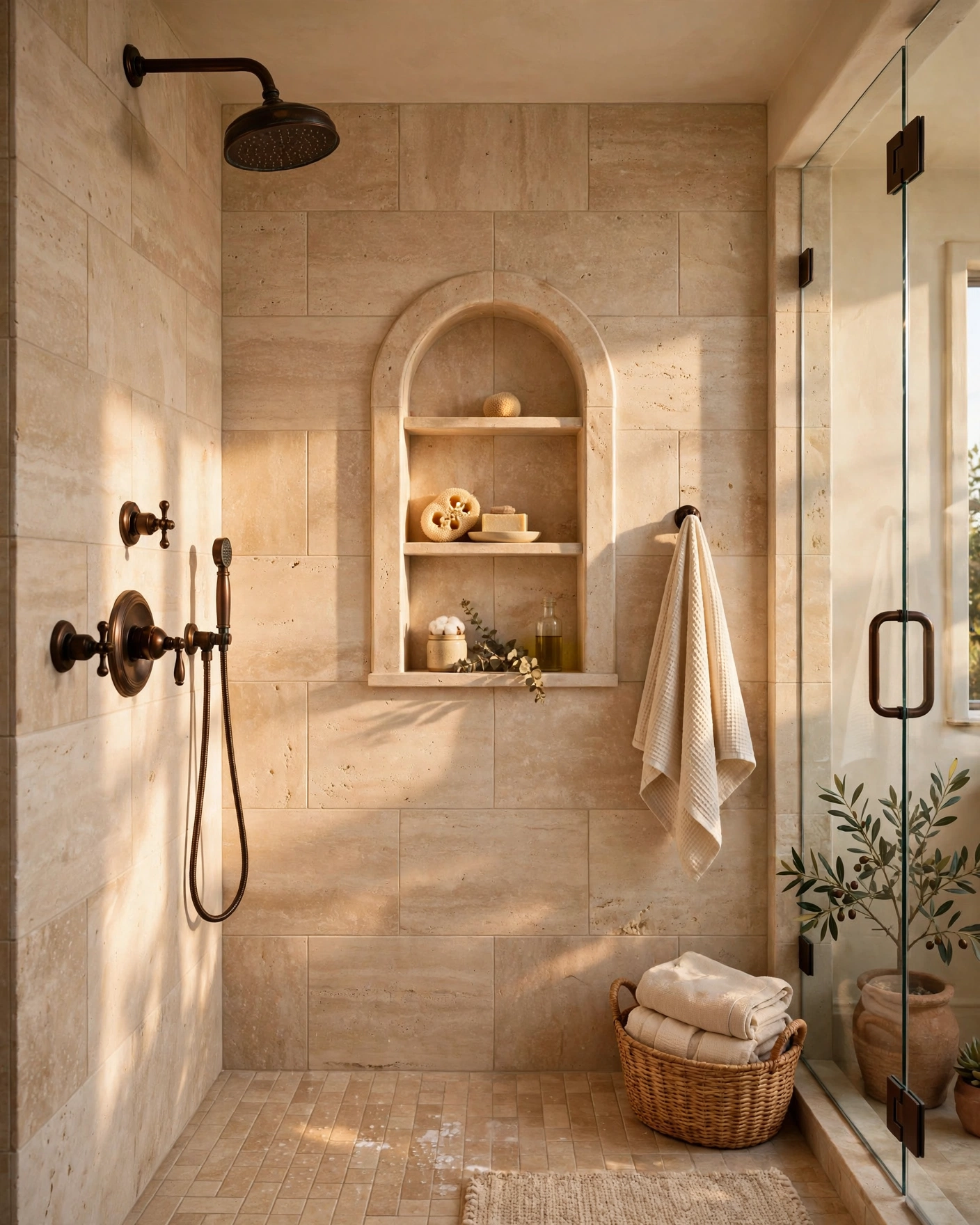
Travertine-look porcelain in warm beige and cream gives a shower the sun-baked calm of a Mediterranean villa, complete with natural-looking pits and veins that never need filling or sealing. Lay large rectangles in a brick pattern and add an arched or simple recessed niche in the same tile for a built-in look. Bronze or black fixtures deepen the warmth, while chrome keeps it fresher. Practical tip: the stone look hides water spots and soap film better than almost any other finish, making it a smart pick for hard-water homes.
16. Patterned Cement-Look Feature Wall
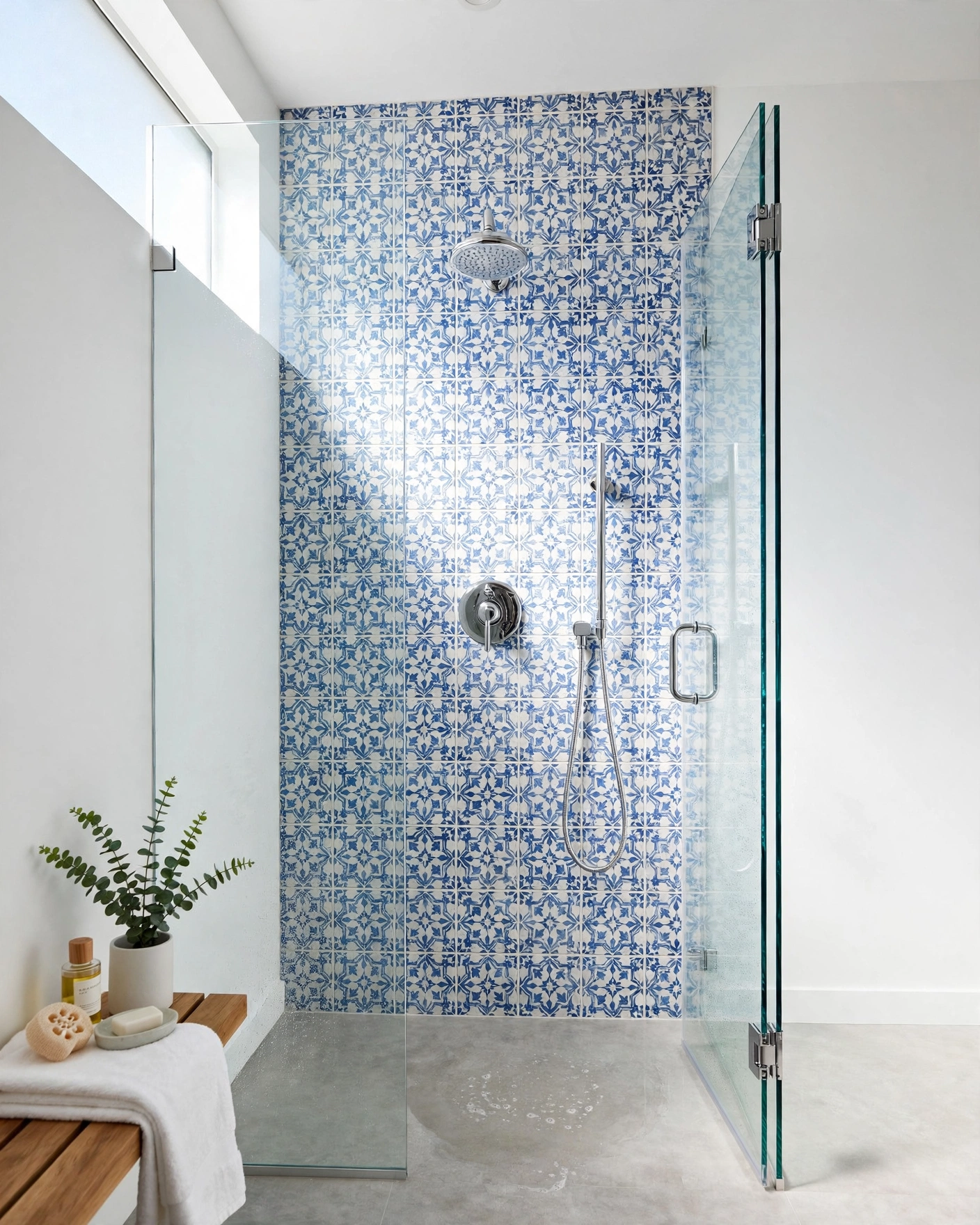
Give the back wall of the shower a patterned cement-look tile, in a blue-and-white Mediterranean print or a soft gray geometric, and keep the other walls plain so the pattern feels like framed artwork. Porcelain versions deliver the handmade cement look with none of the sealing and staining worries of real cement tile, and a shower is the perfect small stage for a bold print. Practical tip: center the pattern on the showerhead wall and start tiling from that center line so the design stays symmetrical.
17. Pale Pink Square Tile
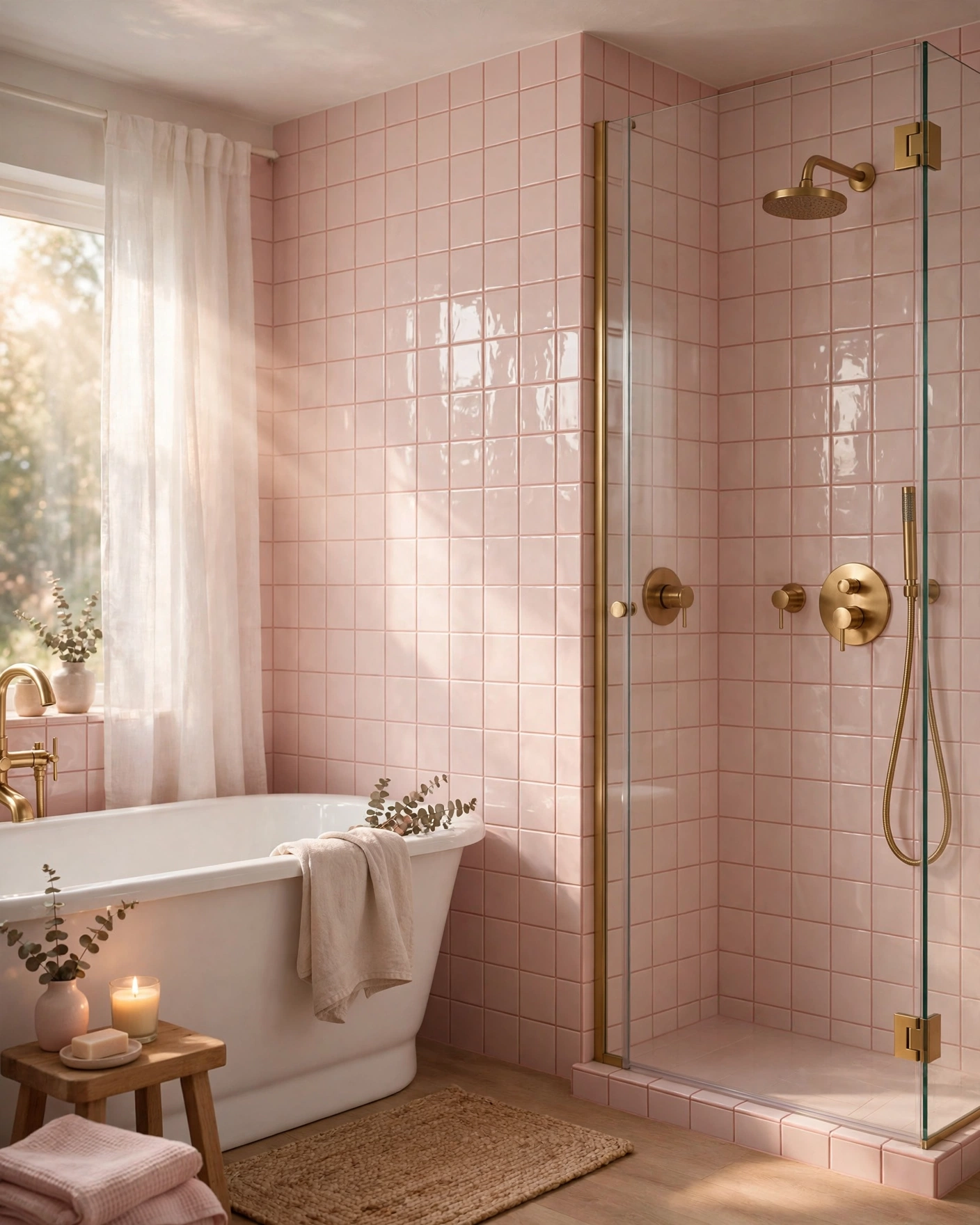
Pale pink 4×4 inch squares with grout tinted to match create a soft, cocooning shower that flatters skin tones and feels a world away from stark white. The tonal grout is the secret: it lets the color read as one calm surface instead of a grid. Brushed gold fixtures lean into the warmth, while white towels and a pale floor keep it grown-up. Practical tip: test your pink under warm and cool bulbs before ordering, since pink glazes shift dramatically with light temperature.
18. Oversized Hexagon Tile in Warm White
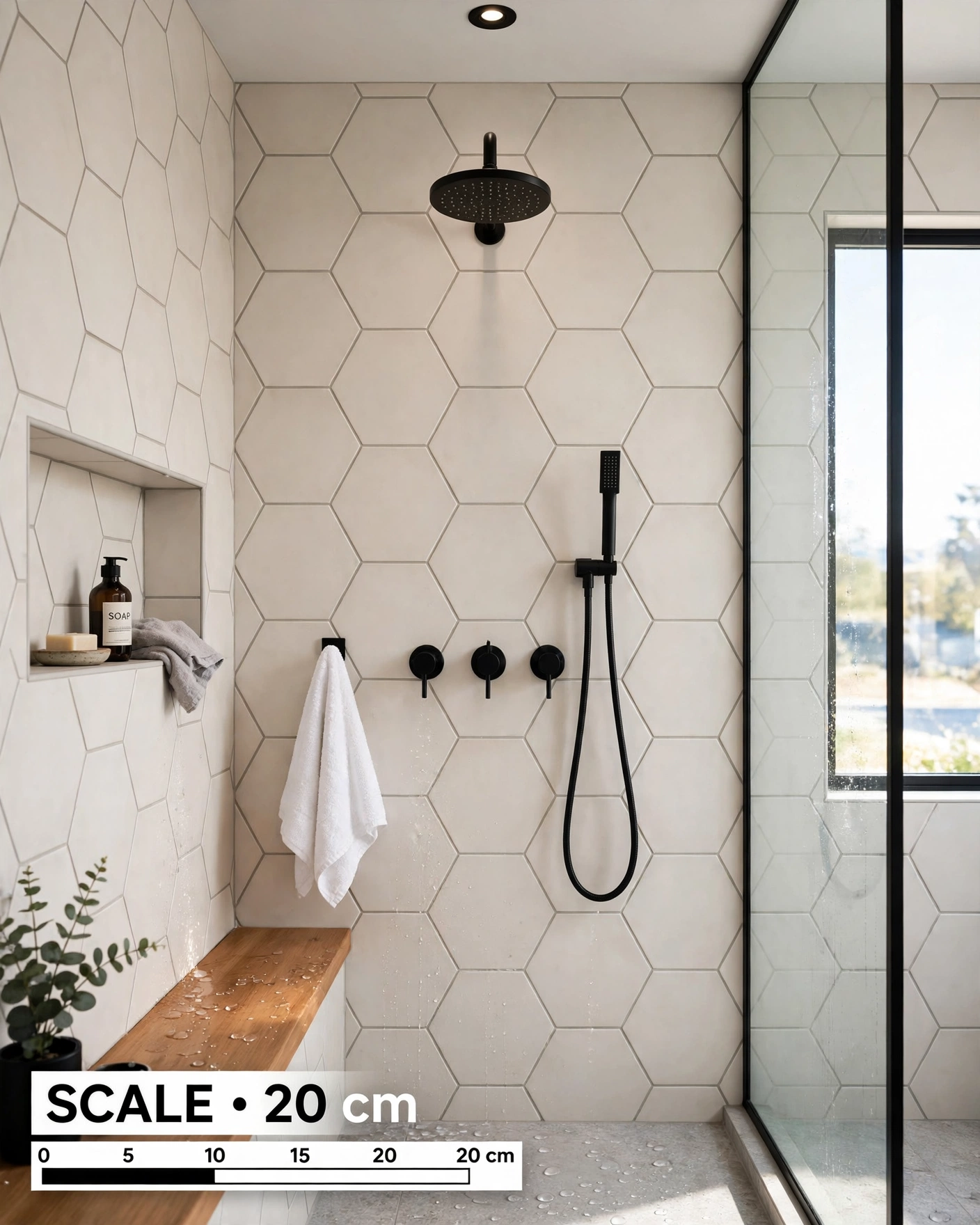
Scale hexagon tiles up to 8 or 10 inches across and grout them in light gray, and a familiar shape becomes a bold graphic statement that still feels clean. The big format means fewer tiles to set and fewer grout lines than mosaics, while the geometry keeps a white shower from feeling plain. Black or chrome fixtures both sharpen the look. Practical tip: large hexagons show lippage at the points, so insist on a perfectly flat substrate and leveling clips during installation.
19. Glossy Emerald Subway Tile
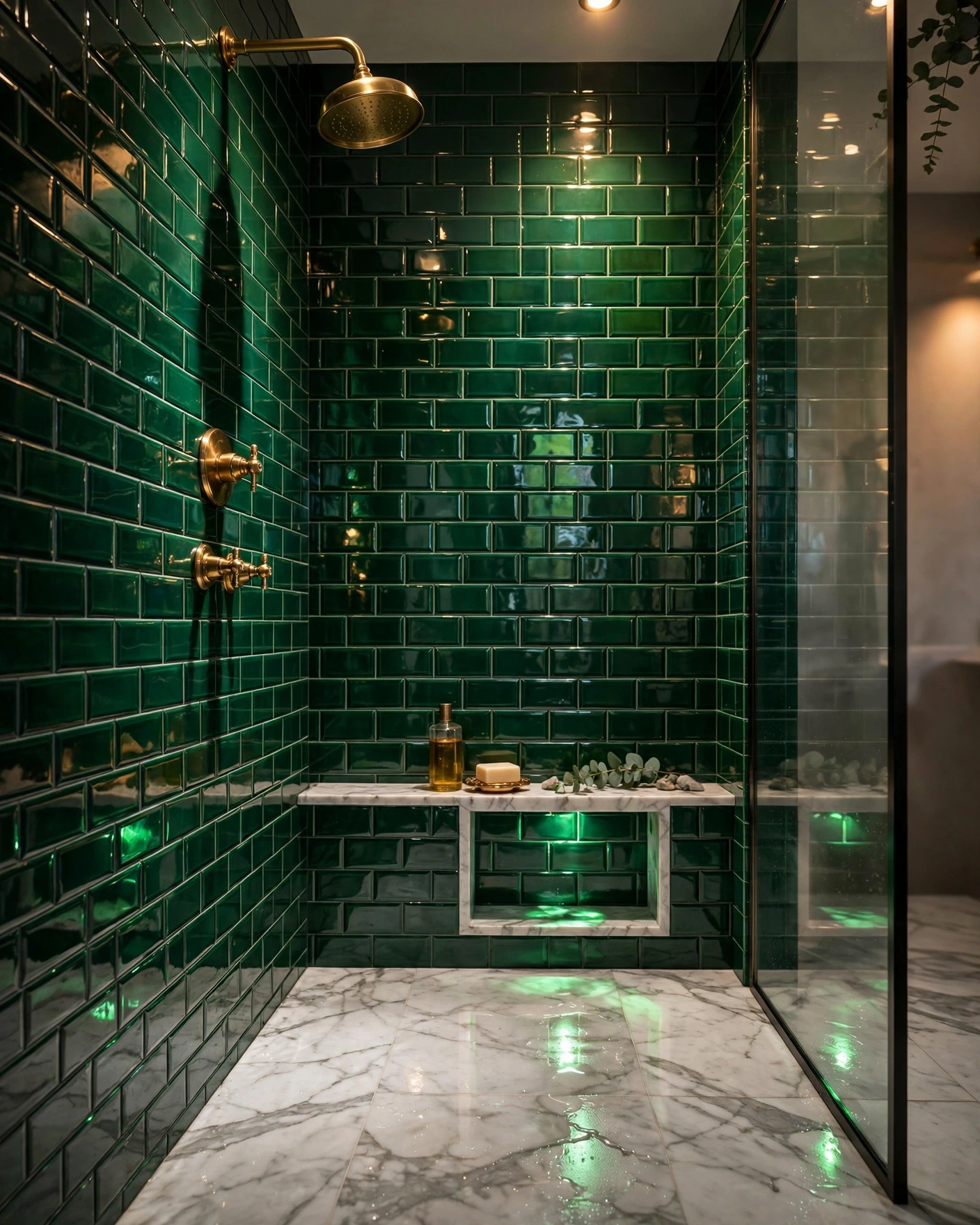
If sage feels too quiet, emerald subway tile is its bolder sister: the glossy glaze and brick layout bounce warm light around the stall and make brass fixtures look twice as rich. It is a confident choice that turns the daily shower into a small event, and it pairs surprisingly well with a simple white marble or porcelain floor. Practical tip: deep green shows dried water spots in hard-water areas, so finish the job with a daily squeegee habit and the color will stay jewel-like.
20. Mixed-Width Vertical Plank Tile
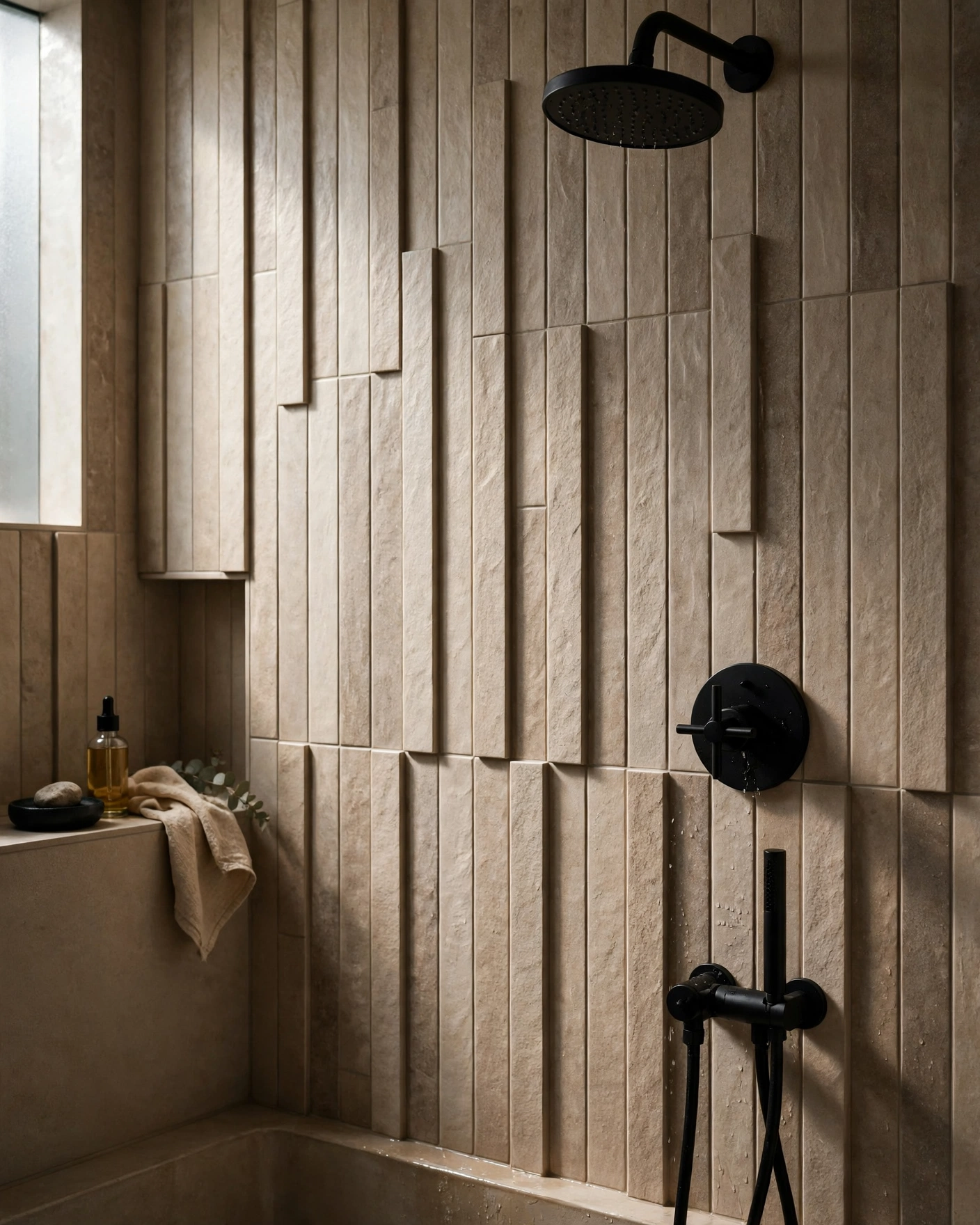
Alternate vertical plank tiles in two or three widths, for example 3, 4 and 6 inches, in warm greige or stone tones, and the shower wall gains a tailored, almost wood-batten rhythm without a single repeated module. The vertical lines stretch the room upward, and the subtle width changes keep large walls interesting up close. Keep grout tight and color-matched so the pattern stays quiet. Practical tip: lay out the width sequence on the floor and photograph it before installing; a random mix looks best when it is actually planned.
21. Timeless Carrara Marble Subway
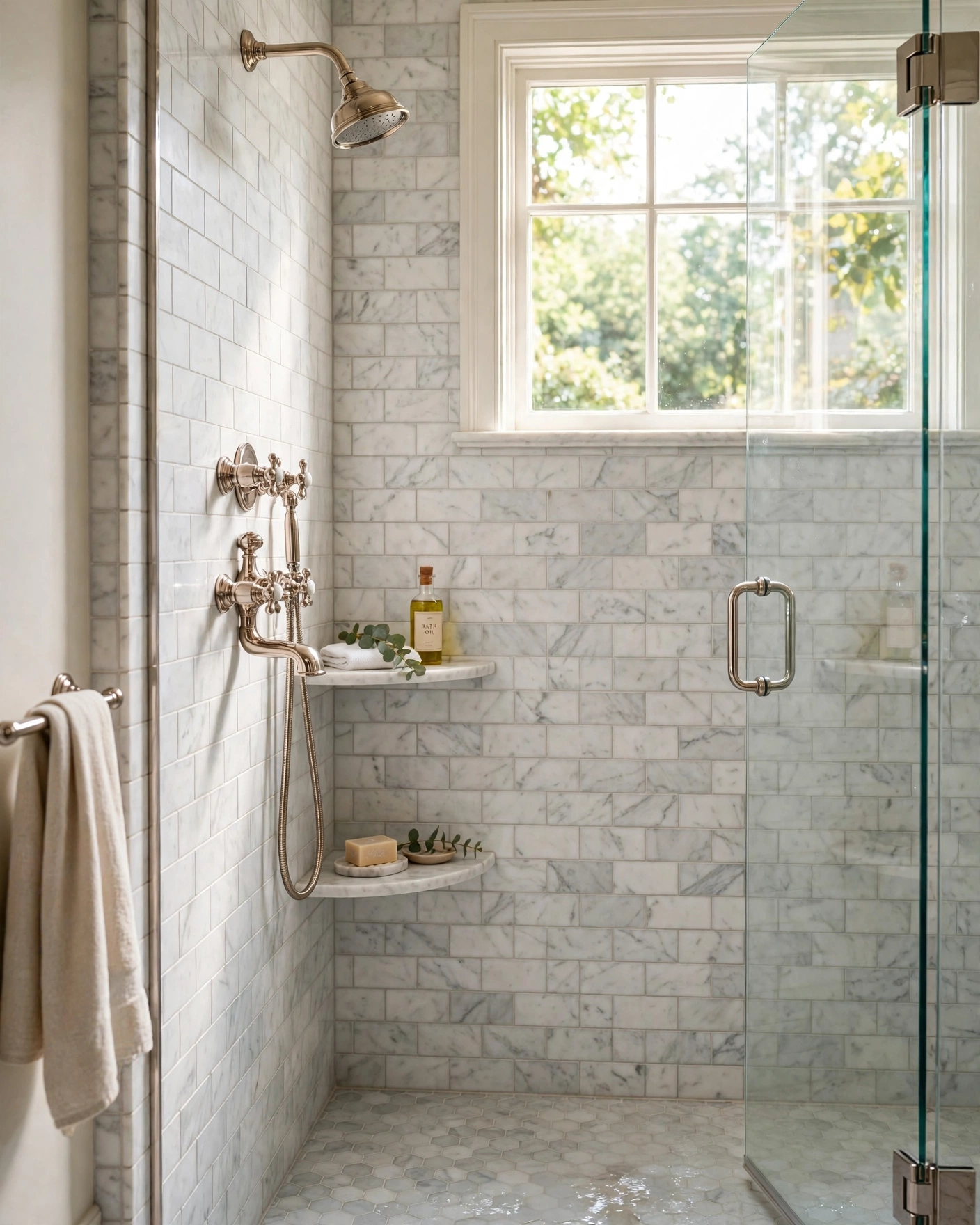
Finish with the classic: honed Carrara marble subway tiles, 3×6 or 4×12 inches, with their soft white ground and feathery gray veining. Real marble brings a depth no print can fully copy, and the subway format keeps the luxury feeling relaxed rather than formal. Use polished nickel or chrome and simple marble corner shelves to complete the traditional picture. Practical tip: marble in a shower must be sealed before grouting and about once a year after; if that sounds like too much, today’s best marble-look porcelains come remarkably close.
In Summary
The right shower wall tile does three jobs at once: it sets the mood of the whole bathroom, decides how much light the stall gets, and determines how your weekends feel, scrubbing grout or not. Big glossy formats keep things bright and easy, small mosaics bring texture and grip, and one patterned or colored wall can carry an otherwise simple room.
Before you order, bring home samples of your two favorites and lean them in the actual shower for a day. Wet them, look at them morning and night, and notice which one you keep smiling at. Tile is a decade-long commitment, so it should earn that smile honestly.
Pick the idea that fits your light, your budget and your tolerance for cleaning, and copy it with confidence. Your future morning self will thank you every single day.
Leave a Reply