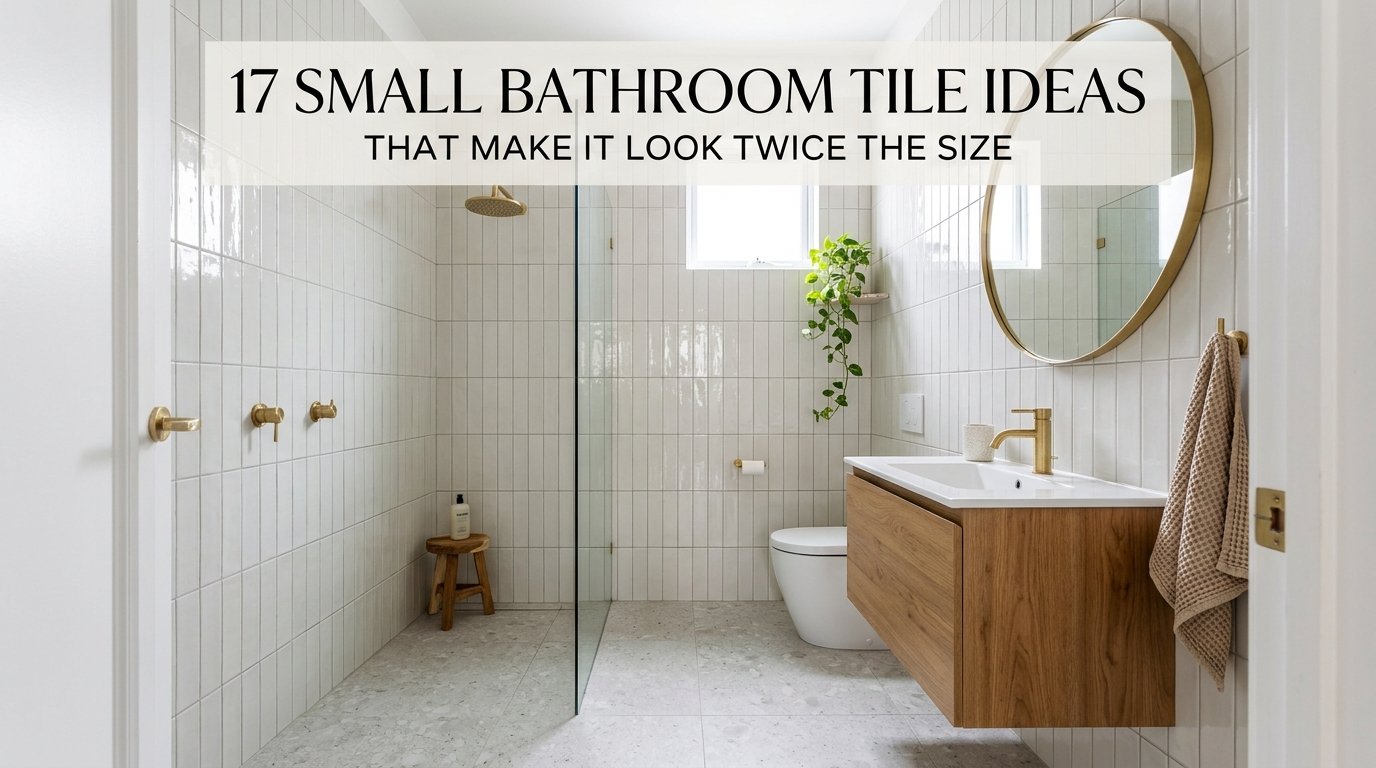
You step into your bathroom and turn around, and you’re already facing the door again. Every inch is spoken for, and the walls feel like they’re leaning in.
The good news is that tile is the strongest tool you have for changing how a small room feels. The size of the tile, the color of the grout, the direction of the layout and the finish of the surface all decide whether your eye stops at the walls or travels past them.
Below are 17 tile ideas that stretch a small bathroom visually, with specific materials, sizes and layouts you can copy. Each one also comes with a practical tip, so you can plan the project and the budget in one go.
Whether you’re renovating a 5×8 hall bath or just refreshing a powder room, there’s a look here that will make the space read as twice the size.
1. Large-Format Porcelain Tiles on the Walls
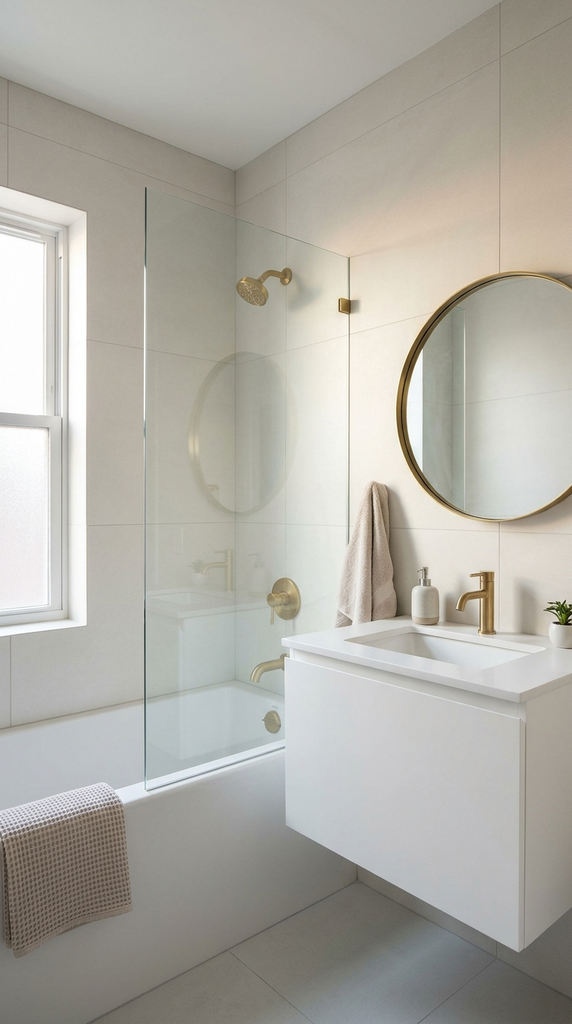
Fewer grout lines mean fewer visual interruptions, so the walls read as one calm surface. Use 24×48 inch matte porcelain in warm white and run it vertically for extra height. Tip: ask your installer for a 1/16 inch grout joint, which keeps the wall looking almost seamless and is easier to wipe clean.
2. Vertical Stack Tile to Lift the Ceiling
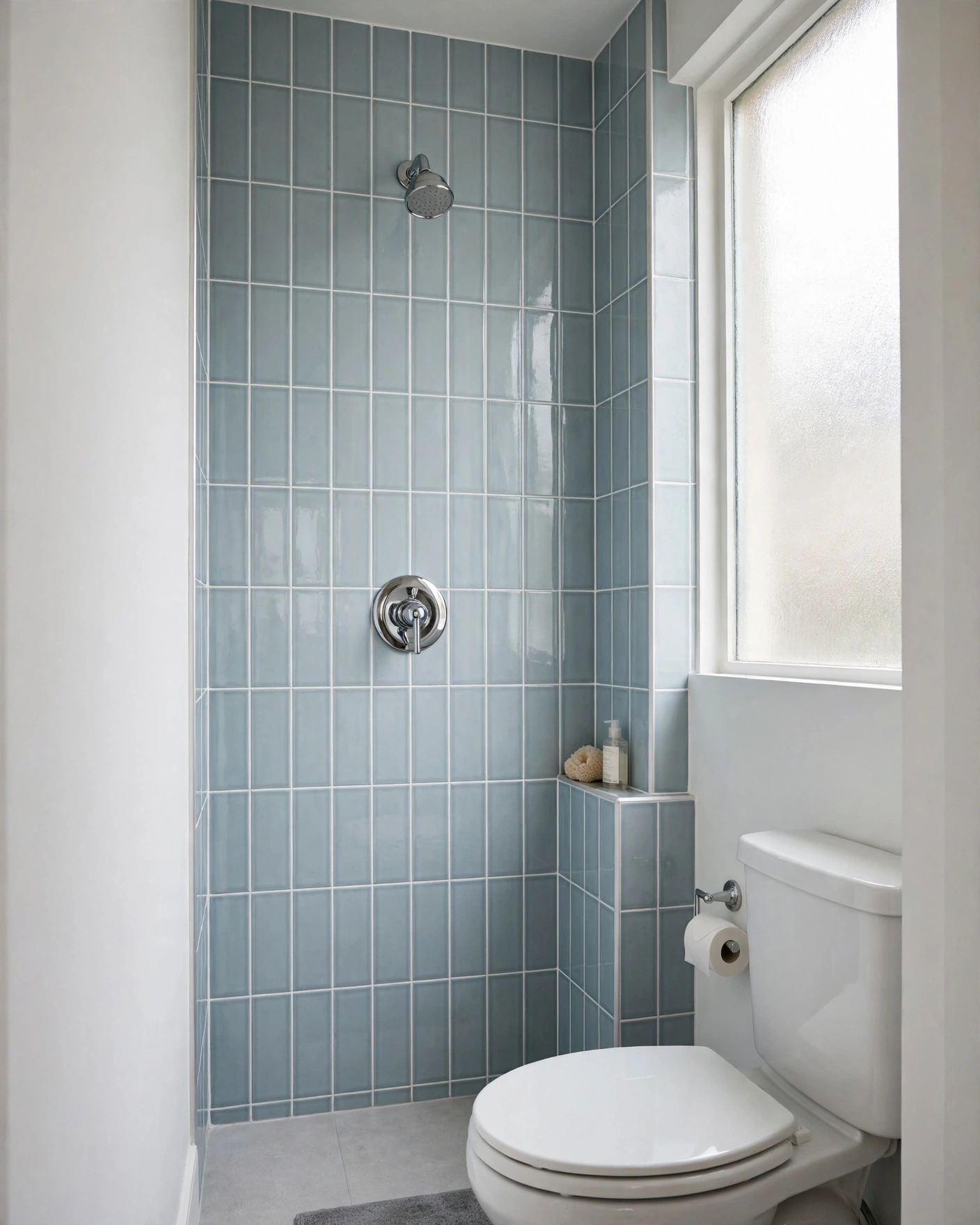
Turn standard 3×12 subway tile on its end and stack it in a straight grid, and the wall suddenly looks taller. A pale blue glossy finish with white grout keeps things light and reflective. Tip: stacking costs no more than a regular layout, so you get a dramatic change for the same budget.
3. Matching Floor and Wall Tile for One Seamless Surface
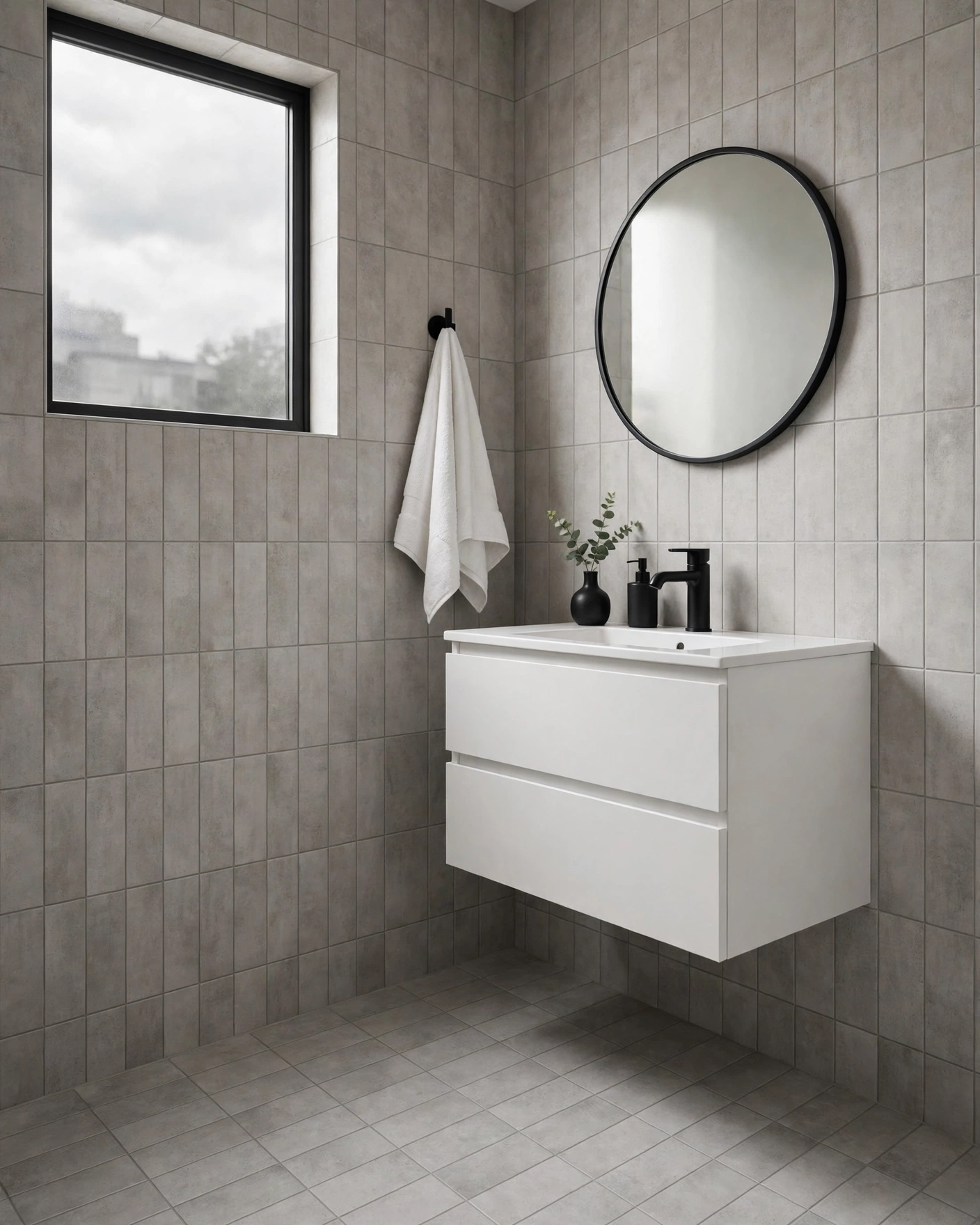
When the floor and walls share the same tile, the room has no hard edge where one surface stops and another starts. Choose a light gray concrete-look 12×24 tile and keep the grout in the same shade. Tip: buying one tile for the whole room usually earns a bulk discount and simplifies ordering.
4. Light Grout That Disappears Into the Tile
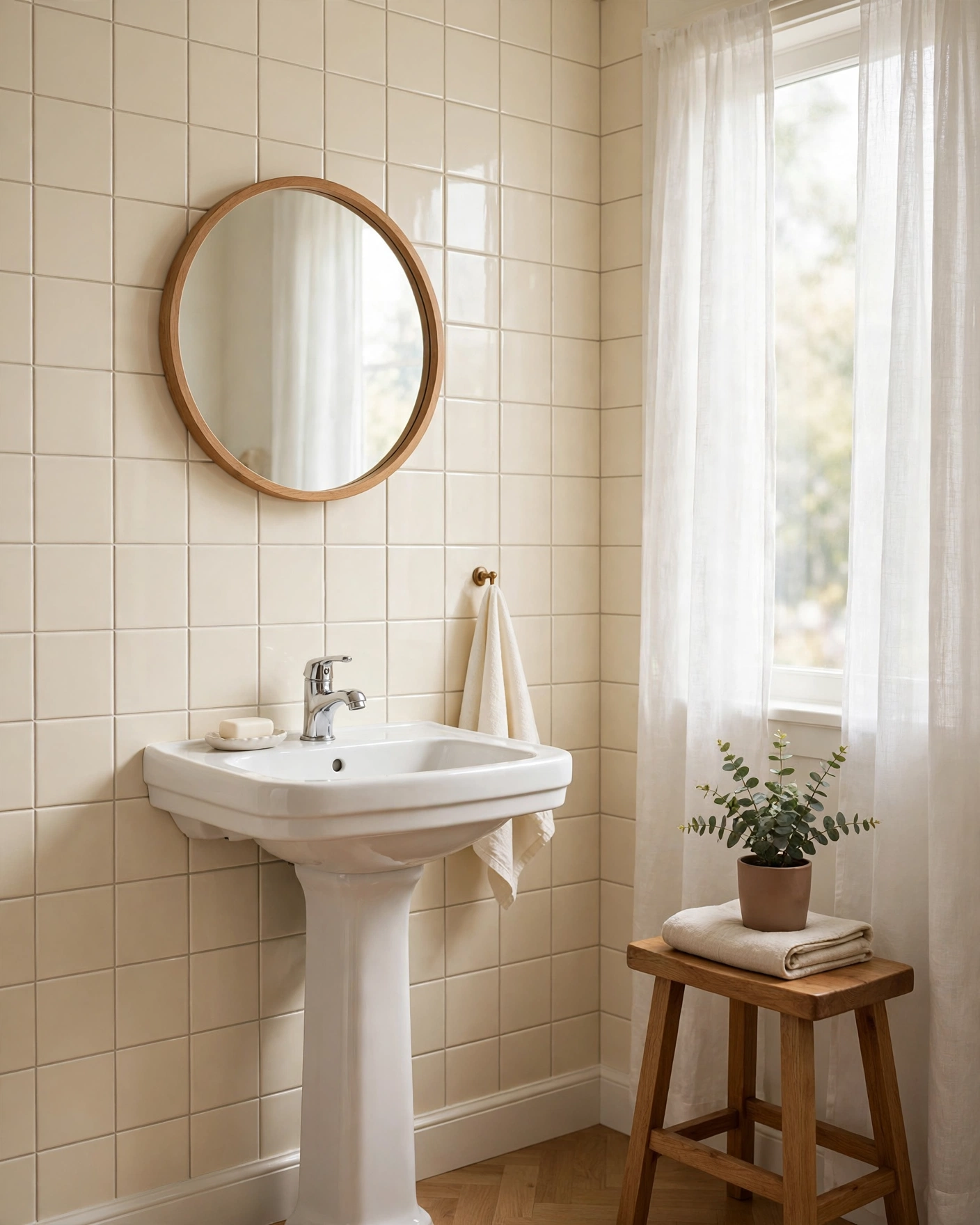
Contrasting grout draws a grid across your walls and chops the room into small boxes. Match the grout to the tile, such as cream on cream, and the pattern fades into a soft, even surface. Tip: pick a stain-resistant epoxy or sealed grout so the pale color stays clean.
5. Glossy Subway Tile That Bounces Light
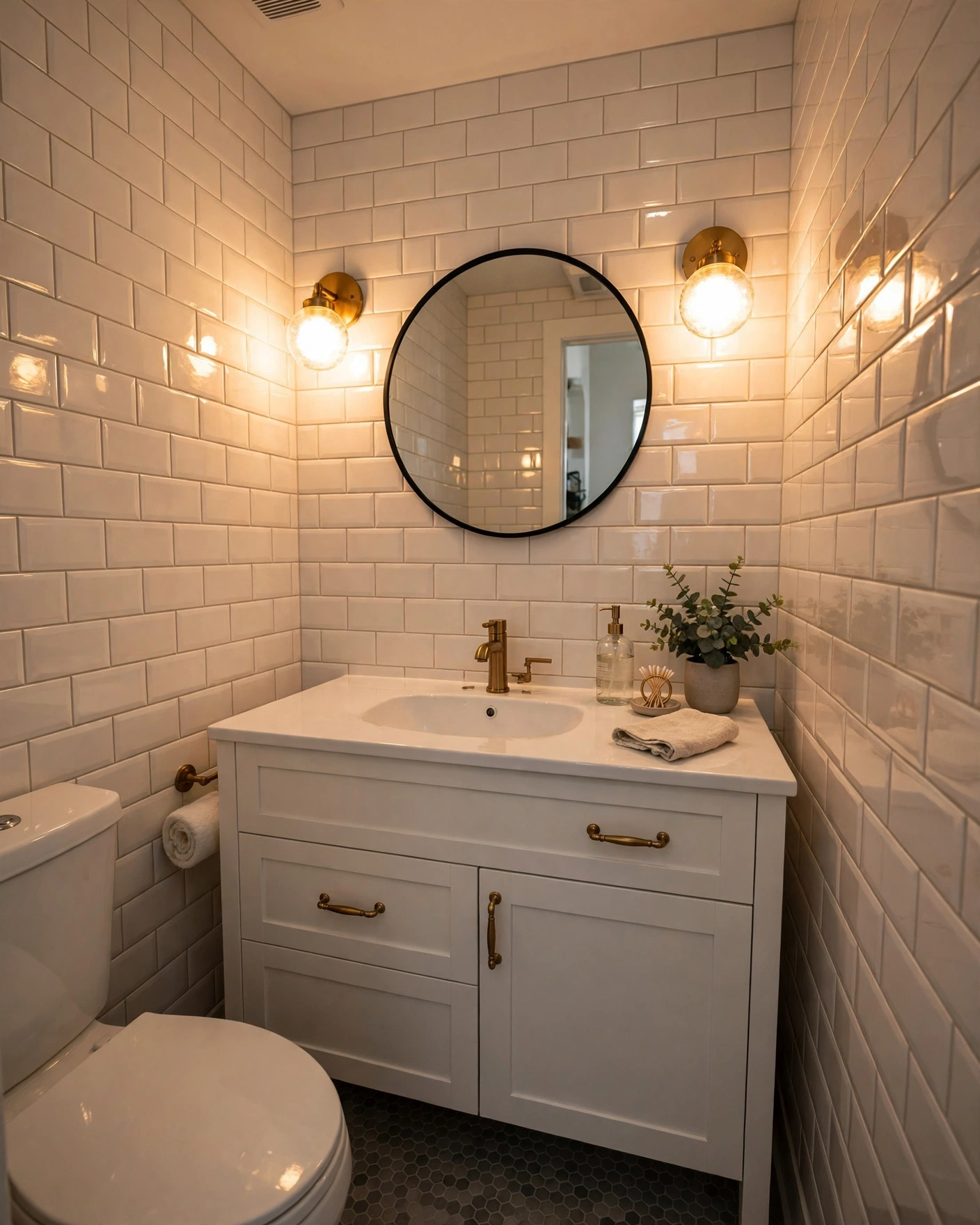
A glossy glaze acts like a soft mirror, spreading lamplight across every wall. Classic 3×6 white subway tile with light gray grout is affordable and works in any style. Tip: if your bathroom has no window, put two wall sconces beside the mirror so the tile has light to bounce.
6. Diagonal Floor Tile Layout
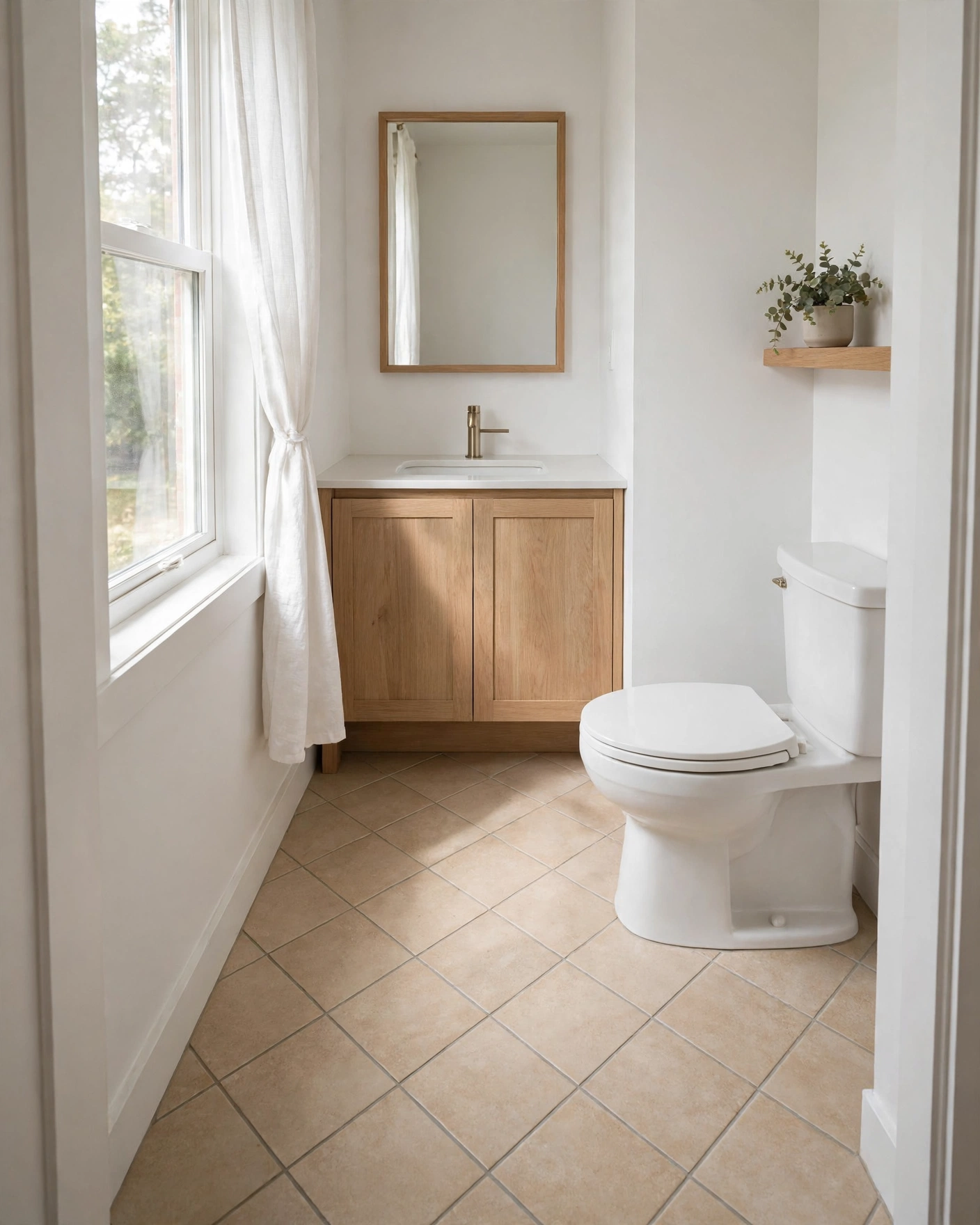
Setting floor tile at a 45 degree angle pulls the eye along the longest diagonal, which makes the floor feel wider. Pale beige porcelain in 12×24 works well and hides dust. Tip: diagonal layouts waste more tile, so order about 15 percent extra.
7. Floor-to-Ceiling Tile in the Shower
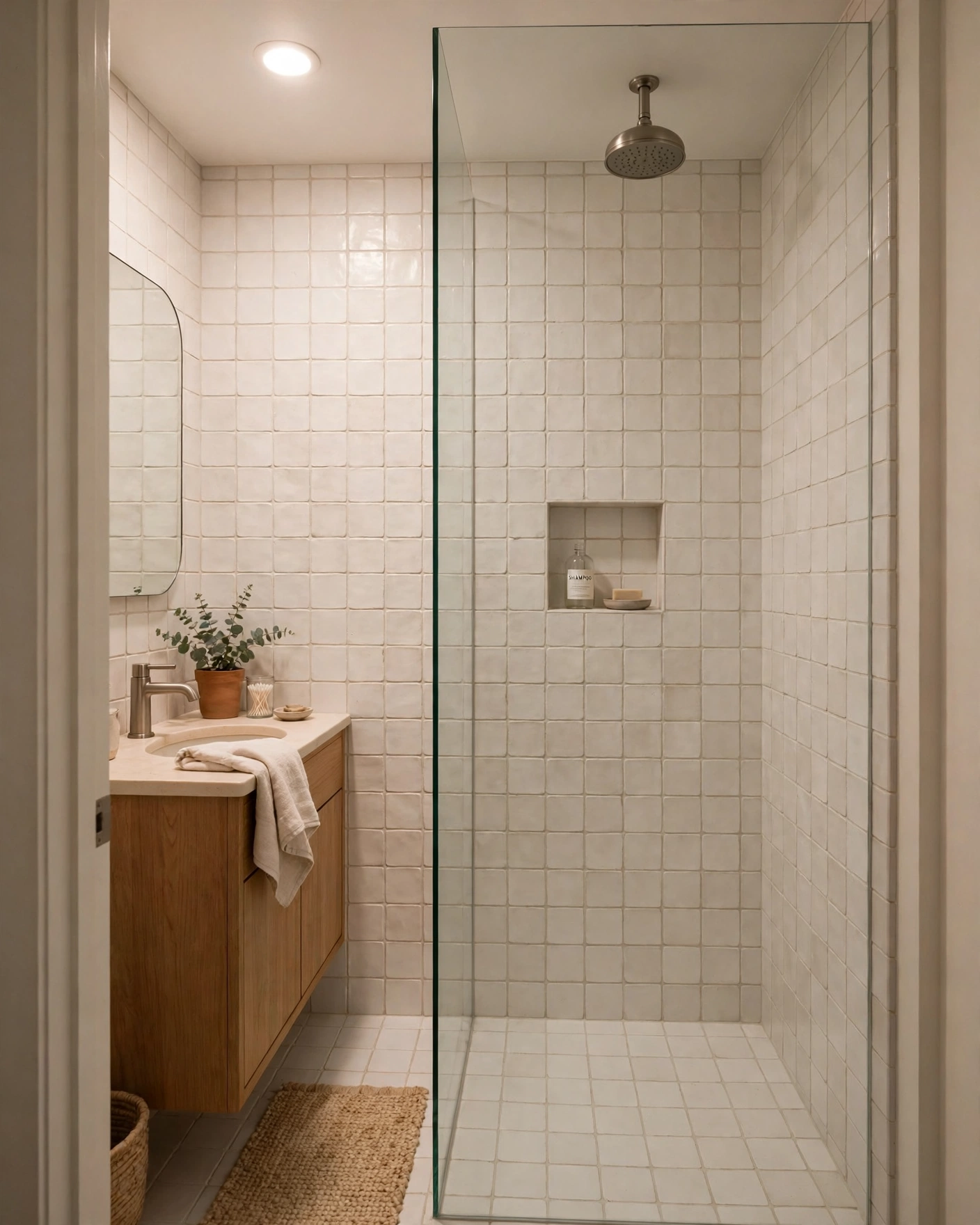
Stopping tile halfway up the wall creates a line that cuts the room’s height. Carry the same white tile all the way to the ceiling and the shower becomes a tall, clean volume. Tip: line up the niche with the tile grid so you don’t end up with thin awkward cuts.
8. Pale Hexagon Floor Tile
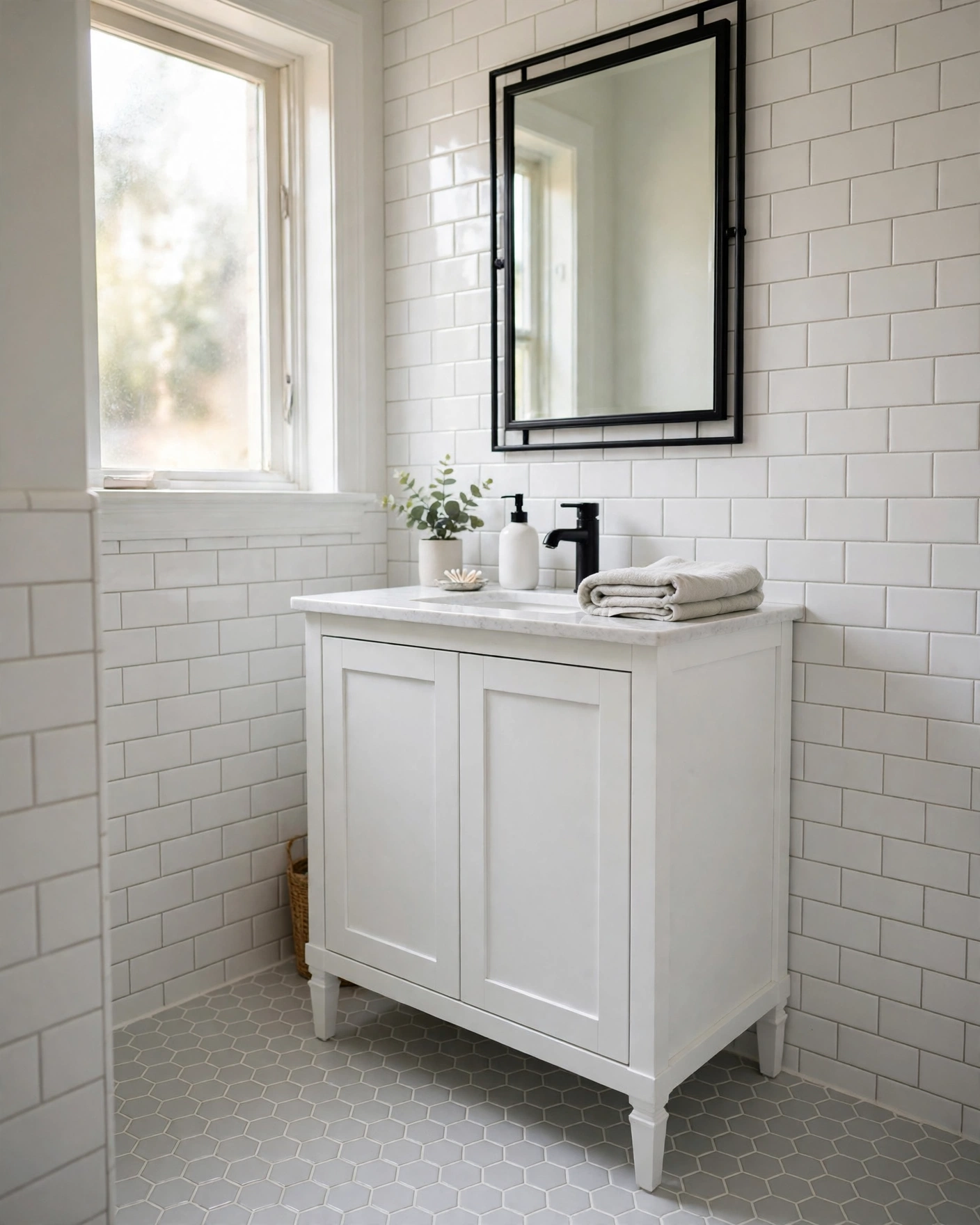
Small hexagons give the floor a soft texture without a heavy pattern. Pick a pale gray tile with white grout so it stays light and quiet underfoot. Tip: mosaic sheets are easier to install around toilets and corners, which can lower labor costs.
9. Frameless Glass Shower with Continuous Tile
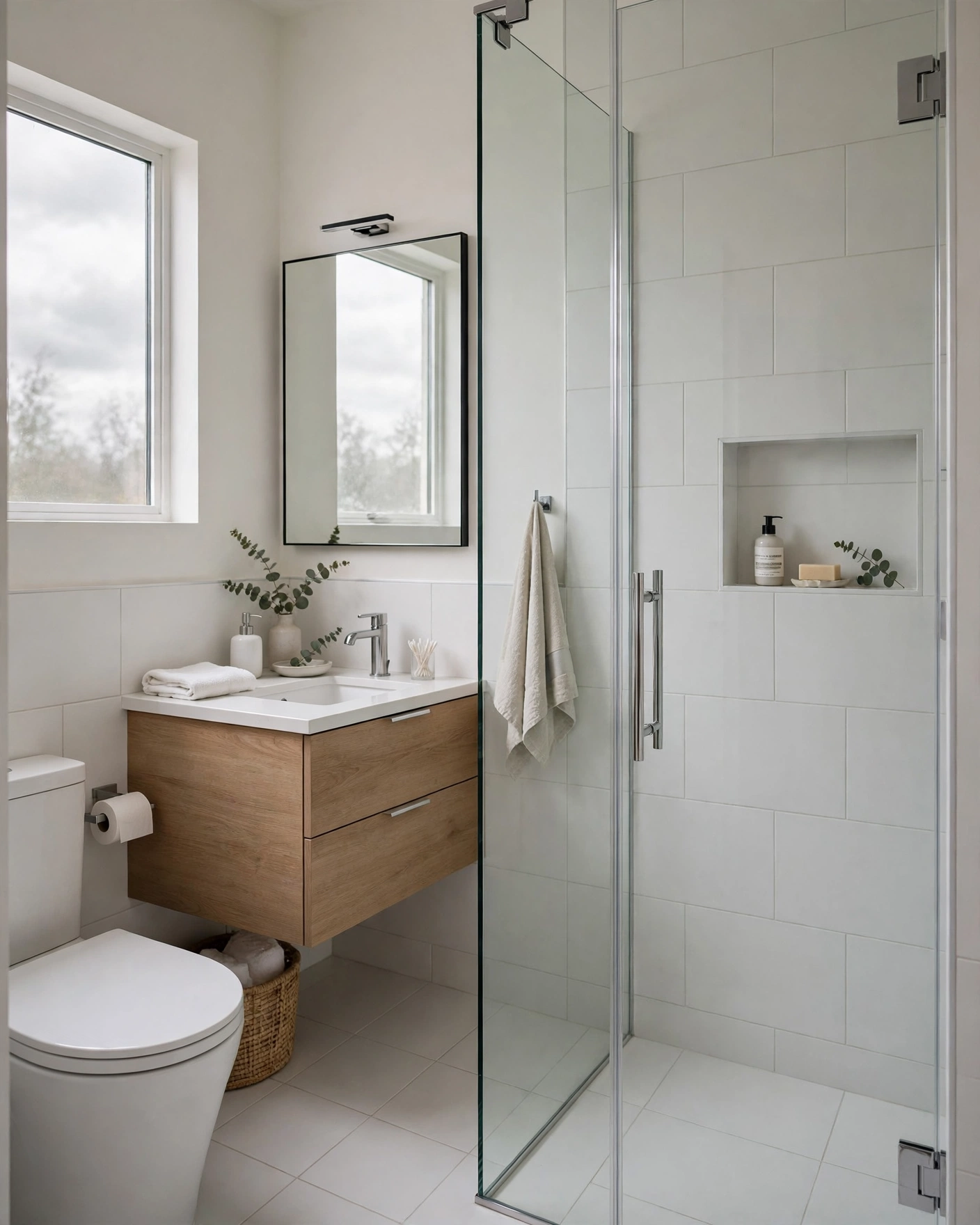
Swap the shower curtain or framed door for a single pane of clear glass and run the same tile straight through. The eye reads one continuous room instead of a bathroom plus a box. Tip: a 3/8 inch glass panel with a fixed screen is cheaper than a full door and looks just as open.
10. Soft Sage Zellige-Look Tile
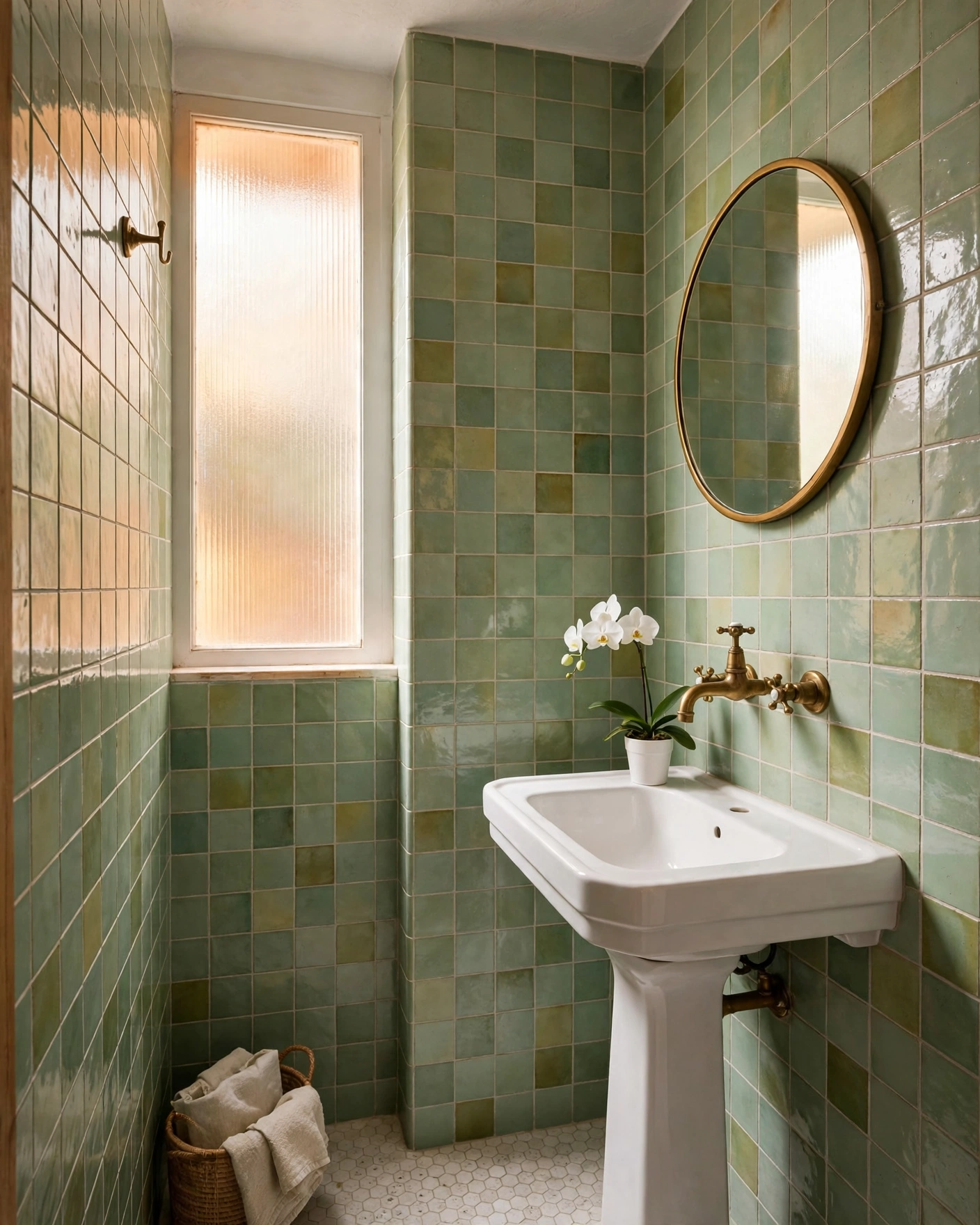
Light sage green has a slight sheen and uneven glaze that catches the light in gentle waves. It adds color without darkening the room, and the handmade look keeps a tiny space from feeling flat. Tip: use a light cream grout so the green stays soft rather than high contrast.
11. Pale Terrazzo Tile with Tiny Chips
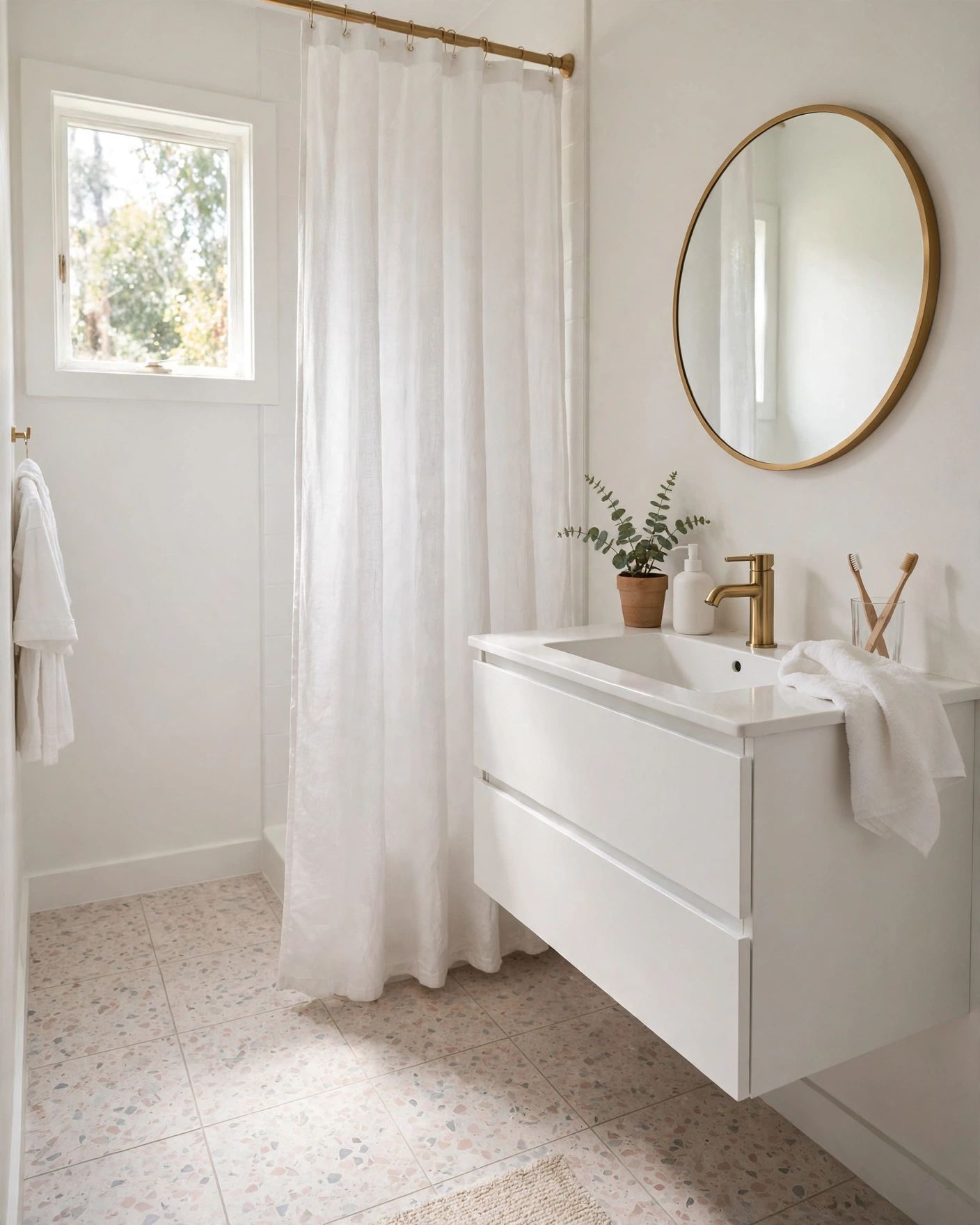
A fine terrazzo pattern adds personality while the light base keeps the floor airy. Choose tiles with small chips so the pattern doesn’t feel busy in a tight room. Tip: pair terrazzo with plain white walls so the floor is the only feature.
12. Herringbone Tile in a Neutral Tone
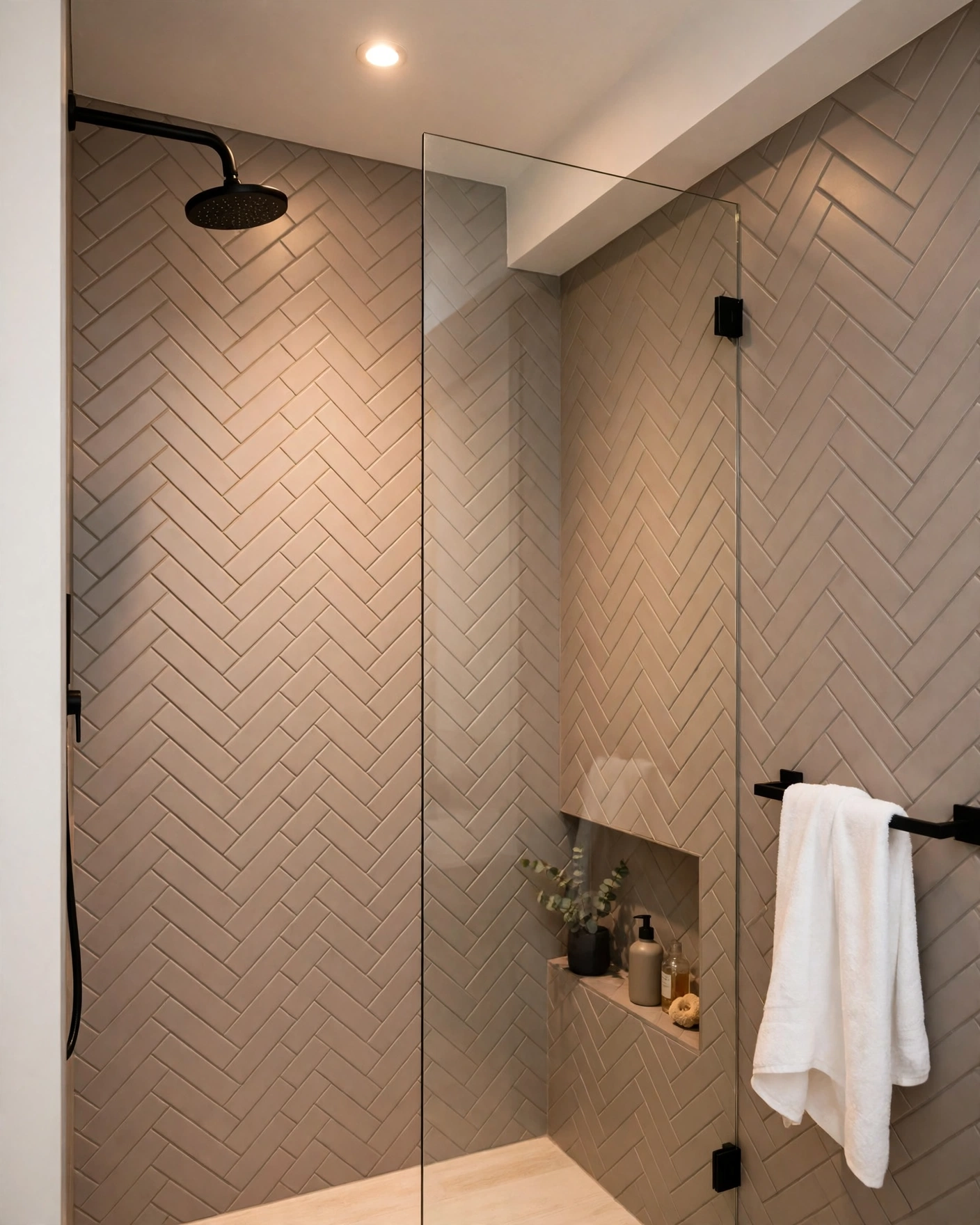
Herringbone adds movement while a neutral taupe keeps it calm. Matching the grout to the tile prevents a busy zigzag from shrinking the wall. Tip: limit herringbone to one wall, such as the shower back wall, to control cost and visual noise.
13. Wood-Look Plank Tile Running Lengthwise
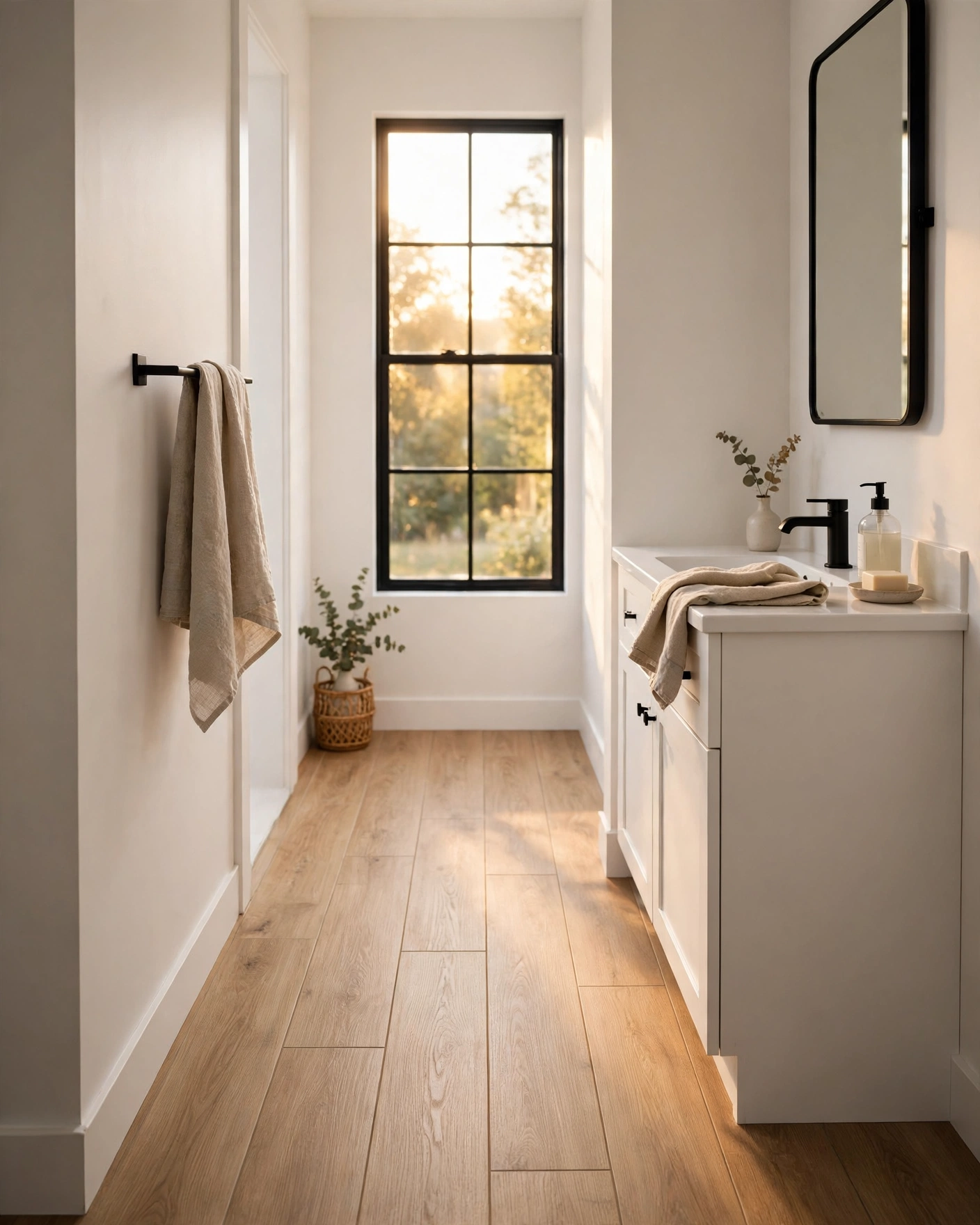
Planks laid along the room’s length draw the eye toward the far wall and make a narrow bathroom feel longer. Light oak porcelain gives the warmth of wood with none of the water worries. Tip: stagger the joints by one third so the pattern looks natural.
14. Tone-on-Tone Penny Tile
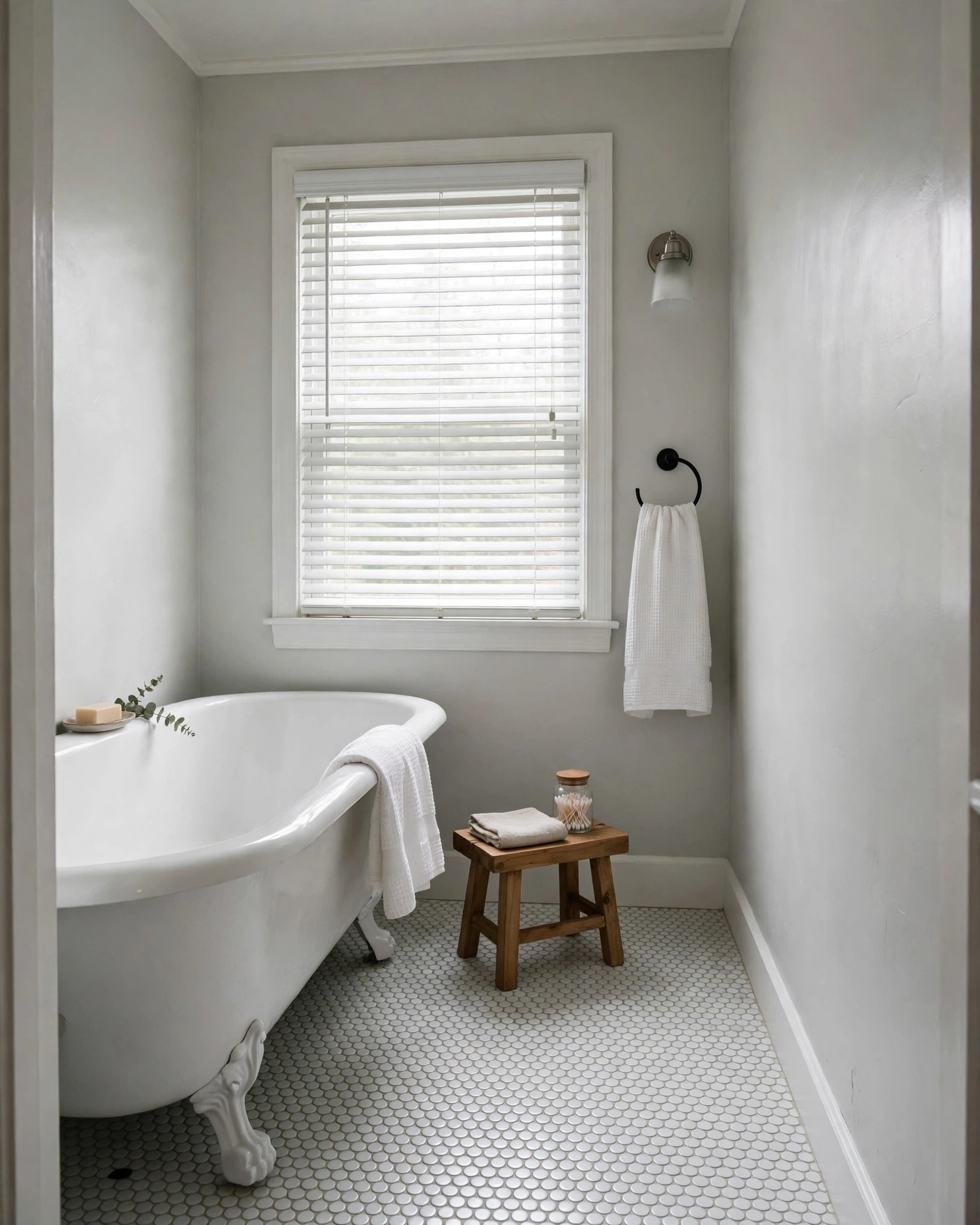
Penny rounds in soft white give the floor a gentle texture that stays light. Keep walls in a similar pale tone and the whole room reads as one quiet shade. Tip: choose a gray or white grout that matches the tile, and seal it once a year.
15. One Soft Pattern Accent Wall
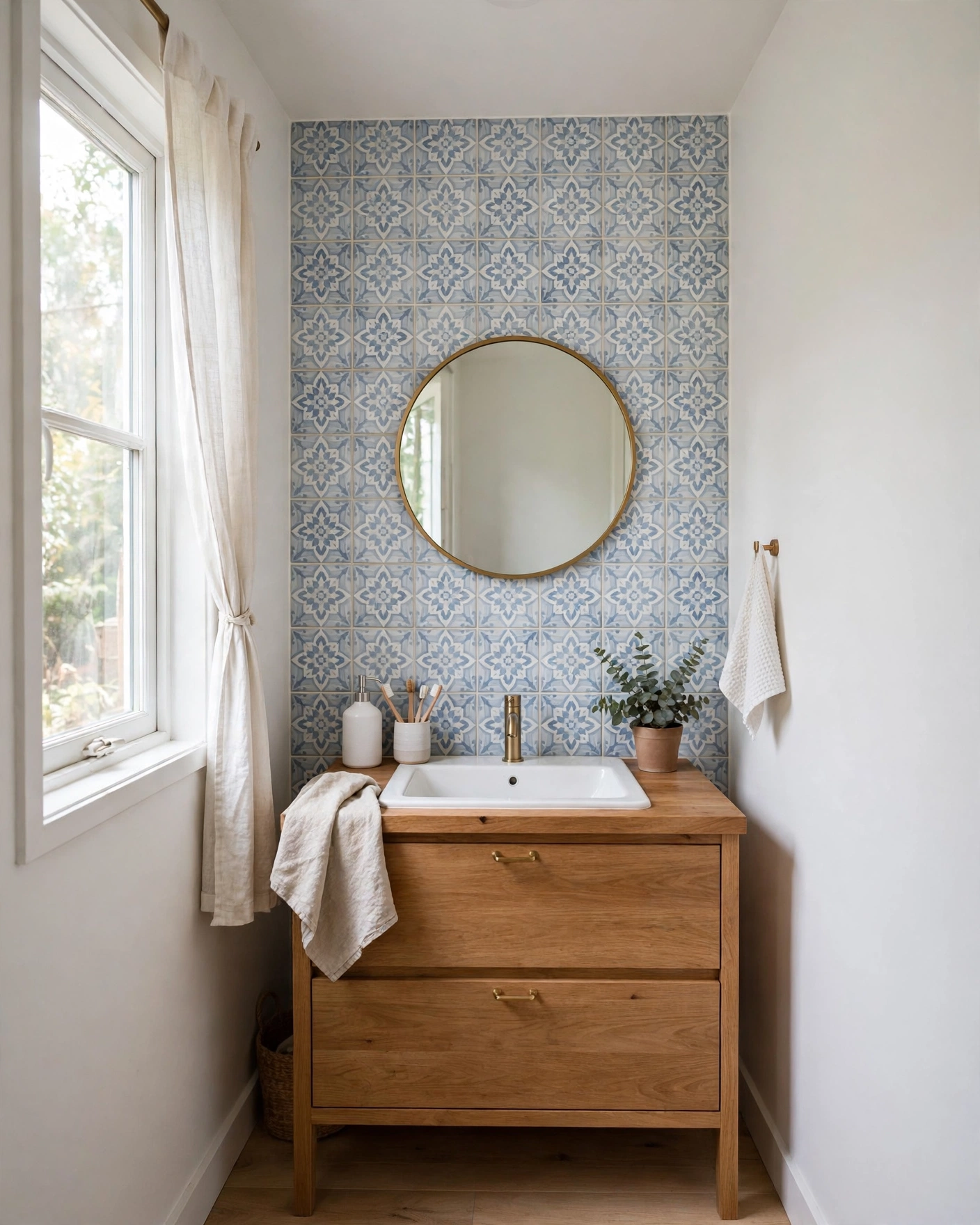
A single patterned wall adds depth, and plain white on the other three keeps the room open. Choose a soft blue and white pattern, not a dark or high-contrast one. Tip: tile only the wall behind the vanity to get the look for a fraction of the cost.
16. Curbless Shower with Continuous Floor Tile
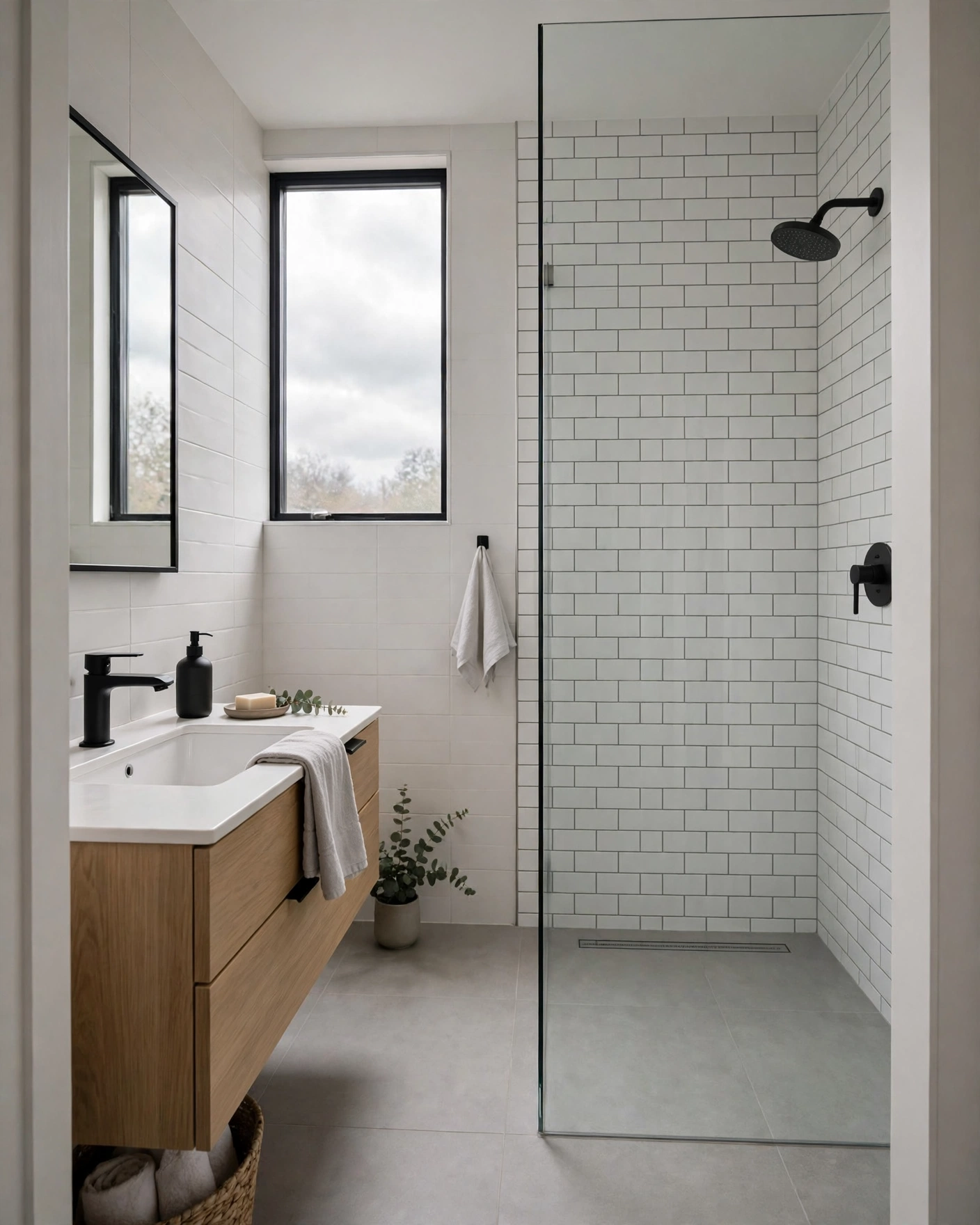
Removing the shower curb lets the floor tile flow into the shower without a break, so the floor looks bigger. A linear drain and a gentle slope keep water where it belongs. Tip: use a smaller textured tile or mosaic in the shower area for grip, and match the color to the main floor.
17. Stone-Look Marble Tile with Soft Veining
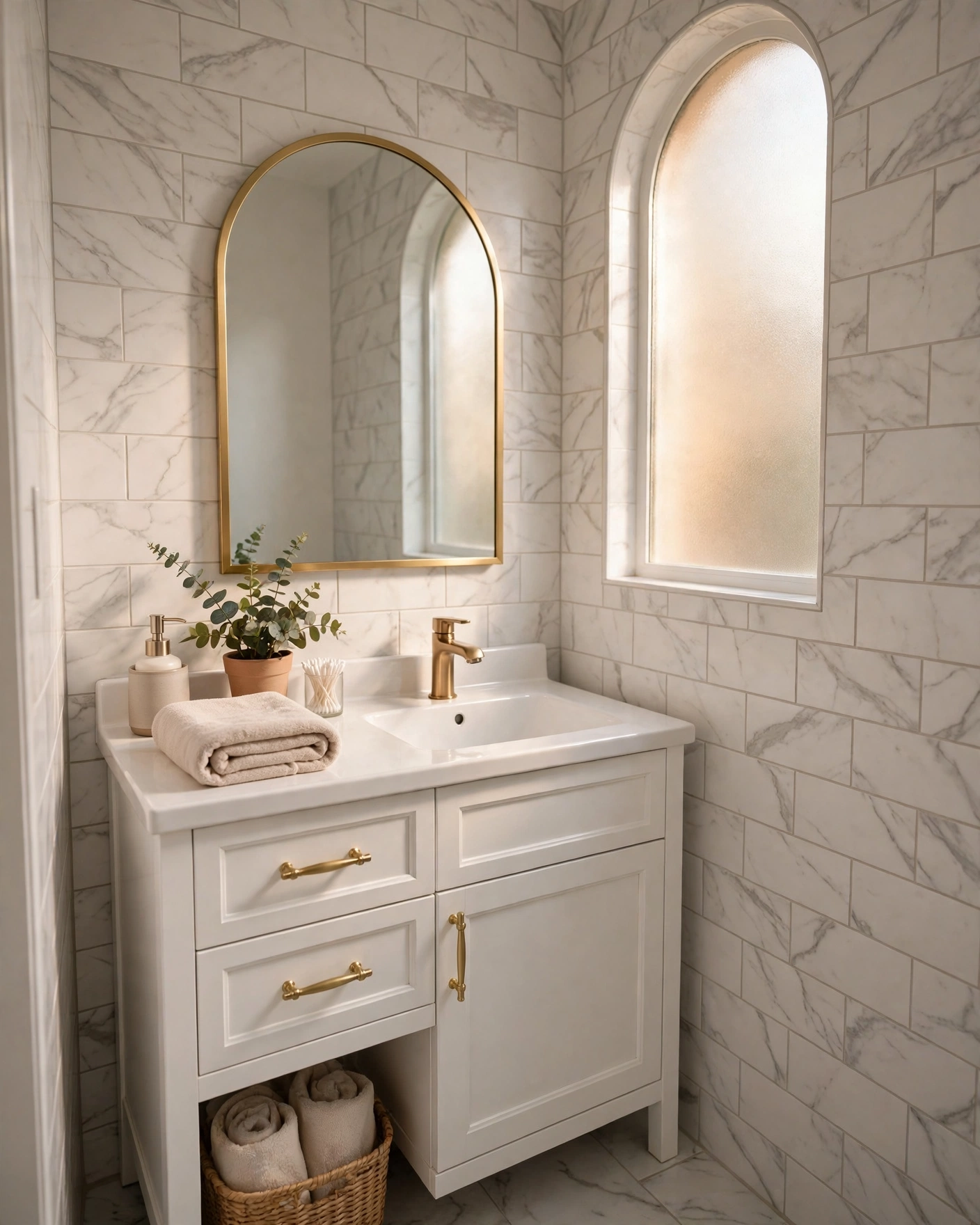
Soft gray veining gives a luxury feel while the white base keeps the room bright. Choose a polished marble-look porcelain in 24×24 and use it on both floor and walls. Tip: porcelain copies the look of marble at a lower price and needs no special sealing.
In Summary
A small bathroom doesn’t need a bigger footprint to feel bigger. It needs smarter tile choices: larger formats, lighter colors, softer grout lines and layouts that lead the eye.
Start with the idea that fits your budget and room shape, then build from there. Even one change, like switching to matching grout or running planks lengthwise, can shift how the whole space feels.
Take your measurements, order a few samples and look at them in your own light. The right tile will make the room feel calm, open and a lot larger than it is.
Leave a Reply